Side A · Liner notes
Insights from Over 3,000 Bank Runs: Understanding Banking Crises Through Historical Data
Banking · Words by Michael Martinez · Released
A comprehensive analysis of over 3,000 historical bank runs reveals that weak fundamentals, rather than small external shocks, largely drive bank failures and economic turmoil.

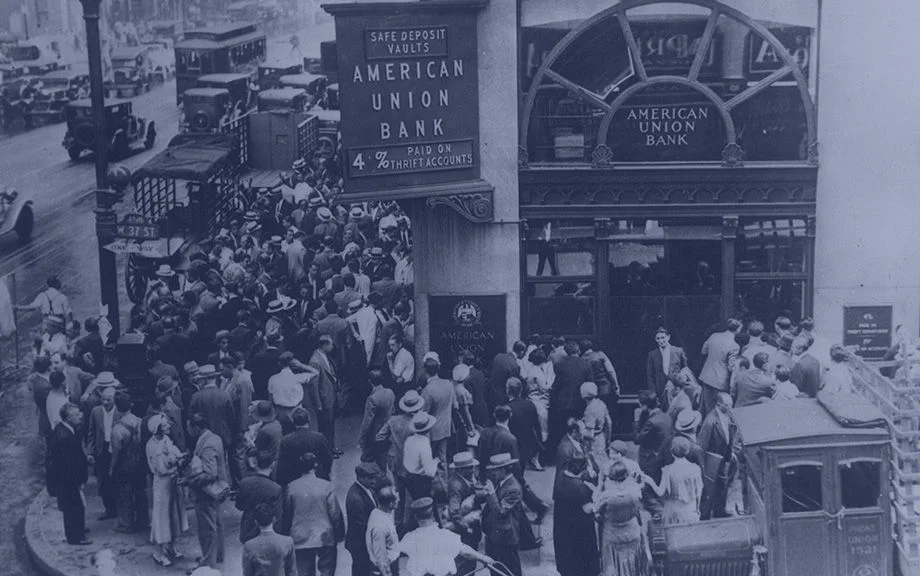
Sergio Correia, Stephan Luck, and Emil Verner explore the intricate relationship between bank runs and banking crises, utilizing a newly compiled database of over 3,000 bank runs that occurred in the United States between 1863 and 1934. This period, encompassing various banking panics including the Great Depression, offers valuable insights into how financial stability—or lack thereof—shapes the likelihood and outcomes of bank runs.
The Historical Context of Bank Runs
One of the significant challenges in studying bank runs is the scarcity of systematic microdata; however, the authors have addressed this issue by leveraging contemporary newspaper records. This research integrates historical occurrences of runs with bank balance sheets, macroeconomic indicators, local business failures, and regional manufacturing data. In contrast to today's banking environment, where government measures like deposit insurance mitigate the likelihood of runs, the historical context provides a stark view of how weaknesses in the banking system can lead to crises.

Key Findings on Bank Runs and Their Consequences
Finding #1: The Connection Between Bank Fundamentals and Run Likelihood
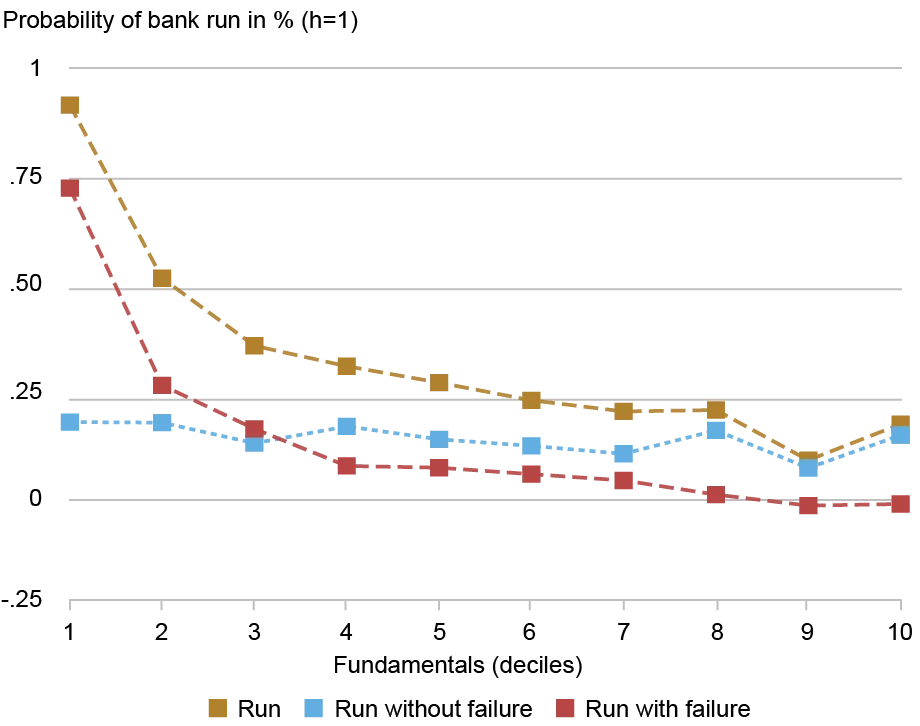
The investigation reveals a clear correlation between a bank’s health—its capitalization, profitability, and ability to fund itself—and the likelihood of experiencing a run. Banks with poor fundamentals are considerably more susceptible to runs. For instance, banks in the lowest decile of health metrics face nearly a 1 percent chance of experiencing a run in a given year, whereas financially sound banks see much lower odds. Despite the lower occurrence, runs can still affect robust banks under certain conditions.

Finding #2: Run Outcomes Are Heavily Influenced by Bank Strength
A critical insight from the data indicates that while the overall probability of bank failure following a run is 38%, this outcome is heavily contingent on the financial health of the institution involved. Banks characterized by weak fundamentals face a 63% chance of failure when subjected to a run. Conversely, the strongest banks essentially show no likelihood of failure in similar circumstances. This suggests that the impacts of runs extend beyond mere liquidity concerns and are deeply intertwined with the inherent soundness of a bank's operations.

How Strong Banks Manage to Thrive Amidst Runs
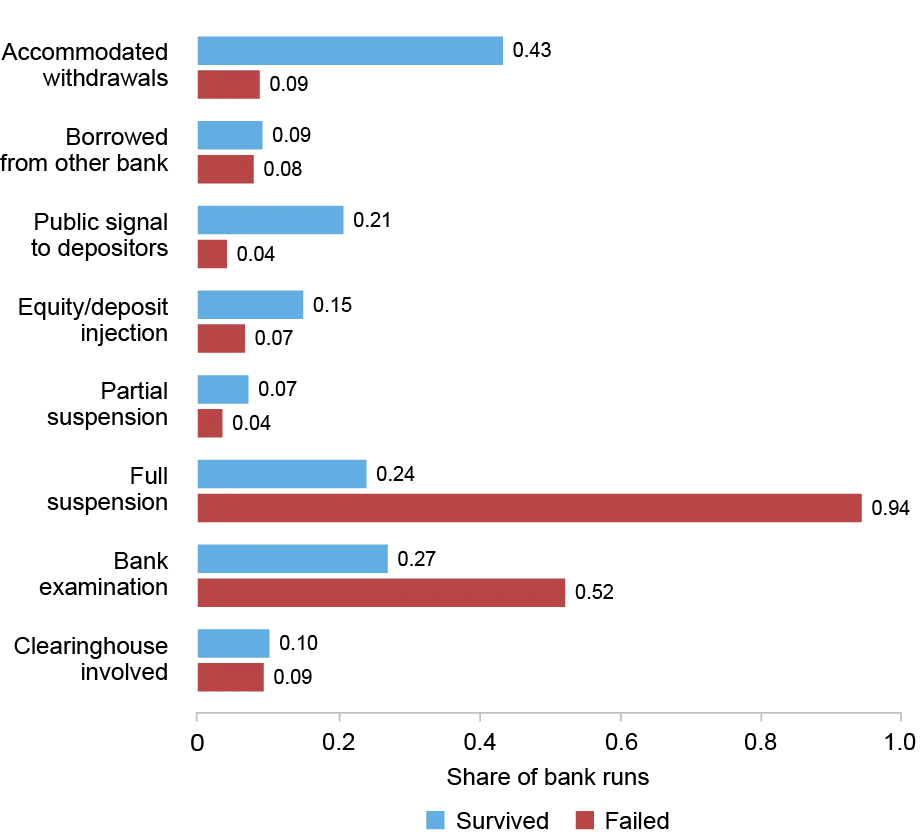
Understanding how healthier banks navigate runs is vital. Analysis of period press coverage shows that robust banks often employ several strategies: accommodating withdrawals to signal confidence, injecting additional equity, securing loans from other banks, and, in severe cases, suspending the convertibility of deposits. These measures can mitigate the financial strain of a run and protect solvent institutions from unnecessary bankruptcy. The involvement of clearinghouses in facilitating liquidity further underscores how operational strategies can prevent sound banks from faltering under pressure.
Finding #3: Economic Impacts of Bank Runs Vary Significantly
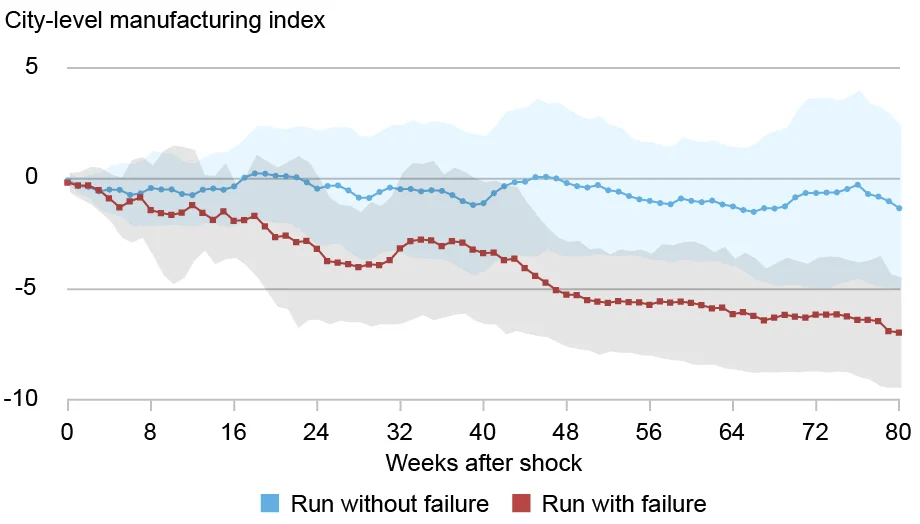
The research also highlights the macroeconomic effects of bank runs at the local level. An analysis of manufacturing activity derived from historical economic summaries illustrates that runs culminating in bank failures lead to significant local economic downturns. Specifically, failures can precipitate over a 5% decline in manufacturing within eighteen months, contrasting with non-failure runs, which show negligible changes. This points to a critical distinction: runs on weak banks are associated with more substantial negative economic repercussions compared to those on stronger counterparties.

Conclusions and Implications
The findings from this extensive analysis urge a reevaluation of how bank runs are perceived in relation to systemic risk. The prevailing notion that minor disturbances can trigger widespread runs appears insufficient when juxtaposed with the evidence that weak bank fundamentals are often prerequisites for failures and subsequent economic distress. This suggests that while runs can act as triggers, they are indicative of deeper structural issues within the banking system. Policymakers must consider these fundamentals to devise effective strategies that bolster financial resilience and avert banking crises.
In this context, the authors emphasize the importance of maintaining strong banking fundamentals as a safeguard against the broader consequences that arise from bank runs. The data illustrates that addressing the root causes of financial instability can mitigate the potential fallout from such events, fostering a more robust banking environment conducive to economic stability.


