Side A · Liner notes
Stablecoins' Resilience and Transformation in Response to Market Shocks: A 2026 Perspective
Banking · Words by John Garcia · Released
The stablecoin market has reflected significant growth and adaptation, particularly in response to external shocks such as the Silicon Valley Bank failure.

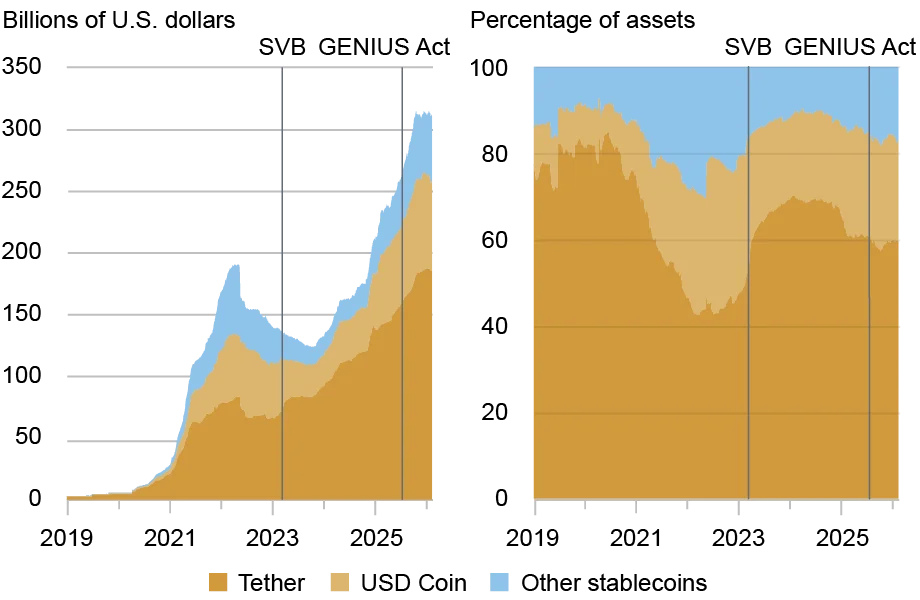
Stablecoins, digital assets typically pegged to fiat currencies like the U.S. dollar, have reached remarkable milestones since early 2025. The latest insights indicate that the market capitalization of U.S. dollar stablecoins has surged by $71 billion (30%) to approximately $308 billion. This growth coincided with the enactment of the GENIUS Act in July 2025, the first federal regulation focusing on payment stablecoins, highlighting the increasing legitimacy and integration of stablecoins within the broader financial landscape.
Current State of the Stablecoin Industry
The stablecoin market is still heavily dominated by a few players, with the largest two issuers—Tether (USDT) and USD Coin (USDC)—controlling over 80% of the market's total assets. The composition of their reserve assets reveals stark differences; USDC's reserves primarily comprise cash and short-term U.S. government securities, along with a significant focus on stability and liquidity. In contrast, Tether has diversified its reserves to include a notable portion of corporate bonds, secured loans, and even cryptocurrencies, which adds a layer of complexity and volatility to its operations.
Impact of External Shocks: The Case of Silicon Valley Bank
One pivotal event that demonstrated the vulnerability and interconnectedness of stablecoins with traditional financial systems was the failure of Silicon Valley Bank (SVB) in March 2023. Following this event, Circle reported that nearly 8% of USDC's reserves were associated with SVB, which triggered a considerable drop in USDC's market price below its peg of $1.00 and led to substantial net outflows from the stablecoin. This incident underscored the sensitivity of stablecoins to shocks outside the crypto domain and raised questions about their resilience.
Adjustment in Reserve Composition Following SVB's Collapse
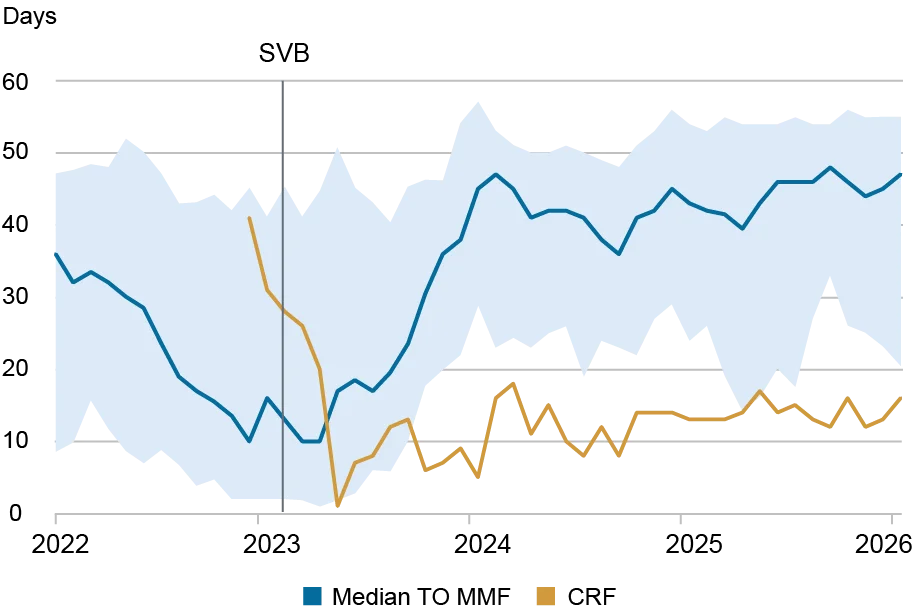
The aftermath of SVB's collapse prompted a reevaluation of USDC's reserve asset structure. Circle's Reserve Fund (CRF)—which accounted for approximately 86% of USDC's reserves as of March 2026—experienced a significant alteration in its portfolio. Prior to the collapse, the weighted average maturity (WAM) of the CRF's assets was higher than that of the median U.S. Treasury-only money market fund (MMF). However, post-collapse adjustments saw a reduction in WAM, bringing it below that of the median treasury fund and indicating a shift towards lower interest-rate risk.

Figure: Weighted Average Maturity of Circle Reserve Fund vs. Treasury-Only MMFs

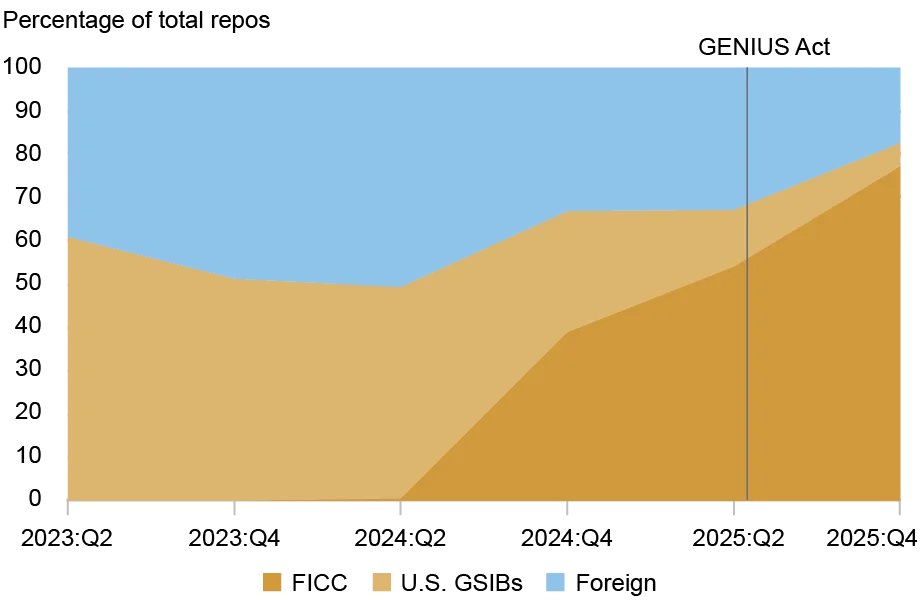
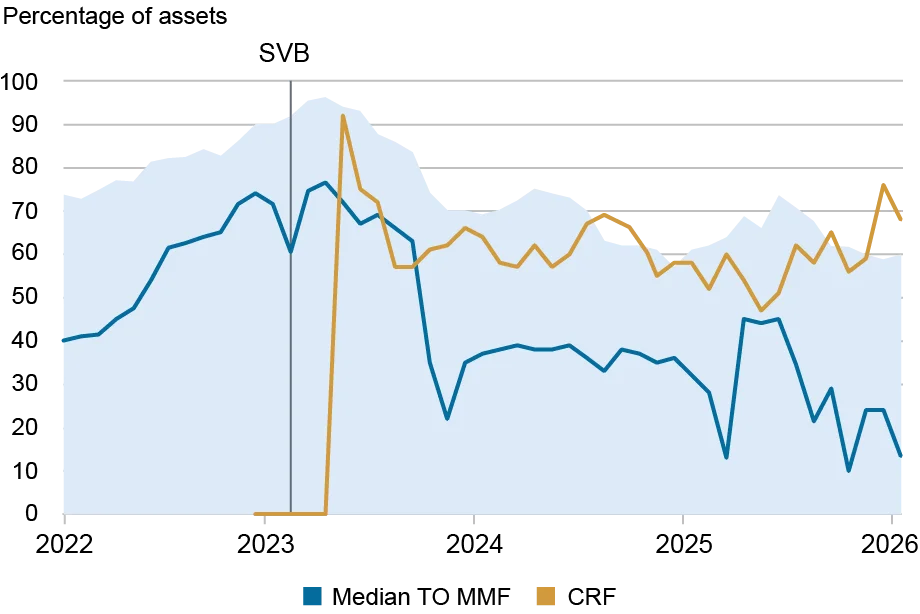
The changes also extended to the CRF's holdings in repurchase agreements (repos). Initially at zero, repo holdings spiked and made up over 90% of net assets immediately following SVB's collapse, settling around 69% later. This realignment indicates a profound shift in the risk profile and investment strategies of stablecoin reserves as they sought to mitigate risk following the unexpected SVB crisis.

Figure: Repo Holdings of Circle Reserve Fund vs. Treasury-Only MMFs

Changes in USDC's Banking Relationships
Additionally, the bank deposit composition of USDC reserves underwent notable shifts post-SVB collapse. The proportion of USDC's reserves held as bank deposits increased temporarily but ultimately settled below pre-crisis levels, signaling a cautious approach to cash management. By April 2023, Circle transitioned from a mixed banking relationship involving Global Systemically Important Banks (GSIBs) and non-GSIBs to a more concentrated strategy, with over 90% of cash held at GSIBs, enhancing the perceived safety of USDC's reserves.

Figure: Fraction of USDC’s Reserves Held at Banks


Conclusion: The Evolving Landscape of Stablecoins
In summary, the fallout from SVB’s failure significantly reshaped the risk landscape for USDC, steering it towards greater reliance on safe, stable assets while mitigating exposure to interest-rate risks. This incident highlights the increasing reliance of stablecoins like USDC on traditional banking systems, emphasizing their vulnerability to external shocks. As the stablecoin market continues to evolve, understanding these dynamics will be critical for stakeholders across the financial spectrum, from investors to regulators.

The ongoing developments in the stablecoin space underscore a critical intersection between digital assets and traditional financial practices, illustrating a landscape that is maturing, yet remains susceptible to sudden shocks. As the market works through these issues, the ability of stablecoins to maintain their pegs and manage risk effectively will remain vital to their future.