Side A · Liner notes
Examining Residual Risk in Homeowner’s Insurance and Its Impact on Households
Banking · Words by David Davis · Released
This analysis highlights how homeowners, particularly those financially constrained, bear substantial residual risks despite being insured, driven by contract terms and market dynamics.
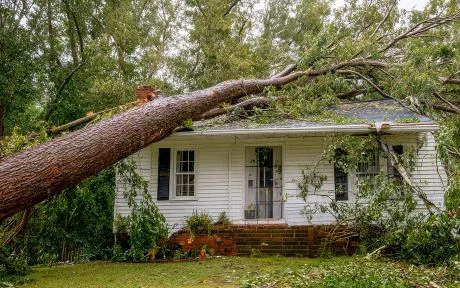
Research conducted by Hyeyoon Jung and Jaehoon (Kyle) Jung illustrates the complexities inherent in homeowner's insurance contracts, particularly the residual risk homeowners retain despite having insurance coverage. Using contract data linked to property exposure and disaster risk, their analysis demonstrates that while households are insured, factors like deductibles and coverage limits mean they still bear a significant portion of potential losses.
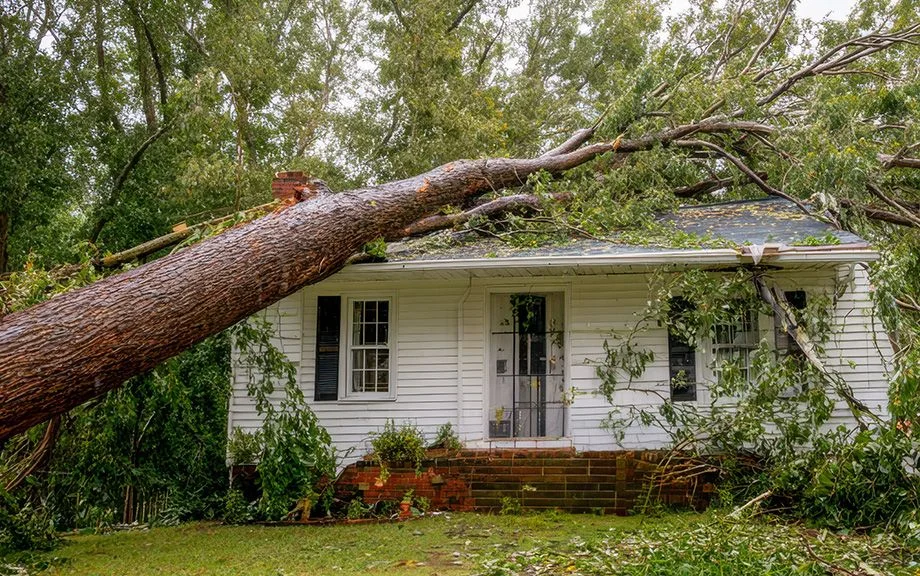
Understanding the Cost of Moral Hazard
A central theme of the research is the challenge of measuring moral hazard in home insurance. Moral hazard refers to the likelihood that an insured party will take risks because they are protected from the consequences. The study builds on established economic frameworks to create a model that assesses the nuances of insurance contract design at the household level. It uses extensive datasets that detail contract terms, property risk factors, and the characteristics of homeowners to quantify how much risk homeowners are willing to transfer to insurers, the associated costs, and the remaining risk they must retain.
Crucially, the research finds that while costs tied to moral hazard for insurers are relatively modest, homeowners retain a substantial 29 percent of expected losses due to contract structures that typically require them to absorb part of any loss. This balance between insurer profit and homeowner risk retention is vital in understanding how coverage impacts homeowner behavior.
Who Faces the Greatest Risk?
Financially Constrained Households
One key finding reveals that lower-FICO score homeowners, often facing more financial limitations, experience higher residual risk. These households tend to be more risk-averse, pay higher insurance premiums, and retain greater uninsured exposure. The data indicates a steady decline in risk appetite and risk retention as FICO scores increase.

Lower-FICO Households Are More Risk Averse, Pay More for Protection, and Keep More Risk.
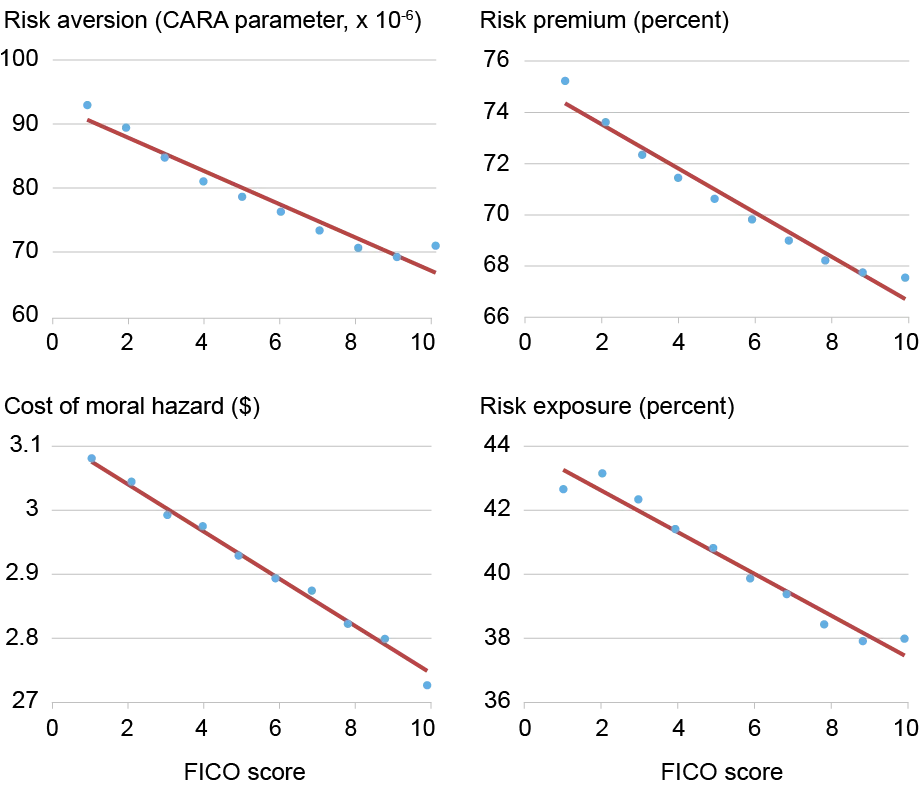
This situation creates a paradox: households with greater difficulty absorbing losses also disproportionately bear the risk in their insurance contracts. It's important to note that these observed correlations could stem from various underlying factors beyond financial constraints, yet they provide valuable insight into where residual risks accumulate.
Properties with Higher Tail Risk
Geographical factors also play a role in residual risk. Properties located in areas susceptible to severe disasters tend to carry increased risk under their insurance terms. The study’s spatial analysis illustrates a stark correlation between regions prone to high-risk events and the extent of residual exposure homeowners face in insurance contracts.
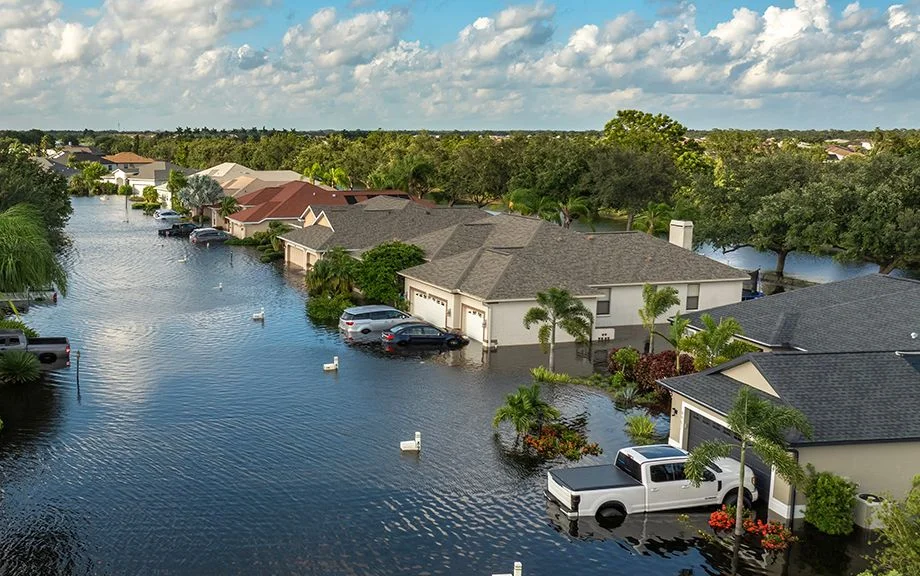
Spatial Distribution of Risk Aversion, Risk Premia, Moral Hazard Costs, and Residual Exposure.
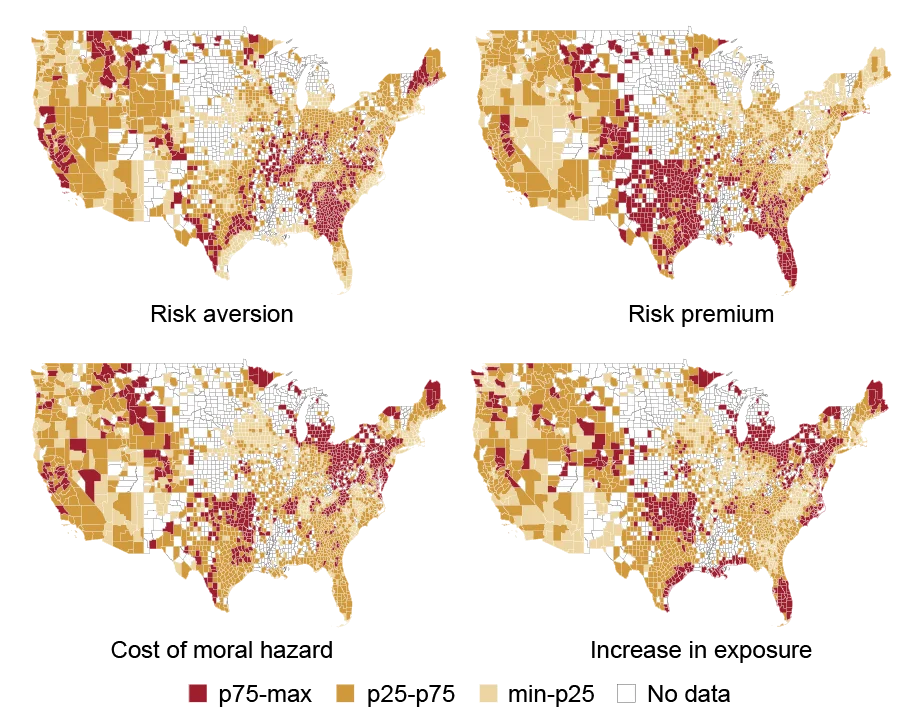
The observed geographic variances highlight the inequalities in both property risk and the types of insurance available based on location, underlining systemic imbalances in the homeowners’ insurance landscape.
Insurers' Financial Health and Its Role
The financial conditions of insurers also impact risk distribution. The research found that insurers with tighter financial constraints tend to underwrite riskier properties and charge higher premiums. Ultimately, this phenomenon suggests that the pricing strategies employed by financially constrained insurers are linked to the types of policies they issue and the risks they absorb.
Despite higher premiums, the share of these premiums attributed to profit margins remains relatively stable across different insurers. This indicates that price differences do not solely reflect insurable risks but also the insurer's business model and the risk profile of their policyholders.
Validating the Estimation of Moral Hazard
The study undertakes several validation exercises to ensure the moral hazard measures align with economic expectations. For example, households that maintain lower loan-to-value ratios—indicating more equity in their properties—exhibit lower moral hazard costs, supporting the idea that greater homeowner investment translates to improved property maintenance.
Additionally, variations in insurance regulation among states demonstrate that tighter controls, such as those requiring property inspections, can mitigate moral hazard by reducing information asymmetry between insurers and policyholders. While these validation exercises don't establish direct cause-and-effect relationships, they affirm that the model produces outcomes consistent with well-established economic principles.
Conclusions and Future Considerations
In summary, the findings provide critical insights into the dynamics of homeowner’s insurance: the direct costs associated with moral hazard may be low due to contract design, but the implications for vulnerable households are significant. Their exposure to residual risk, particularly among lower-income households and properties with a higher likelihood of severe disasters, raises important policy questions regarding insurance coverage adequacy.
This inquiry prompts consideration of whether insurers should be mandated to provide broader coverage. The challenge lies in balancing the protection offered by comprehensive coverage against the need for homeowners to maintain incentives to mitigate risks. The exploration of this trade-off will be crucial in future discussions surrounding homeowner's insurance policy reform.
As this research evolves, it will continue to refine our understanding of risk sharing mechanisms, informing discussions on how best to structure homeowner insurance to protect the most vulnerable and ensure broader financial stability.
Hyeyoon Jung serves as a financial research economist at the Federal Reserve Bank of New York, and Jaehoon (Kyle) Jung is an assistant professor at NYU Stern School of Business.


