Side A · Liner notes
September Sees Surge in CMBS Delinquency Rates Amidst Structural Challenges in Office and Retail Sectors
Banking · Words by Wolf Richter · Released
Delinquency rates for commercial mortgage-backed securities rose in September, with office and retail sectors facing acute structural problems, while industrial properties show resilience.
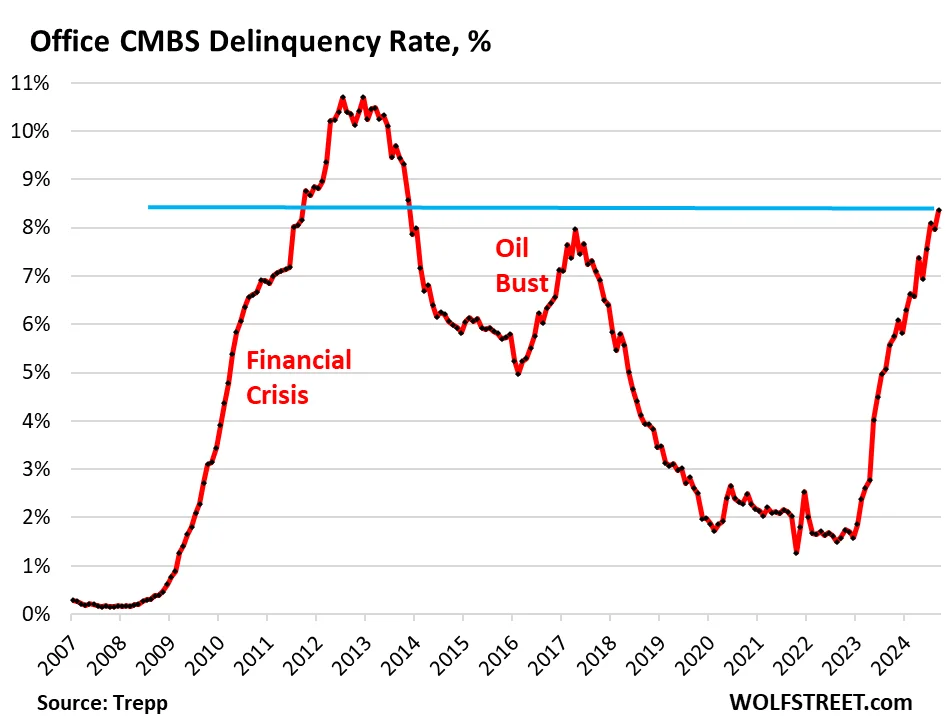
The commercial real estate (CRE) sector is grappling with serious challenges as indicated by a rise in delinquency rates for commercial mortgage-backed securities (CMBS) in September. As highlighted by Blackstone’s president Jonathan Gray earlier in the year, a perceived “bottom” for the market may not be as stable as hoped, with significant structural issues particularly evident in office, retail, and lodging segments.
Surge in Office Delinquency Rates
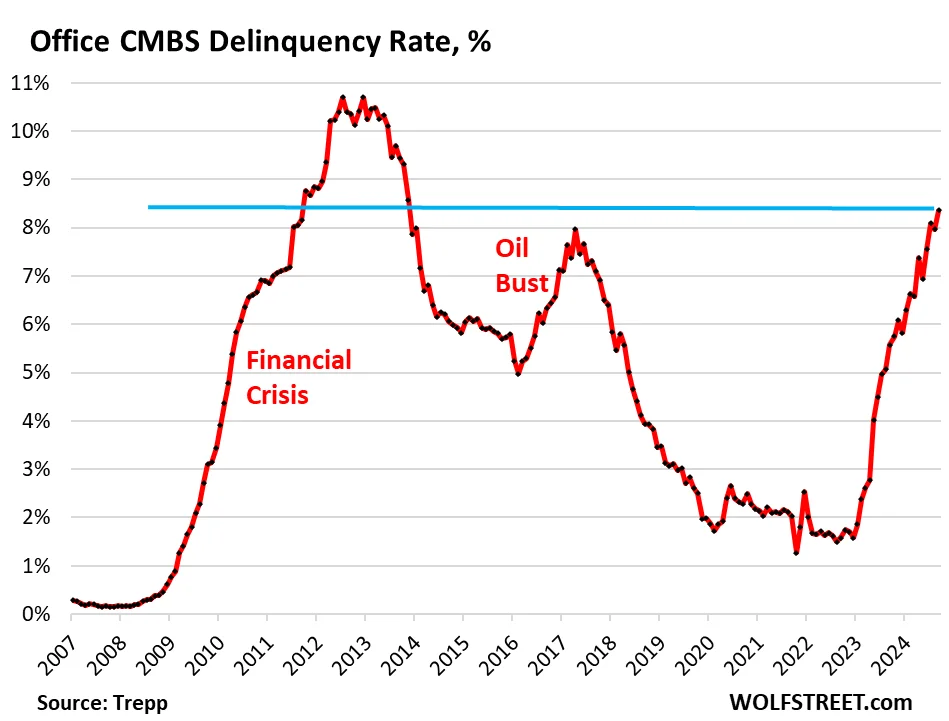
Delinquency rates for office mortgages supporting CMBS surged to 8.4% in September, marking the highest level since the Great Recession between August 2011 and November 2013, according to Trepp's data. This increase has surpassed delinquency levels experienced during the decline of the oil sector between 2014 and 2016, which notably affected Houston's office market.
The office sector is currently contending with an oversupply crisis rooted in prior overbuilding spurts that responded to an earlier perceived need for office space. Major companies, anticipating growth, accumulated more space than needed, leading to significant vacancies today. A rate cut from the Federal Reserve might offer temporary relief to some borrowers attempting to refinance, but it is unlikely to address the persistent structural problems underpinning the office market.
Trepp categorizes loans as delinquent when a borrower fails to make an interest payment following a 30-day grace period. However, loans not fully repaid at maturity, despite ongoing interest payments, are not included in this delinquency rate. A range of resolutions including foreclosures and restructurings can affect these delinquency tallies depending on borrower actions.
Retail Sector Struggles
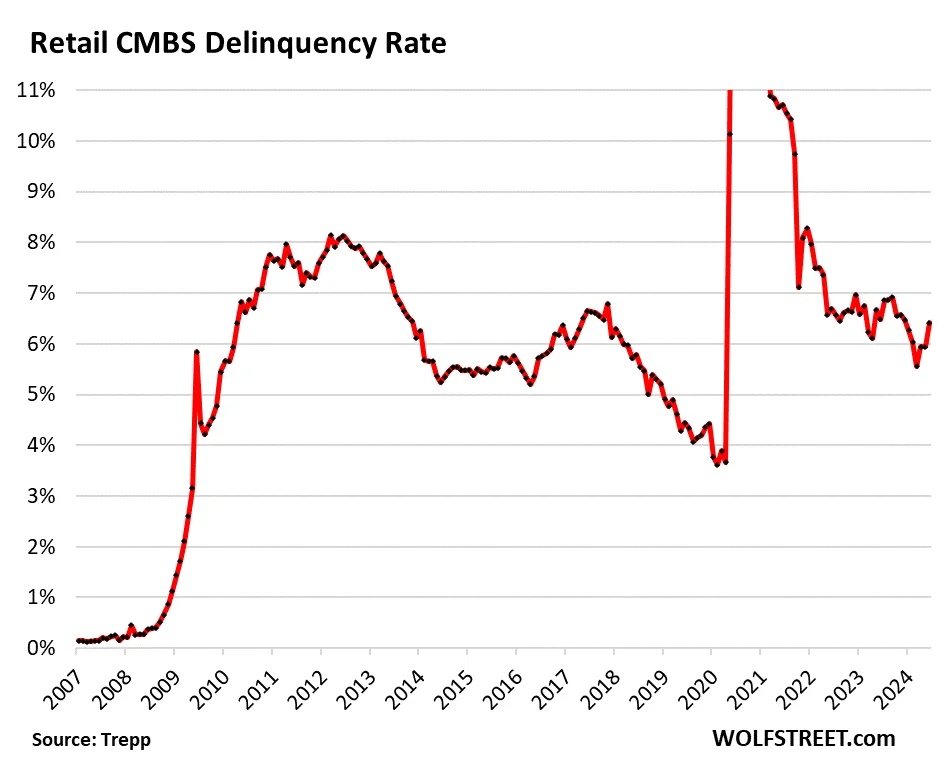
The delinquency rate for CMBS linked to mall and other retail properties climbed to 7.1% in September. The retail segment has faced long-standing issues, worsened by the ongoing e-commerce boom, often termed the "Brick-and-Mortar Meltdown." This shift has seen major mall landlords unable to sustain their operations, with some defaulting on their loans. A prominent example is Simon Property Group, which has discontinued several mall properties over the past decade.
With even industry giants opting to walk away from struggling malls, the situation raises critical concerns about the future viability of brick-and-mortar stores across the U.S. As department stores dwindle and retail chains file for bankruptcy, the notion of ‘zombie malls’—abandoned shopping centers awaiting redevelopment—has become increasingly relevant. Rate cuts will not stem the growth of e-commerce, which is fundamentally altering consumer shopping behavior and diminishing the relevance of traditional retail properties.

Lodging Sector Deterioration
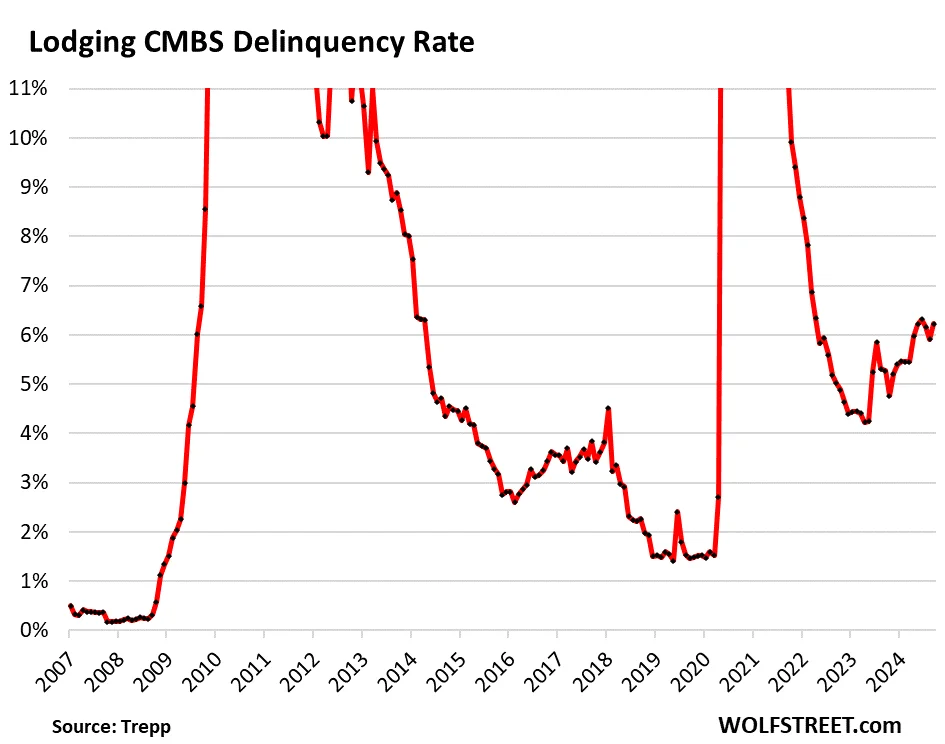
Delinquency rates for hotel and resort mortgages increased to 6.2% in September, reversing a downward trend from prior months. The pandemic had previously driven this rate as high as 24% back in June 2020 and to nearly 19% during the Great Recession.

The lodging sector faces a tough position as tourists increasingly opt for vacation rentals over traditional hotels, contributing to strategic challenges for hotel operators. This change not only decreases hotel occupancy rates but also distorts local housing markets as properties convert to short-term rentals, often evading hotel taxes and altering the landscape of tourism in affected cities.
Multifamily CMBS Stability
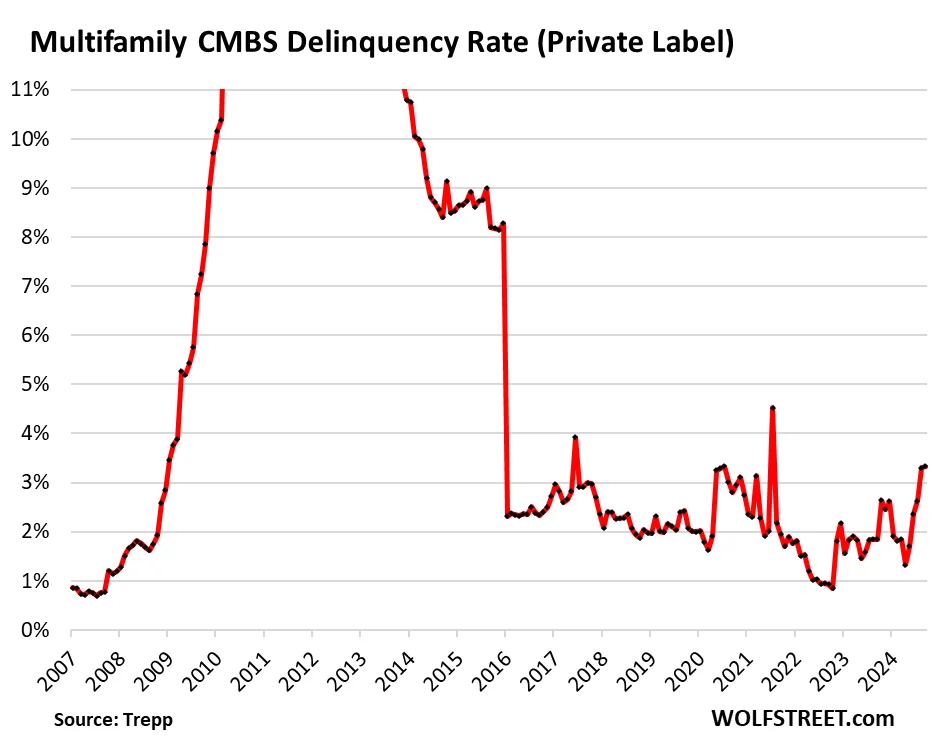
Conversely, the multifamily housing segment is holding relatively steady, with delinquency rates remaining unchanged at approximately 3.3%. Historically, this rate peaked at almost 17% during the Great Recession. While there have been notable defaults in recent years, CMBS accounts for only a small fraction of the multifamily mortgage market—about 3.2%, with a significant majority of such loans held by government entities and private lenders.
This limited volume means that fluctuations in delinquency rates can significantly sway the overall statistic. Historical instances, like the resolution of a $3 billion delinquent loan related to a major New York residential development, illustrate the pronounced impacts of significant loan resolutions in this relatively consolidated market.
Industrial Sector’s Resilience
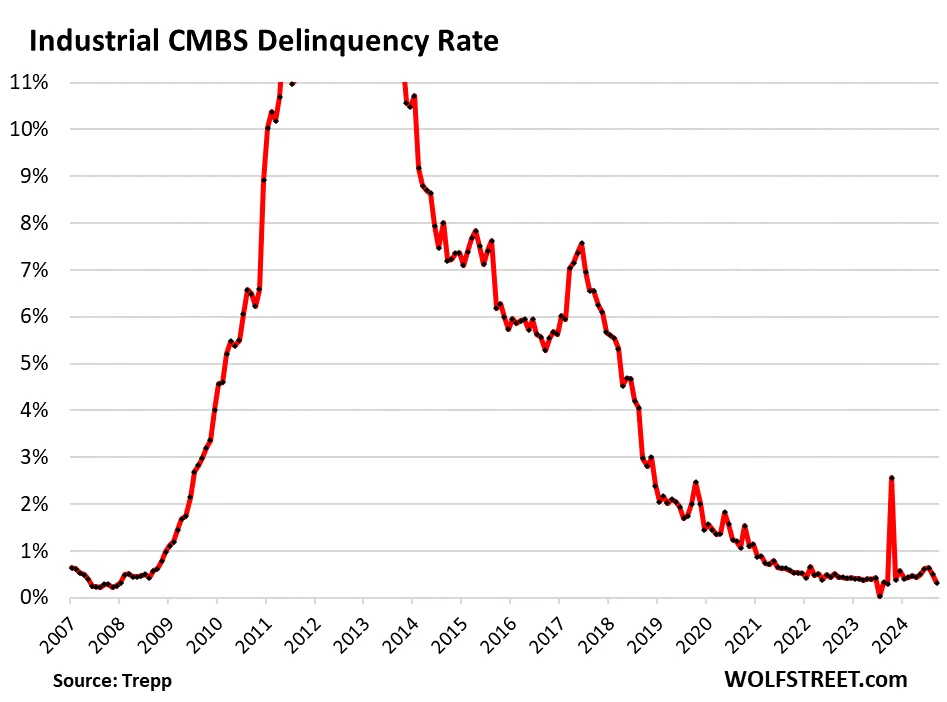
In contrast to its counterparts, the industrial real estate sector, specifically warehouses and fulfillment centers, posted a minimal delinquency rate of just 0.3% in September—a historical low compared to highs above 12% during the Great Recession.
This sector has benefited as e-commerce scales, with major retailers expanding their logistics networks across the U.S. However, the post-pandemic market adjustment has led to some oversupply of fulfillment centers, and while vacancy rates currently hold at about 6.1%, they are still below the prepandemic average. Following a massive increase in asking rents—growing 50% from Q1 2020 to Q2 2023—activities have since stabilized, influenced by consistent demand for e-commerce services.
Despite the existing challenges in terms of market adjustments, the industrial sector showcases a continued demand that provides a stark contrast to the other sectors facing stark declines in occupancy and rising delinquency rates.
In summary, while sectors like office, retail, and lodging struggle with substantive structural challenges exacerbated by economic factors and shifting consumer preferences, industrial real estate remains resilient underpinned by the ongoing growth of e-commerce, which continues to thrive amid changing market dynamics.


