Side A · Liner notes
Kohl's Revenue Declines Amidst Consumer Shift to E-commerce
Stocks · Words by Wolf Richter · Released
Kohl’s shares plummeted 24% following a quarterly revenue decline, continuing a trend of decreasing sales as consumers favor online shopping.
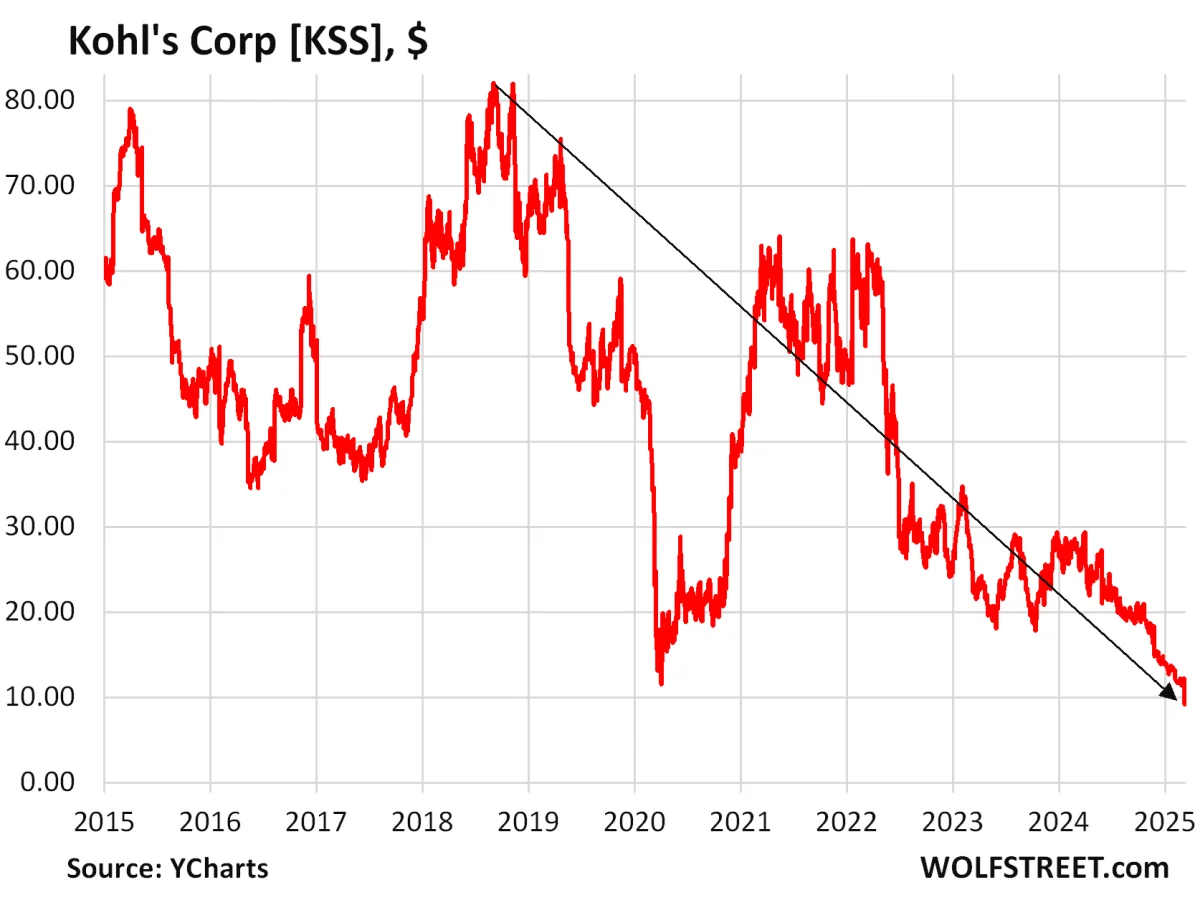
Kohl’s [KSS] faced a significant decline today, with shares dropping 24% to $9.19, marking the lowest price since August 1997. This plummet is a stark reminder of the company’s struggles, as the stock has now plunged by an alarming 89% since its peak in September 2018, leading to its inclusion in the category of "Imploded Stocks."
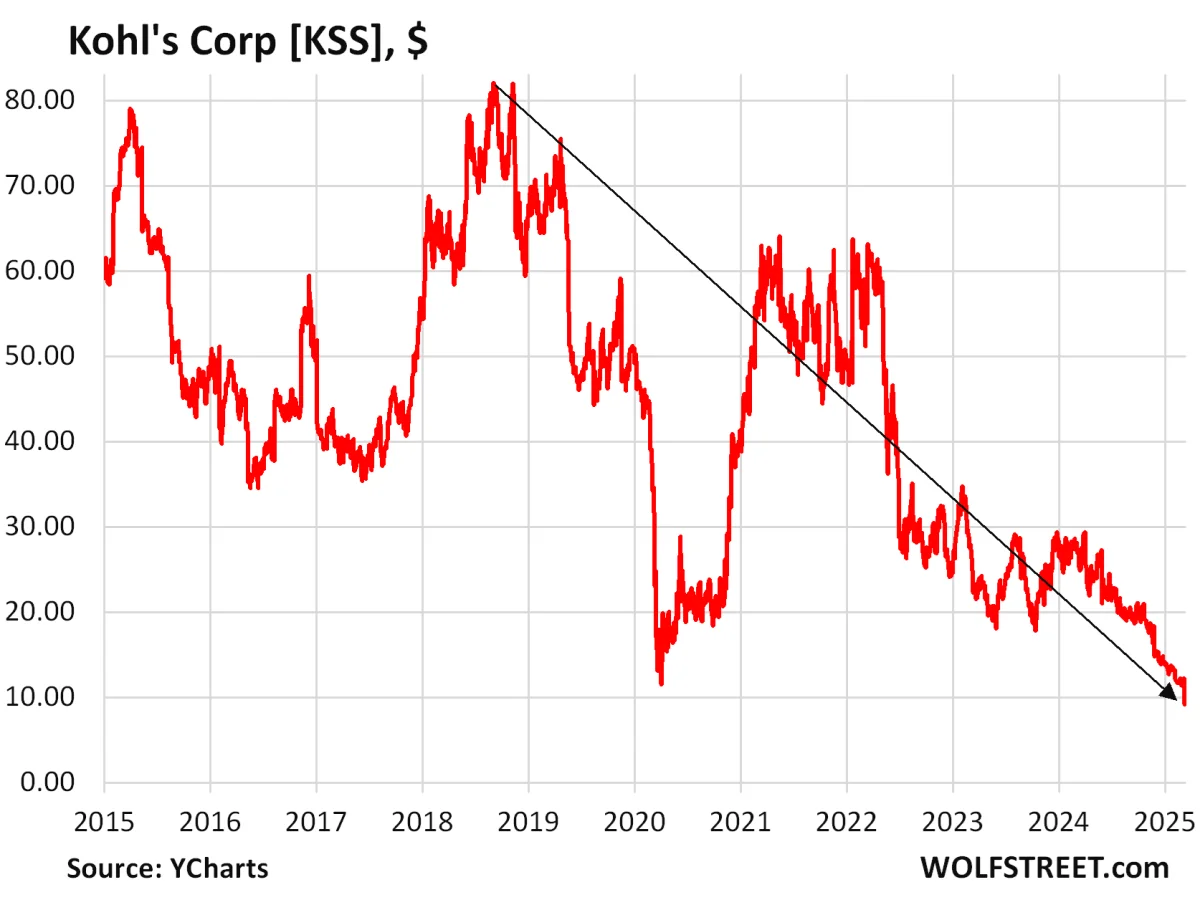
The sharp decline in stock price comes on the heels of Kohl's fourth-quarter earnings report, which revealed a 9.4% year-over-year drop in total revenue. For the entirety of 2022, the company reported a 7.3% revenue decline, resulting in total revenues of $16.2 billion. This marks the third consecutive year that Kohl’s has witnessed annual revenue declines, and this figure is strikingly similar to the lows experienced during the 2020 pandemic lockdowns. Notably, revenue has fallen from stagnation around $20 billion in the years leading up to 2020, reflecting a 20% decrease since 2018.
Analysts and market watchers are concerned about the forward outlook as Kohl's projected another revenue decline of 5-6% for the upcoming fiscal year. If realized, this would indicate a cumulative revenue decrease of 25% since 2018, revealing a concerning downward trend for the retailer. This data, sourced from YCharts, illustrates the challenges Kohl's faces in a shifting retail landscape.
Further compounding these difficulties is the stark contrast in income. Net income fell sharply by 74% in Q4 to just $48 million, with annual net income collapsing by 66% to only $109 million. In comparison, net income reported in 2017 was at a solid $859 million, showcasing an 87% decrease, underscoring the steep financial decline of the retailer.
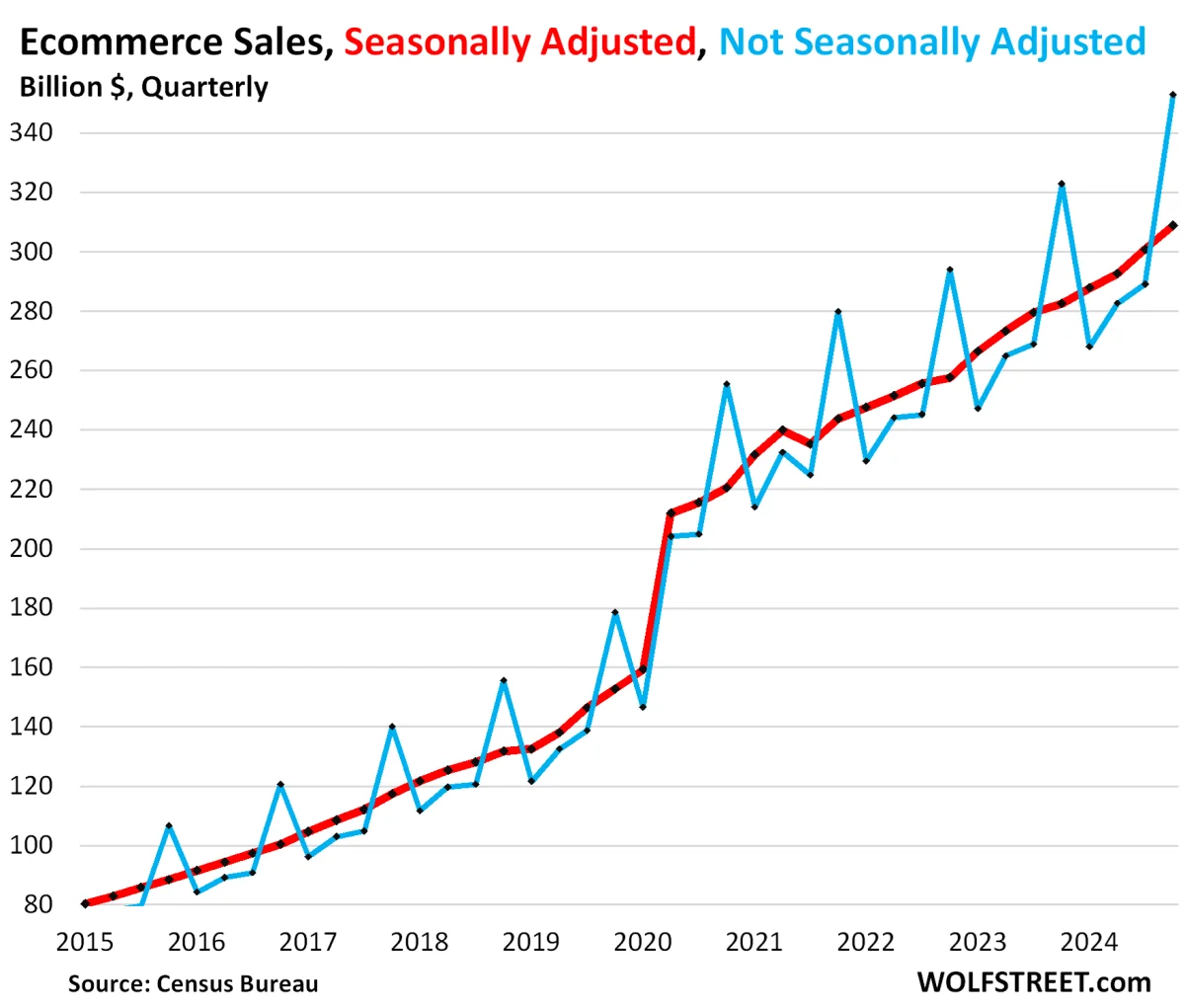
Despite these issues, the retail environment overall does not appear to be struggling uniformly. While Kohl's grapples with significant revenue loss, e-commerce sales surged by 9.3% year-over-year within the same timeframe, pointing to a consumer trend favoring online shopping. This divergence highlights a critical issue: consumers seem to be opting for online alternatives at retailers such as Amazon, Walmart, and others that provide broader selections alongside competitive pricing.
In light of these challenges, Kohl's leadership made the decision to bring in a new CEO, Ashley Buchanan, earlier this year. In announcing the new strategic direction, Buchanan indicated further store closures for 2025. During a recent earnings call, he highlighted the fiscal constraints faced by their customer base, stating that individuals earning less than $50,000 annually are likely "constrained from a discretionary standpoint." He suggested that even consumers with income under $100,000 face similar challenges, a sentiment that some industry observers found curious given the overall growth in e-commerce.
The reality for Kohl's presents a paradox: while leadership attributes declining sales to "constrained" consumers, many of these same individuals seem to be turning to digital platforms for their purchases, effectively taking their business elsewhere. For instance, the patterns of shopper behavior reveal that competition from various e-commerce channels poses a formidable challenge to department stores, which are known to struggle to adapt their traditional business models to an increasingly digital marketplace.

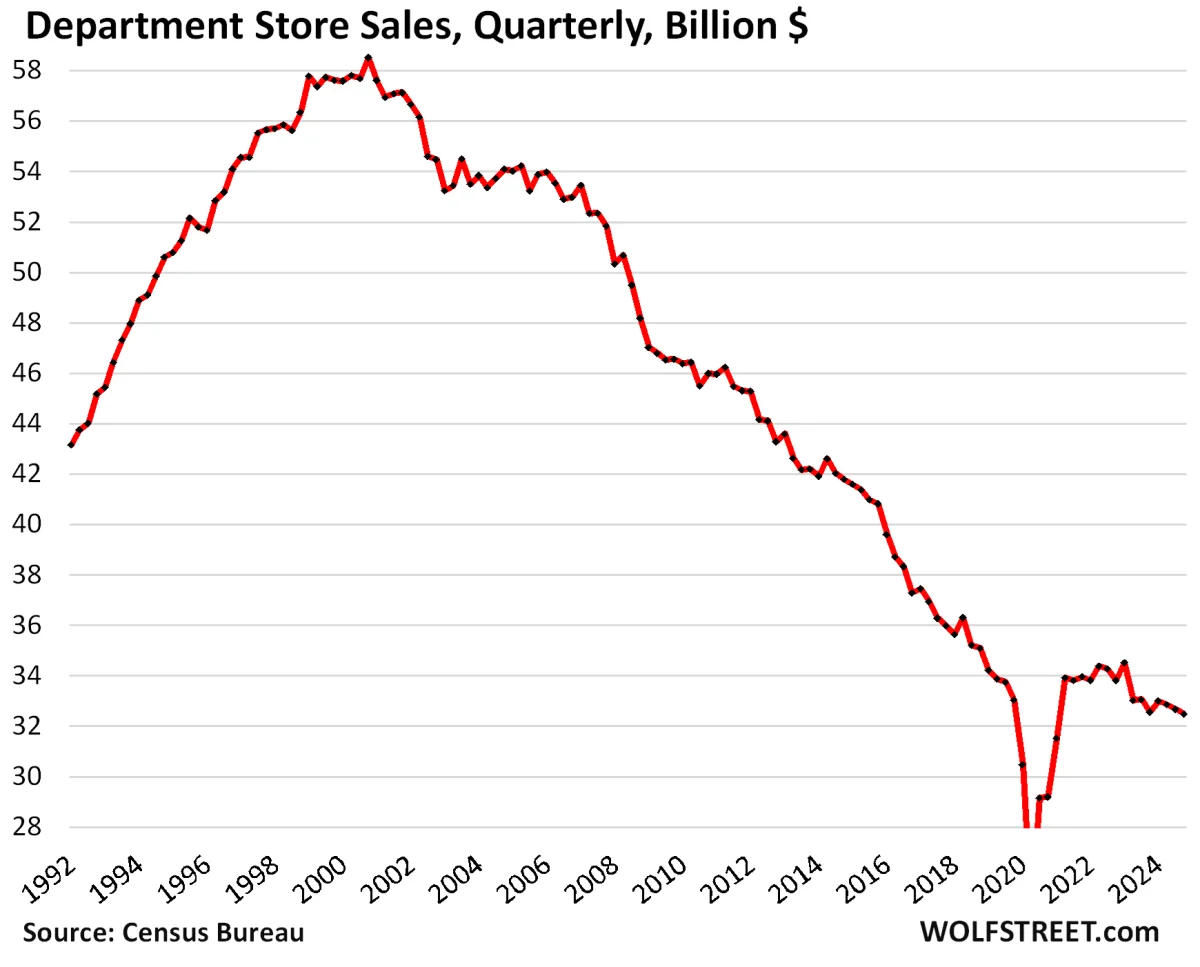
General trends reveal that department store sales have dramatically dipped by 43% since their peak in 2000, suggesting no recovery on the horizon for physical retail spaces. The rise of online shopping continues to undercut brick-and-mortar businesses, fundamentally changing consumer purchasing habits and preferences.
As industry observers note, this struggle is not exclusive to Kohl’s; it illustrates a broader crisis affecting all physical department stores. Many chains have struggled to maintain their footing against the booming e-commerce sector, and closures of physical stores have become common. Each closure shifts a portion of remaining business to nearby competitors and further fuels the exodus to online options. Since 2016, thousands of stores have shuttered, resulting in a phenomenon termed the "Brick-and-Mortar Meltdown."

Forward-thinking retailers like Walmart have proactively addressed these challenges by investing billions into their e-commerce platforms, achieving growth rates between 20-30% in their online business. Beyond that, Walmart supplemented its core grocery business, emphasizing in-store shopping experiences that continue to draw customers, even as digital shopping preferences expand.
Buchanan, previously part of Walmart's successful e-commerce strategy, understands the need for a paradigm shift. The focus on enhancing online sales while reducing brick-and-mortar presence could be seen as a survival tactic, albeit a painful one for its stakeholders to accept. It’s a challenging discourse, one that may require Kohl's leadership to reassess their strategy and transparently communicate the reality of transforming their business model to adapt to the current retail environment.
As the retail landscape continues to evolve, investors watching Kohl's trajectory may need to reconcile themselves with the idea that adapting in a digital-first market will be integral to their future.


