Side A · Liner notes
Evaluating Economic Capital as an Indicator of Bank Solvency and Failure Risk
Banking · Words by Richard Jones · Released
Economic Capital is a robust alternative measure for assessing bank solvency, providing more timely signals of failure compared to traditional methods.

Beverly Hirtle and Matthew C. Plosser explore the importance of accurately identifying potential bank failures and the costs associated with financial instability. Their research highlights Economic Capital (EC) as an effective measure for evaluating the solvency of banks, particularly in light of recent banking distress events, such as those seen in March 2023.

Understanding Economic Capital
Economic Capital serves as an alternative to conventional solvency measures like regulatory capital and tangible common equity (TCE). The computation of EC involves estimating the present value of a bank’s assets, liabilities, and required operational expenses. Unlike traditional measures based heavily on accounting principles, which tend to lag in capturing real-time asset valuation changes due to shifts in interest rates or credit spreads, EC adjusts dynamically to these factors.

This innovative metric is derived using publicly available regulatory data spanning nearly all U.S. commercial banks from 1997 through early 2025. One notable component of EC is the R-EC, or run economic capital, which estimates the value under scenarios where uninsured depositors withdraw their funds, thereby providing insightful indicators of potential insolvency during times of stress.

How Effective is Economic Capital at Identifying Failing Banks?
The authors examined instances of bank failures, especially during the acute banking stress observed in March 2023, which resulted in significant bank collapses including Silicon Valley Bank (SVB), First Republic, Silvergate, and Signature Bank. The analysis encompassed a broader historical dataset of bank failures from 1997 to 2025, predominantly tracing back to the credit-driven failures during the 2007-2009 Global Financial Crisis (GFC).

Analyzing the March 2023 Banking Crisis
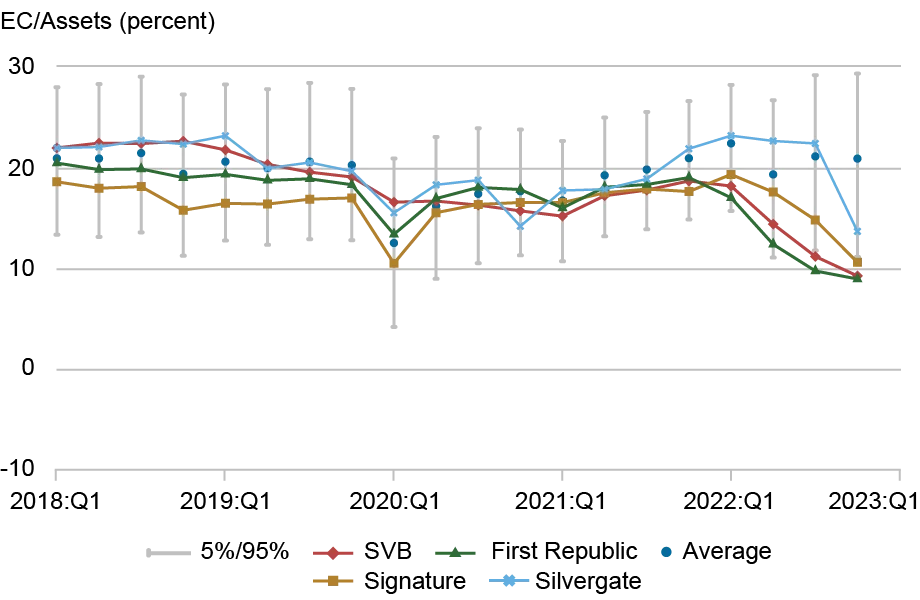
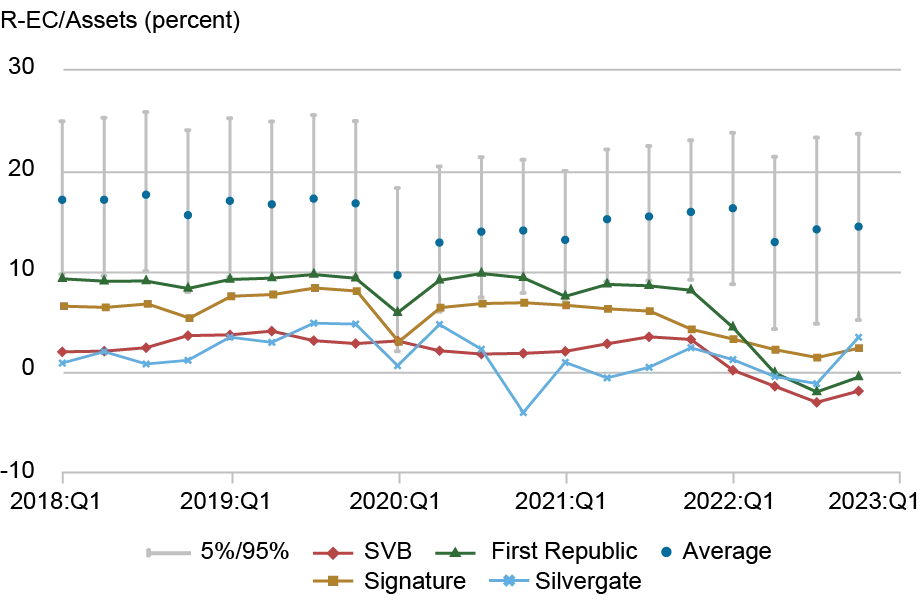
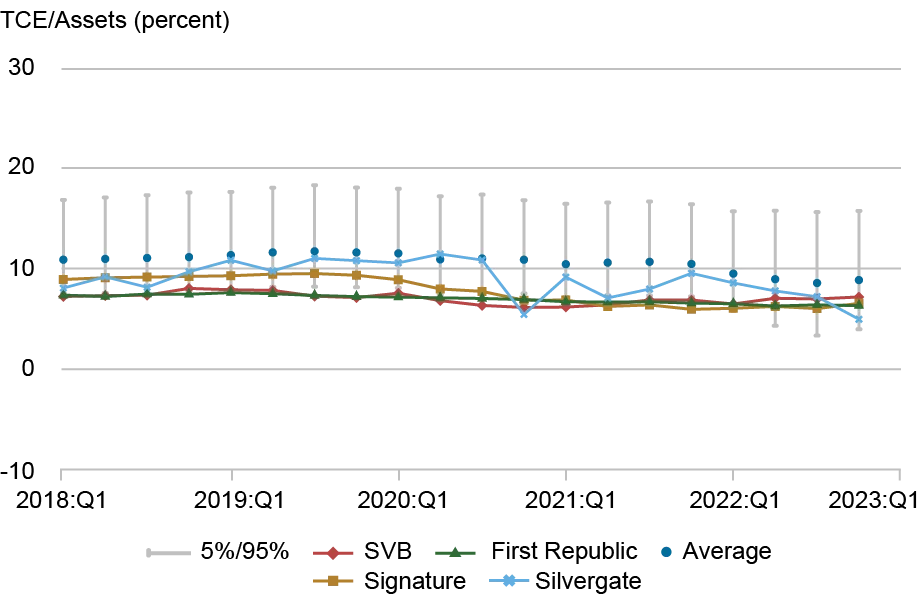
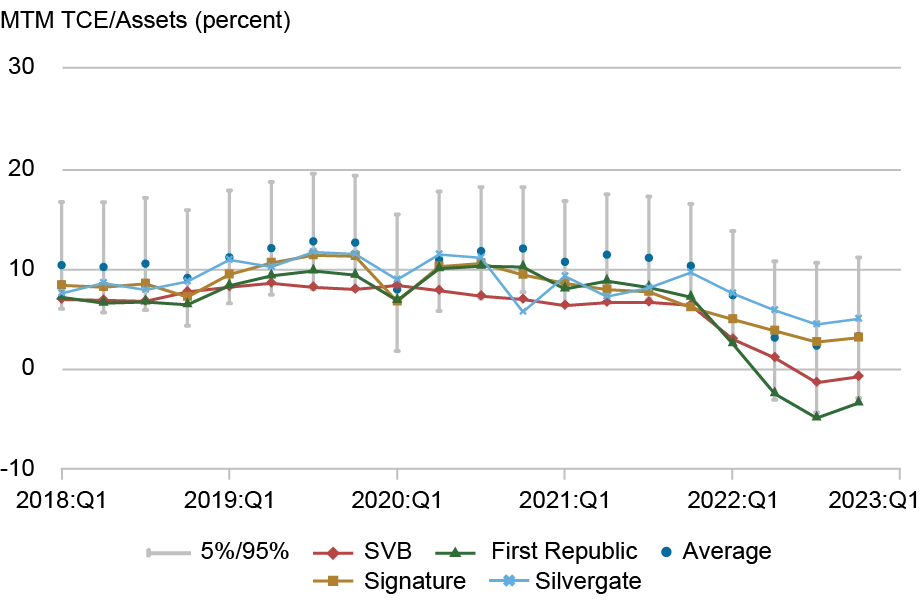
In their study, Hirtle and Plosser present a detailed examination of four key solvency measures over the five years leading up to March 2023: EC, R-EC, TCE, and mark-to-market TCE (MTM TCE). Each of these metrics was scaled relative to total bank assets, facilitating comparisons. The findings revealed that while the traditional EC ratios for the banks that collapsed weren’t dramatically low in the lead-up to increased interest rates, R-EC ratios indicated a more dire situation.

Notably, R-EC values for the failing banks, especially SVB and First Republic, fell below the 5th percentile threshold as early as mid-2022, suggesting a high risk of insolvency long before the actual events unfolded. In sharp contrast, TCE metrics for these institutions remained within the normative 5th to 95th percentile range, thus offering less alarming insights into their financial health.

The evidence also highlighted how MTM TCE ratios showed temporary improvements, signaling an unhealthy reliance on accounting-based adjustments rather than the stark real-world financial pressures that emerging risks were indicating.

Considerations Beyond Interest Rate Risks
While the results from the March 2023 stress test appear to favor Economic Capital metrics, the authors caution against overgeneralizing these findings. They assessed a broader sample of 465 failed banks from their dataset, chiefly during the post-GFC period (2008-2010), which suffered significant credit losses unlike the interest-rate-driven losses characterizing the most recent failures.
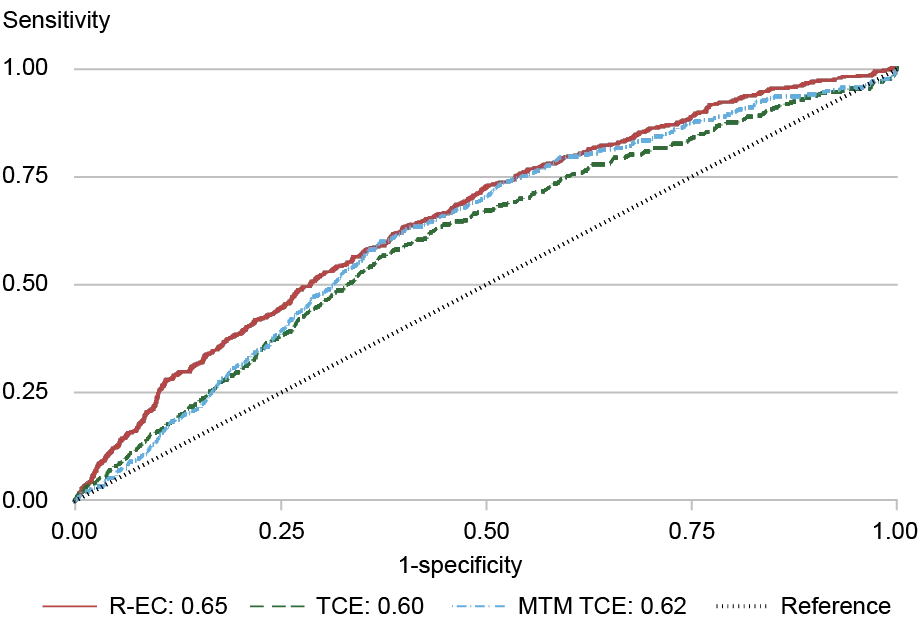
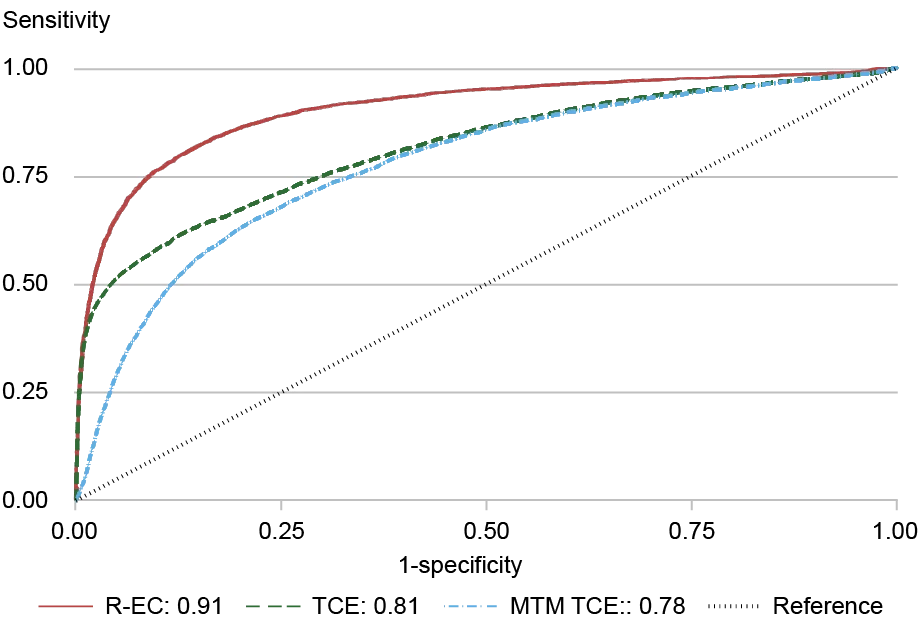
By employing simple logit models across a range of solvency measures, Hirtle and Plosser evaluated R-EC, TCE, and MTM TCE for their predictive power regarding bank failures. Their analysis tracked performance over eight and twelve quarters leading to a bank’s collapse, examining the so-called Receiver Operating Curves (ROCs) for accuracy in classification between failing and stable institutions.
Findings revealed R-EC consistently performed better than its accounting-based counterparts, showcasing steeper curves in the ROCs at both measurement intervals. This unapologetically positions R-EC as a more reliable predictor of impending bank failures, allowing timely intervention before insolvencies manifest.
Implications for Bank Monitoring and Stability
Ultimately, the authors argue that Economic Capital offers critical insights into bank solvency – particularly under adverse conditions like a run on deposits. Where accounting measures base their validation on the enduring assumption of continual operations, EC adapts in real-time to provide insights under actual market stress scenarios, thereby presenting a more realistic picture of a bank’s capacity to meet obligations.
Their research underlines the potential for EC, and particularly R-EC, to enhance monitoring practices of individual banks and provide systemic risk insights for the banking sector at large. By offering timely warnings of financial distress, EC emerges as a vital tool for regulators, investors, and stakeholders concerned with preserving the integrity of the financial system.

Beverly Hirtle is a financial research advisor in the Federal Reserve Bank of New York’s Research and Statistics Group. Matthew C. Plosser was also a financial research advisor at the time this analysis was conducted.