Side A · Liner notes
Understanding the Role of Transformative Entrepreneurs in Economic Growth
Banking · Words by Michael Brown · Released
A new study from Denmark reveals how transformative entrepreneurs drive productivity, highlighting risk factors that policymakers should address.

Recent research by Ufuk Akcigit, Harun Alp, Jeremy Pearce, and Marta Prato examines the factors that distinguish successful entrepreneurs from their peers in driving economic growth. By utilizing an extensive dataset from Denmark, the study unveils patterns in entrepreneur demographics and their impact on productivity. A key finding is the emergence of a small subset of entrepreneurs identified as “transformative,” who significantly enhance productivity through their business practices.

Defining Transformative Entrepreneurs
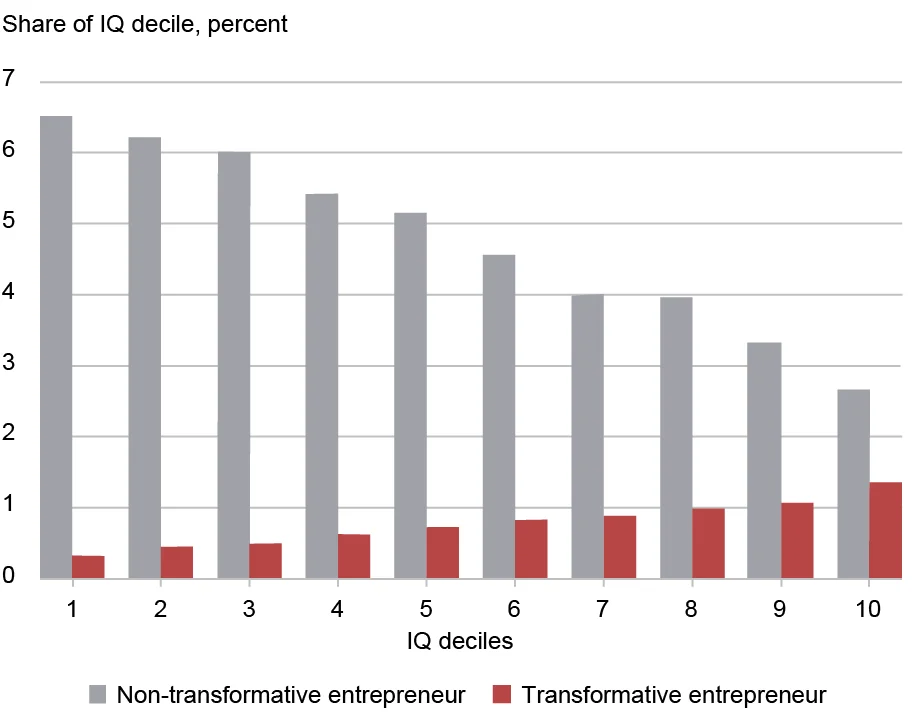
To differentiate between various types of entrepreneurs, the study categorizes them based on their hiring habits related to research and development (R&D). Transformative entrepreneurs are classified as those who employ at least one R&D worker, indicating a commitment to innovation. In contrast, non-transformative entrepreneurs do not hire technical personnel, thus lacking the same degree of focus on innovation.
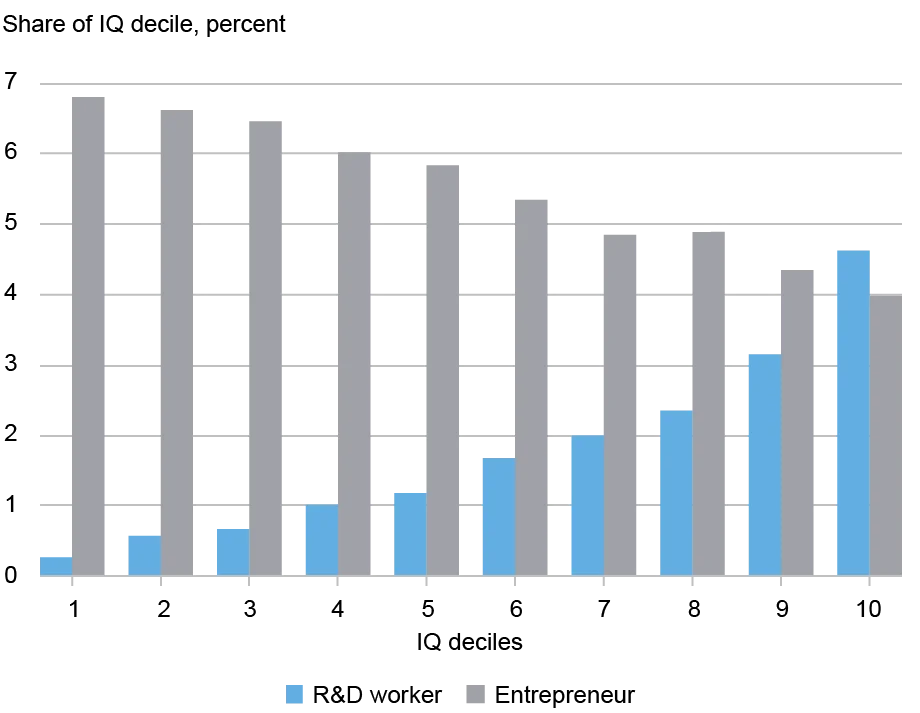
Data from Denmark Statistics serves as the backbone for this analysis. The researchers use IQ test scores from military assessments alongside educational and parental background information to illustrate the correlation between personal attributes and entrepreneurial outcomes. The study asserts that individuals with higher IQs are less likely to become entrepreneurs overall but more inclined to become transformative entrepreneurs.
IQ and Educational Impact
Analysis of IQ distributions presents a compelling narrative. While higher IQ individuals tend to become R&D workers, their presence among entrepreneurs is less pronounced. However, the reverse is true for transformative entrepreneurs; they are predominately found in the higher IQ brackets. This trend persists even when controlling for factors like parental background, education, and age.
Educational attainment emerges as another critical factor influencing entrepreneurial success. Notably, while college graduates are less likely to become entrepreneurs when looking at all entrepreneurs, they are more inclined to establish transformative firms. Given that having entrepreneurial parents significantly increases the likelihood of business ownership, the impact of familial background cannot be overlooked.

Performance of Transformative Firms
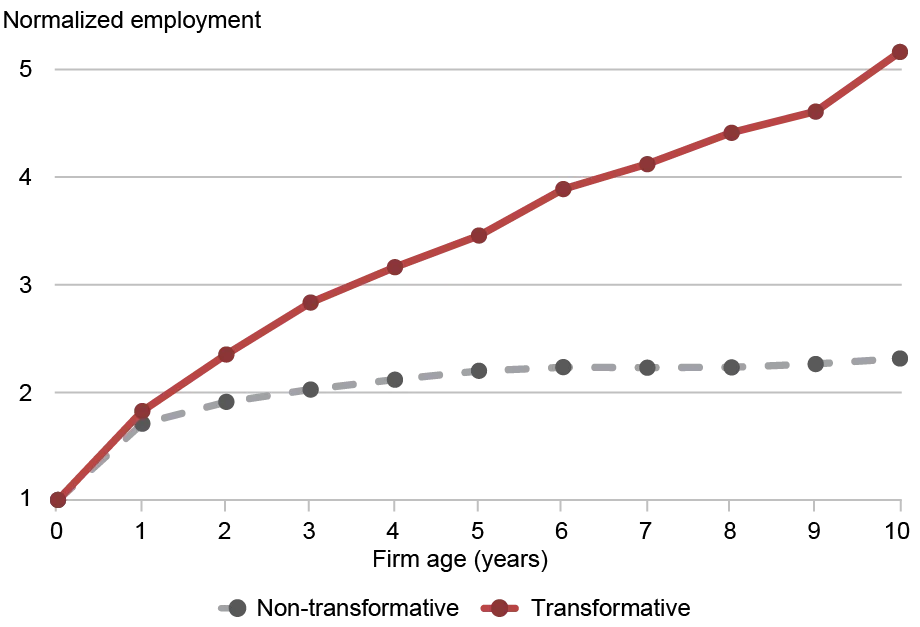
A decade-long observation of firm performance post-establishment reveals distinct differences between transformative and non-transformative entrepreneurs. Firms initiated by transformative entrepreneurs typically exhibit nearly double the employment growth rates—16 percent annually compared to 8 percent for non-transformative firms. Additionally, by the tenth year, transformative firms can achieve revenues up to seven times their initial earnings, whereas non-transformative firms stagnate at a growth rate of 2.5 times their starting figures.

Exit rates show a marginal distinction between these two groups. Early on, 16 percent of non-transformative firms exit in their first year compared to 12 percent for transformative firms, but the rates converge to about 8–9 percent within eight years. This gives insight into the varying degrees of entrepreneurship resilience and market adaptability.

Industry Trends and Skills Sorting
Further examination indicates a clear sorting of entrepreneurs by IQ across different sectors. Low-IQ entrepreneurs are predominantly involved in traditional sectors like trade, transport, and construction, while high-IQ entrepreneurs thrive in knowledge-intensive industries, with the knowledge and communication sectors comprising half of all entrepreneurial activity within the top IQ deciles.

Macroeconomic Implications of Entrepreneurial Patterns
The research employs a quantitative model that illustrates the broader economic implications of entrepreneurship on innovation and growth. This model incorporates variances in personal ability, family income, and early exposure to entrepreneurship, allowing for an in-depth understanding of career trajectories. It asserts that individual educational attainment, which is critical for success in technical fields, is influenced by both innate ability and familial resources.
One of the pivotal insights from this model is the identification of a symbiotic relationship between transformative entrepreneurs and R&D workers. The model reflects the detrimental effects of high thresholds in the transition from production roles to entrepreneurship, thereby highlighting supply-side constraints in the availability of R&D workers. Additionally, demand-side limitations, which stem from the insufficient number of transformative entrepreneurs capable of hiring these skilled individuals, further complicate the landscape.
Policy Recommendations
This research underscores the policy implications surrounding education and support for entrepreneurship. Policies aimed at expanding access to education—particularly for disadvantaged groups—show outstanding potential to boost economic growth. The model indicates that addressing financial constraints in education can elevate the share of R&D workers by 15 percent and transformative entrepreneurs by 7 percent, ultimately leading to an 11 percent increase in economic growth. Notably, the positive effects are most pronounced among high-ability individuals from low-income families.
The analysis of subsidies reveals that investments in technical education are more productive than traditional R&D grants, yielding four times the initial returns by providing access to innovative careers. This illustrates the necessity for a balanced and strategic approach to stimulating both the supply and demand sectors of the entrepreneurial ecosystem.
Conclusions
The findings from this study provide critical insights into the dynamics of entrepreneurship and its varying impacts on productivity and innovation. By demonstrating the stark contrasts between transformative and non-transformative entrepreneurs, this research highlights the importance of supportive policies that foster educational advancements and entrepreneurship opportunities. The lessons extend to innovation ecosystems, suggesting that integrated efforts across multiple facets are essential for cultivating a thriving economic environment.
Through effective collaborations between transformative entrepreneurs and R&D professionals, economies can unlock significant productivity gains and sustain long-term growth.


