Side A · Liner notes
Analyzing Recommendation Letters in Academic Hiring: Insights from Banking Models
Banking · Words by William Brown · Released
A look into how specialized banks' lending models can inform the effectiveness of recommendation letters in the PhD job market.

The process of hiring PhD candidates in academia involves evaluating various signals of a candidate’s potential, particularly through letters of recommendation. Kristian S. Blickle and Cecilia Parlatore propose that insights from specialized banking models can shed light on how these letters function in the academic job market. Their analysis emphasizes the importance of familiarity with the context and author of each recommendation, which affects how these letters are interpreted in the hiring process.

Understanding Specialized Lenders and Credit Quality
In their research, Blickle and Parlatore built a model to analyze the dynamics of lenders and borrowers. This model illustrates that banks specializing in certain industries are better positioned to assess the quality of their borrowers. By repeatedly lending to similar clients, these specialized lenders gather nuanced information about the borrowers that diversified lenders lack. This nuanced understanding allows them to make more informed lending decisions, assess risks more accurately, and ultimately bid competitively for high-quality borrowers.
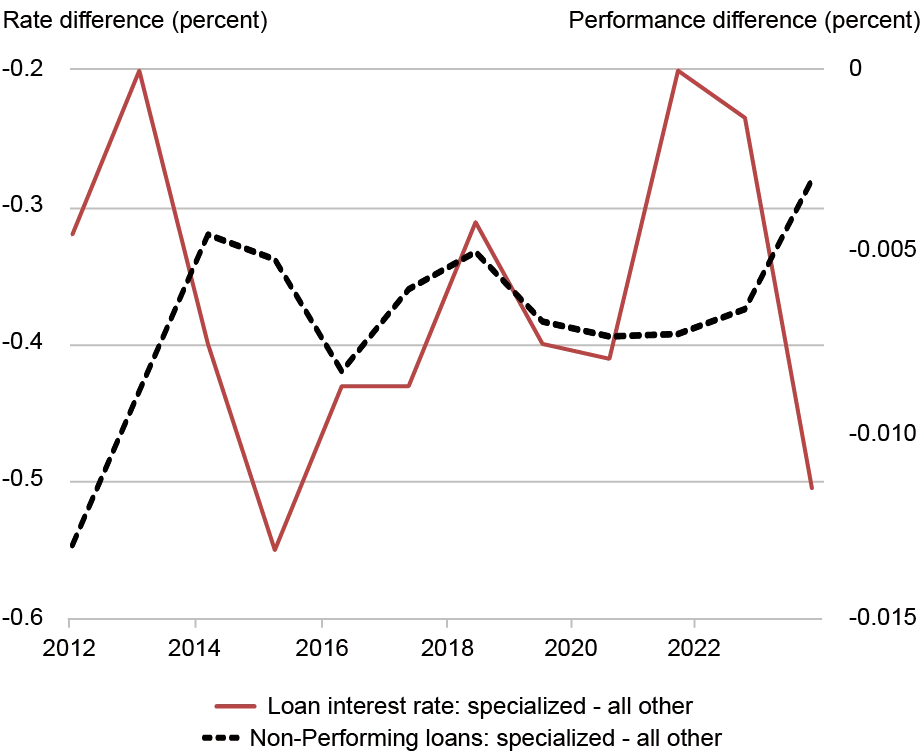
Traditional banking models tend to center on signals of borrower quality but often fail to account for variations in screening capabilities among lenders. By contrast, Blickle and Parlatore’s model aligns more closely with real-world observations, revealing that specialized lenders are capable of offering favorable loan terms, often resulting in lower interest rates and reduced default rates. The empirical evidence backs these claims, showing that loans from specialized lenders tend to yield better outcomes at a given risk level.
Translating Banking Insights to Academic Hiring
Just as lenders analyze borrower quality based on a range of indicative signals, hiring committees assess PhD candidates through recommendation letters. These letters provide insight into a candidate’s work ethic, teaching abilities, and potential future contributions to an academic institution. However, the effectiveness of these letters hinges significantly on who reads them.
The committee members’ familiarity with both the candidates and their referees can greatly affect how the recommendation letters are interpreted. Members who have engaged with specific writers frequently and possess substantial experience in a given field are analogous to specialized lenders. They can discern subtle cues in the letters, effectively filtering out noise and honing in on the essential qualities of the candidate. Conversely, a committee member lacking this context is less likely to accurately assess the strengths or nuances conveyed in the recommendation.
The concept resonates with observations that letters from well-regarded advisors tend to carry additional weight in hiring decisions. This is not solely due to their prestige but also because seasoned readers have honed their ability to extract pertinent signals from such letters.
The Portability of Letters Across Disciplines
Another significant implication is that recommendation letters may have limited portability across various fields or subdisciplines. A letter lauding a PhD candidate in behavioral finance may not resonate equally when assessed by someone from a different academic background, such as industrial organization theory. This differential interpretation underscores the need for specificity in letters to maximize their impact in varied academic contexts.

Competition Among Lenders and the Role of Experience
The banking model highlights that specialized lenders may not always secure a dominant position. They are particularly effective when they can undercut generalist lenders in the bidding process for high-quality borrowers. However, in highly competitive markets or when information is less precise, the advantage of specialization may diminish.
In light of this, hiring committees function similarly; the advantage experienced letter readers have is maximized when they can leverage their insights effectively. The ability to communicate nuanced evaluations from recommendation letters relies heavily on the presence of knowledgeable members within the committee who can distill complex signals to inform their colleagues.
Implications for Recruiters and Aspiring Candidates
Organizations aiming to attract top talent should prioritize cultivating robust relationships with candidates to facilitate more effective letter writing. Committees composed of experienced individuals may enhance the quality of candidate assessment due to their refined ability to interpret recommendation letters. Conversely, PhD candidates seeking to strengthen their applications might consider obtaining letters from well-known and prolific referees, while those with relatively weaker profiles might opt for less established writers.

Ultimately, the hiring landscape in academia could benefit from a strategic repositioning of committee members, favoring seasoned professionals who can navigate the intricate interplay of recommendation signals. This focus may contribute to better hiring practices that identify talent more accurately, further enriching the academic community.
As Blickle and Parlatore conclude, understanding the schema of recommendation letters through the lens of specialized lending can improve hiring decisions and candidate placement, equipping both institutions and applicants with the tools to enhance their respective outcomes in the competitive landscape of academia.

Kristian Blickle serves as a financial research advisor in the Federal Reserve Bank of New York’s Research and Statistics Group.
Cecelia Parlatore is an associate professor of finance at the NYU Stern School of Business.


