Side A · Liner notes
The Challenges and Adaptations of Carbon Tax Effectiveness in Europe
Markets · Words by James Miller · Released
This analysis explores how firms adapt to carbon taxes by seeking low-emission inputs from outside regulated economies, illustrated by the EU's forthcoming carbon tariff.

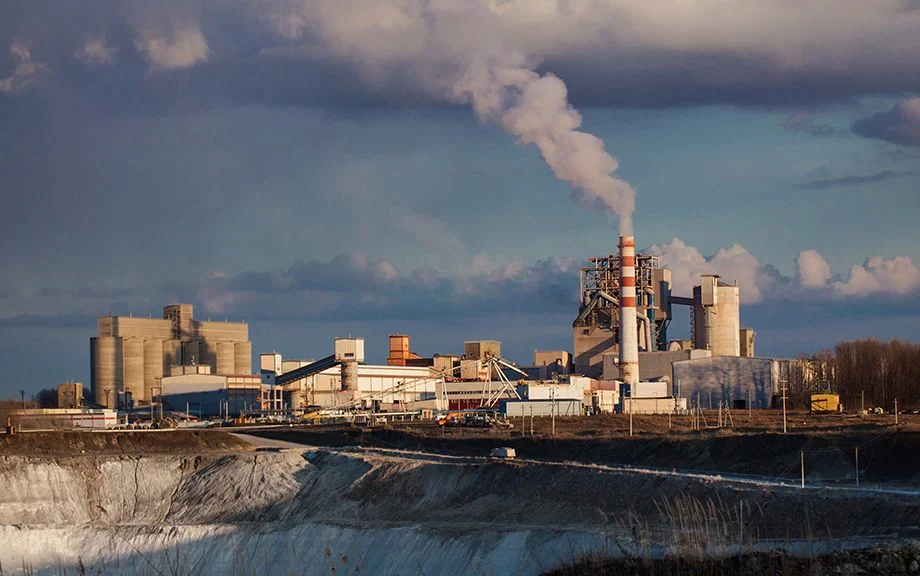
Countries worldwide have adopted carbon taxes and cap-and-trade systems aimed at curtailing greenhouse gas emissions by imposing costs on fossil fuel consumption. These measures are designed to shift firms toward cleaner energy sources; however, they create economic pressures that could lead companies to seek loopholes rather than comply fully. A recent study illustrates such a loophole occurring within French industries, where firms began sourcing high-emission inputs from outside the EU Emissions Trading System (EU ETS), thereby undermining the intended carbon reduction goals.
The EU ETS Framework and Its Evolution
The EU ETS, operational since 2005, regulates emissions from certain high-emission sectors like steel, chemicals, and cement by capping their overall greenhouse gas output. It allows firms to buy and sell allowances, creating a market for carbon emissions. Over time, the EU has tightened these caps through various phases that reflect both policy adjustments and economic trends, with carbon prices showing a generally upward trajectory. For instance, the price of carbon allowances has fluctuated, influenced by regulatory changes and market dynamics, growing significantly since the system's inception.
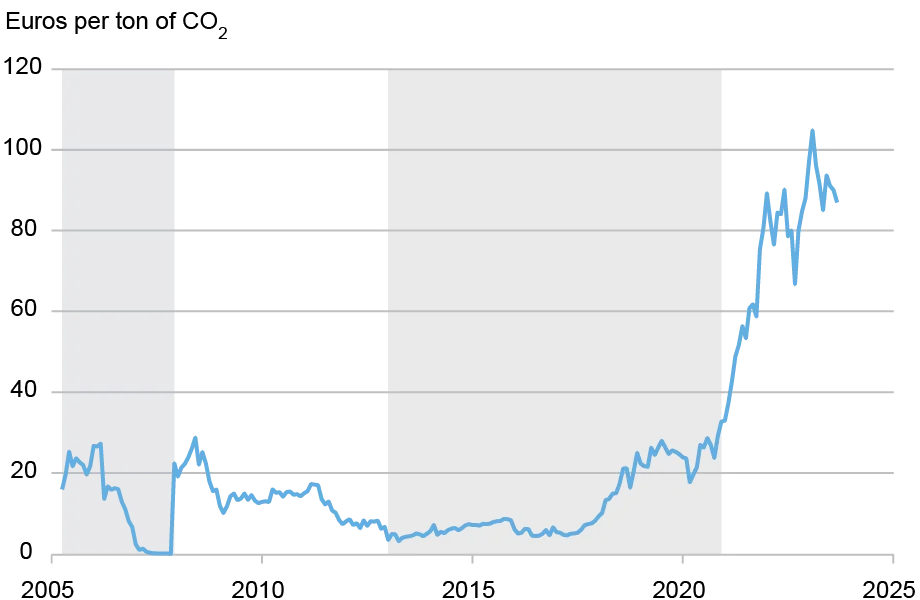
Chart illustrates the evolution of carbon prices over the phases of the EU Emissions Trading System.
Defining Regulated and Unregulated Goods
This analysis used a new dataset distinguishing between regulated and unregulated manufacturing goods based on EU emissions policies. By integrating this classification with French firms' import data, the research scrutinizes patterns in sourcing both regulated and unregulated goods over time. Such analysis aids in revealing the indirect impacts of the ETS on firms by examining their supply chains and the origins of their inputs.
Analysis of Sourcing Strategies
The study leveraged detailed import data to assess how the ETS influenced the sourcing of regulated inputs. The methodology involved examining the import share of specific goods relative to total imports and identifying whether firms began sourcing from new countries. This nuanced approach aimed to capture the increase in imports from non-ETS regions, revealing a significant behavioral shift among firms in response to rising carbon prices.

The estimates indicated a notable uptick in the sourcing of regulated products from outside the EU—an increase of 4.3 percentage points between 2004, prior to the ETS’s implementation, and 2019. Additionally, there was a 3.6 percentage point rise in the likelihood of firms beginning to import regulated goods from non-ETS countries. These figures underscore the trend of carbon leakage, where firms adapt by sourcing inputs with higher emissions from external markets, thereby compromising the EU's carbon reduction efforts.
Implications of Carbon Leakage
This study's findings suggest that domestic carbon policies like the EU ETS may not effectively decrease global emissions. Instead, they can prompt firms to shift their sourcing strategies, resulting in a mere geographical relocation of emissions rather than an actual reduction in total greenhouse gas outputs. This phenomenon of carbon leakage poses significant challenges for policymakers striving for genuine environmental benefits through regulatory frameworks.
Potential Solutions: Carbon Tariffs
As a countermeasure to mitigate carbon leakage, the EU is set to introduce a "carbon tariff" in 2026, formally known as the Carbon Border Adjustment Mechanism (CBAM). This initiative aims to level the playing field by imposing tariffs on imported goods based on their carbon content. Such a strategy may deter firms from seeking lower-cost inputs from non-compliant regions, thus enhancing the effectiveness of domestic carbon pricing mechanisms.

The implications of this impending policy raise questions about its potential impact on international trade dynamics and the responsiveness of firms engaged in high-emission activities. While tariffs can address some of the challenges posed by leakage, they introduce a new layer of complexity in global supply chains and market competition.
Conclusion
The adaptability of firms in an open economy can seriously undermine the effectiveness of domestic carbon policies, as seen in the case of the EU's ETS. As firms navigate rising carbon costs, their sourcing behavior may shift toward non-regulated sources, leading to global emissions that remain unchanged. The introduction of carbon tariffs may provide a solution to curb this leakage; however, it also requires careful consideration of the broader implications for international trade and environmental policy compliance.
This discourse highlights the necessary balance between effective carbon pricing mechanisms and adaptive corporate strategies in a global market, emphasizing the need for continuous policy evolution to achieve meaningful emission reductions.
Pierre Coster is an economics Ph.D. student at the University of Southern California.
Julian di Giovanni is an economic research advisor at the Federal Reserve Bank of New York.
Isabelle Mejean is a professor of economics at Sciences Po.


