Side A · Liner notes
Worker Preferences on Gender Composition in the Workplace: New Insights
Banking · Words by Rachel Schuh · Released
Recent research reveals that both women and young single men prefer jobs with at least half female coworkers, shedding light on workplace demographics.

Recent research has brought new insights into workforce preferences regarding gender composition, revealing significant trends among men and women. Traditionally, analysis of workplace diversity has centered on broad occupational segregation and amenities like flexibility. However, the sex make-up of a work environment is an often-overlooked factor influencing job choices.

Understanding Preferences for Workplace Composition
A study by Rachel Schuh, a research economist at the Federal Reserve Bank of New York, utilizes a survey experiment to assess worker preferences for the gender mix in various occupations. The research highlights stark contrasts in preferences based on sex and demographic factors, underscoring how nuanced these preferences can be. For instance, the data indicates that women and younger single men exhibit a preference for jobs featuring at least a 50% female workforce.
Measuring such preferences poses challenges. Observational data makes it difficult to isolate individual preferences from underlying hiring practices and industry standards. The overlap between workers' choices and firm demographics complicates this further. For example, do women gravitate towards part-time jobs out of personal preference, or are they simply reflecting the limited part-time availability in fields predominantly occupied by women? These questions illustrate the intricacies involved in unpacking individual preferences in a workplace.
Methodology of the Study
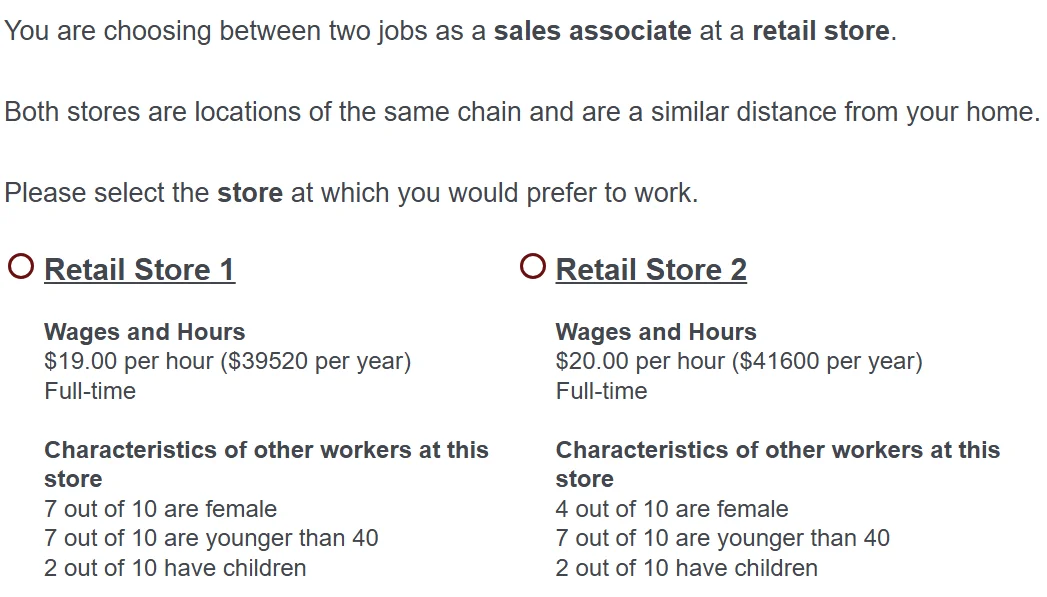
Through a hypothetical job choice experiment, Schuh sought to quantify preferences tied specifically to workplace gender composition. Respondents engaged in decisions between pairs of jobs with identical roles but varying wage scales and demographic compositions. Survey areas included professions such as teaching, sales, nursing, and software engineering, ensuring a diverse range of scenarios.
One illustrative example from the survey presents two job offers for a sales associate position, each exhibiting different sex ratios among coworkers. By focusing on controlled variables, Schuh was able to extract insights on individuals’ preferences regarding gender composition without the confounding factors that would typically accompany such analyses.
Willingness-to-Pay Analysis
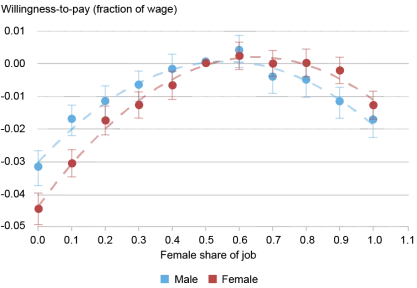
A significant finding from the research revolves around the estimated willingness-to-pay (WTP) for varying female representation in the job market. Resulting data indicates that women exhibit a -3% WTP for positions with only 10% female representation compared to those with a 50% representation. In practical terms, this suggests that for women to consider lower-female composition jobs attractive, they expect a higher wage premium.

The willingness-to-pay profile constructed in the study reveals that women actively prefer occupations with female majorities, conveying negative WTP for positions where men dominate. Interestingly, this trend appears flat beyond the 50% female mark, indicating that while they value women’s presence, additional cohorts of women in the workplace beyond half provide little incremental value.

Conversely, men also depict a negative WTP for majority-male roles. This inclination shifts as the gender balance approaches parity, although men generally show a slight aversion to majority-female positions compared to women’s preferences. This data suggests that while men might not have as strong a preference as women for a certain gender mix, they still prefer some balance in the workplace environment.

Preference Heterogeneity
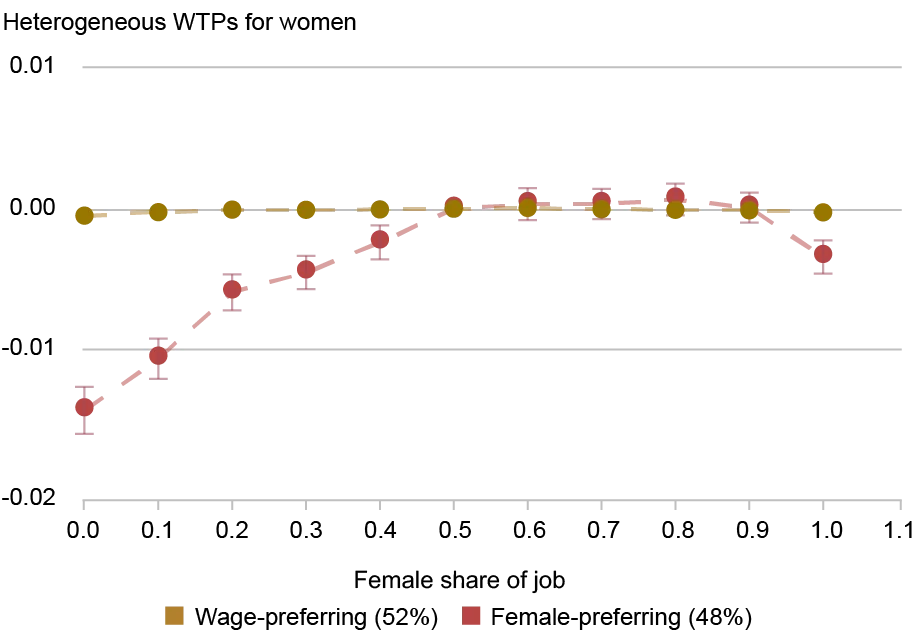
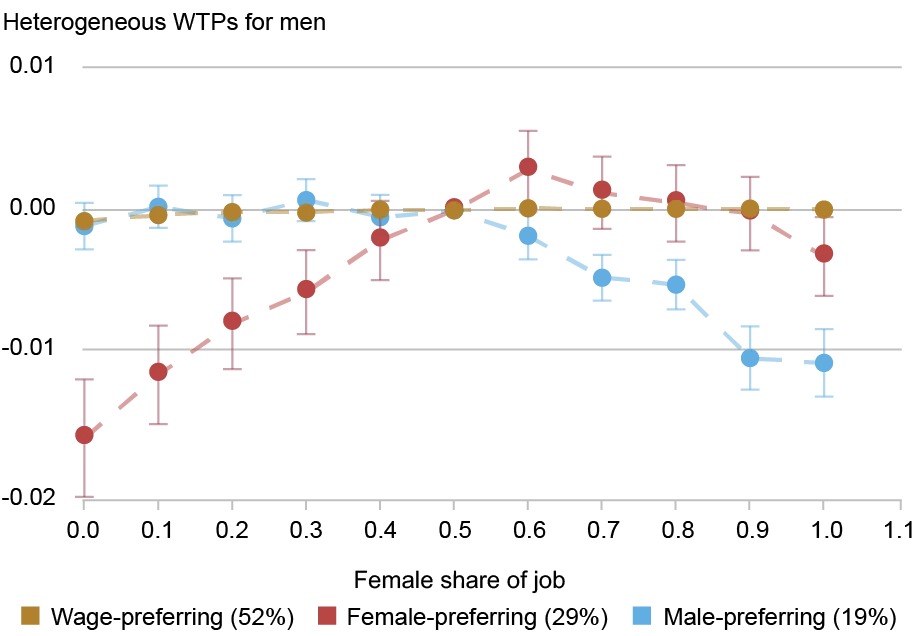
Notably, the study reveals significant heterogeneity in preferences for sex composition. Approximately 50% of respondents, both male and female, displayed indifference towards the gender of their coworkers, favoring positions offering higher wages above all else. Meanwhile, segments of the respondents preference skirts between majority-female or majority-male workplaces, demonstrating diverse motivations and attitudes around workplace gender diversity.

Older respondents, particularly women, tend to express greater preferences for female coworkers. This trend could be attributed to historical exposure to stricter gender norms, or perhaps evolving preferences as individuals mature. Understanding these dynamics could provide insights into shifting workplace norms and expectations.
Demographic Factors Influencing Preferences
Schuh’s research further explores how demographic factors shape preferences. For example, younger, single men have shown a notable inclination towards female-dominated workplaces, which suggests potential social motivations like workplace romance. This could open avenues for future studies investigating the complex interplay between workplace composition and interpersonal relationships.
Overall, the insights garnered from this research illuminate critical aspects of workplace gender dynamics that are likely to impact hiring, corporate culture, and talent retention strategies in the future. Establishing a balance between diverse sexual representations could play a vital role in attracting and retaining talent across various sectors. As organizations seek to bolster retention and satisfaction among employees, understanding these nuanced preferences will be key in shaping inclusive work environments moving forward.
To read the full details of the study and explore the implications of these findings, refer to the comprehensive paper published in the Federal Reserve Bank of New York’s research series.


