Side A · Liner notes
Firms Anticipate Lower Inflation in 2026 Following 2025 Price Increases
Banking · Words by Richard Davis · Released
A recent survey indicates businesses expect inflation rates to stabilize at 3% in the near future, reflecting a drop in inflation expectations compared to last year.

Amid fluctuating economic conditions, businesses in the New York-Northern New Jersey region faced notable cost pressures throughout 2025, leading to heightened price increases. A recent analysis reveals that, after a period of moderation, firms resumed raising prices significantly last year, particularly in the manufacturing sector. Notably, average price increases for service providers reached 5.0%, up from 4.1% in 2024, while manufacturing firms recorded an increase of 6.0%, nearly doubling from 3.3% a year earlier.

Price Surge in 2025 and Future Expectations
The escalation in pricing comes after a lull observed during 2023 and 2024, suggesting businesses have been reacting to various constraints. These include rising insurance premiums, surging utility costs, and tariff-related expenses affecting both goods and materials. Businesses had anticipated price adjustments, but the actual increases surpassed the projections from manufacturing firms, who had forecast an average increase of 5.4% for 2025—a number that now looks significantly conservative in hindsight.
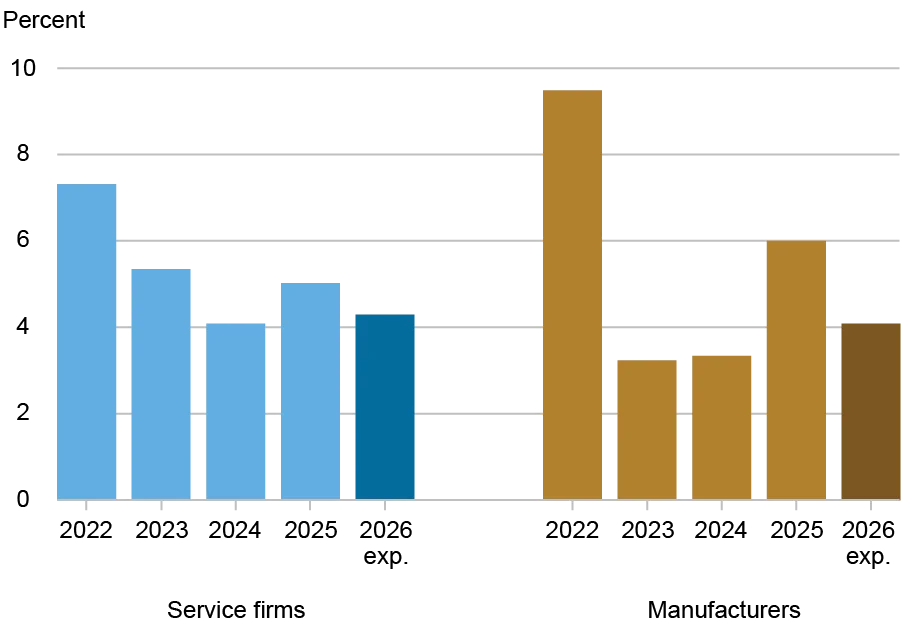
What's interesting is that this wave of price hikes doesn't just occur in isolation. It's a reflection of broader economic forces and expectations. In the wake of increased costs, businesses will likely adopt different pricing strategies. For example, firms might consider exploring efficiency improvements or updating supply contracts. A more tempered inflationary environment, as firms expect for 2026 with a projected dip to just above 4%, points towards volatility in the pricing strategies they may employ.
Falling Inflation Expectations
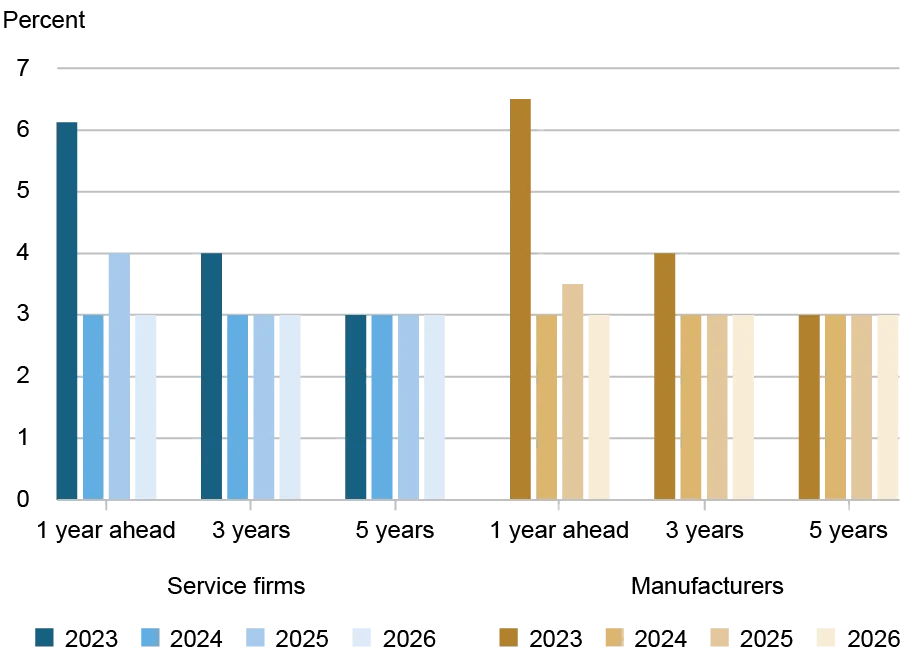
While businesses experienced an uptick in prices last year, their inflation forecasts exhibit a noteworthy decline. The median year-ahead inflation expectation among firms slid to 3.0% in early 2026, paralleling the forecast levels seen in 2024. This represents a significant decrease from the previous year’s expectations of 4.0% among service firms and 3.5% among manufacturers. Such a shift in mindset speaks volumes about how businesses assess both the current market and their future outlook.

This trend aligns with consumer inflation expectations, also reflecting a drop to around 3%. This correlation indicates a stabilizing belief among consumers and businesses alike that inflationary pressures may not persist as previously feared. If you're working in this space, you'll want to keep an eye on how this consensus forms, as it could influence spending behavior across a range of sectors. The perception that tariff-induced cost increases in 2025 were temporary adjustments rather than signals of sustained inflation is a noteworthy development in these discussions. Businesses are likely hoping they can weather this storm without making permanent changes to pricing structures.

Long-Term Inflation Projections Steady
Interestingly, long-term inflation expectations remain anchored at approximately 3.0% over three- to five-year horizons. This stability in long-term outlooks suggests that firms aren't adjusting their pricing strategies or wage expectations in a way that might contribute to persistent inflation. In fact, if firms believe inflation will remain subdued, they're less likely to implement significant wage increases or steep price hikes, which could lead to a self-fulfilling prophecy of inflation. This cautious stance from businesses is important. It indicates a sentiment that aligns with the central bank's goals of maintaining stability and controlling inflation effectively.

This anchoring effect is pivotal as businesses' inflation outlook influences wage negotiations and pricing strategies. Commitments on wage levels can have significant implications: higher wages lead to increased costs, which must be passed onto consumers eventually. If firms successfully keep wage hikes modest, it may help prevent an inflation spiral from taking hold that many economists warn about. But this balancing act is delicate—market psychology can shift rapidly, so continued attention is required.

Market Insights and Economic Implications
The recent behavior of inflation expectations illustrates a complex relationship between immediate pricing pressures and longer-term forecasts. Businesses have faced mounting costs, leading to price increases, yet many are taking a cautious approach regarding what this will mean for future inflation. This is more significant than it looks; market dynamics are often influenced by perceptions. Analysts will be watching how these dynamics unfold in the upcoming quarters. Increasingly cautious about passing on costs, particularly in a fiercely competitive market, companies may prioritize absorbing costs to maintain market share.

The implications of these findings extend beyond the firms themselves; shareholders, employees, and consumers will all be affected by how inflation expectations shift over time. If businesses manage to navigate these challenges without inducing chronic inflation, market stability can be maintained. This is about more than just numbers; it's about economic resilience. If companies can effectively transmit consumer confidence alongside price stability, this could usher in a more balanced market environment.
Future Outlook: Implications and Significance
The interplay between current costs and future predictions will remain a critical area for observation as the economic environment continues to shift. Some analysts may view the recent drops in inflation expectations with skepticism, arguing that while current signs appear favorable, underlying economic vulnerabilities persist. Tariff complications, labor shortages, and geopolitical risks still loom large. And yet, this cautious optimism from industry players may hold the key to understanding potential economic recovery paths.

If these firms can recalibrate their expectations without falling prey to knee-jerk reactions—like excessive price increases or wage demands—it could signal a more sustainable economic recovery. What this means for you is simple: understanding these trends will be key for navigating future investments and decisions. As businesses adapt, the market will respond, and those who pay close attention may find opportunities in the disruptions that lie ahead.