Side A · Liner notes
Rising Health Insurance Costs and Their Impact on Wage Growth: An Analysis
Banking · Words by John Miller · Released
Employer-sponsored health insurance costs are rising sharply, impacting wage growth across various sectors, as firms struggle to manage escalating expenses.

Employer-sponsored health insurance is a significant part of worker compensation in the U.S., which has seen costs rise by nearly 20 percent over the past five years. The average annual premium for family health insurance coverage reached approximately $27,000 in 2025, matching the annual salary of a full-time employee earning $15 per hour. Recent surveys conducted in February by the Federal Reserve Bank of New York revealed that businesses stated health insurance expenses had risen, on average, more than 13 percent this year. Such increases have affected businesses' ability to raise wages, with firms indicating they would have increased wages by nearly an additional percentage point without these rising costs.

Wage Growth Trends
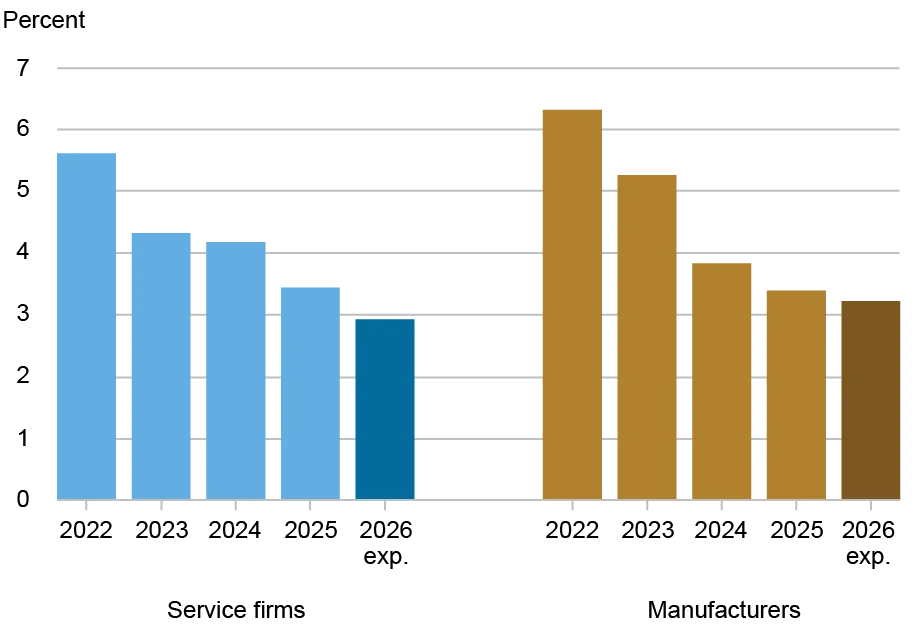
The regional business surveys indicated a notable deceleration in wage growth since 2022. Service firms reported a wage increase decline from 5.6 percent in 2022 to just 3.4 percent in 2025. Manufacturers experienced a similar trend, with wage growth dropping from 6.3 percent in 2022 to the same 3.4 percent by 2025. Expectations for the coming year suggest further slowing; service firms anticipate a rise of only 2.9 percent while manufacturers project 3.2 percent.

Visualizing Wage Growth Trends

The Links Between Health Insurance Costs and Wage Growth
Despite the slowdown in wage growth, health insurance remains a critical component of total labor costs. Around three-quarters of service firms and 90 percent of manufacturers in the surveys provide health insurance. While wage increases have been muted, health insurance costs surged, with the Kaiser Family Foundation reporting a near 6 percent hike in 2025 and an expected 11 percent increase in 2026. This trend parallels the 13 percent rise indicated by surveyed businesses as their insurance policies renewed.

The primary drivers of this escalation include increased hospitalization and physician care costs, along with expensive treatments such as GLP-1 prescriptions. Businesses are managing these surging costs in several ways. Some companies are passing increases onto customers via higher prices, while others have chosen to absorb costs through reduced profit margins. Additionally, firms have indicated a mix of cutting health insurance coverage, increasing employee contributions, and reducing wages.

To understand the causal relationship between rising health insurance prices and wage growth, firms facing higher insurance costs were asked how wages might have changed in a hypothetical scenario where those costs remained stable. The results suggest that, absent these rising costs, wage growth at service and manufacturing firms could have been notably higher, by about 1 percentage point, which signifies a considerable drag on wage increases.

Hypothetical Wage Increases Without Health Cost Pressures

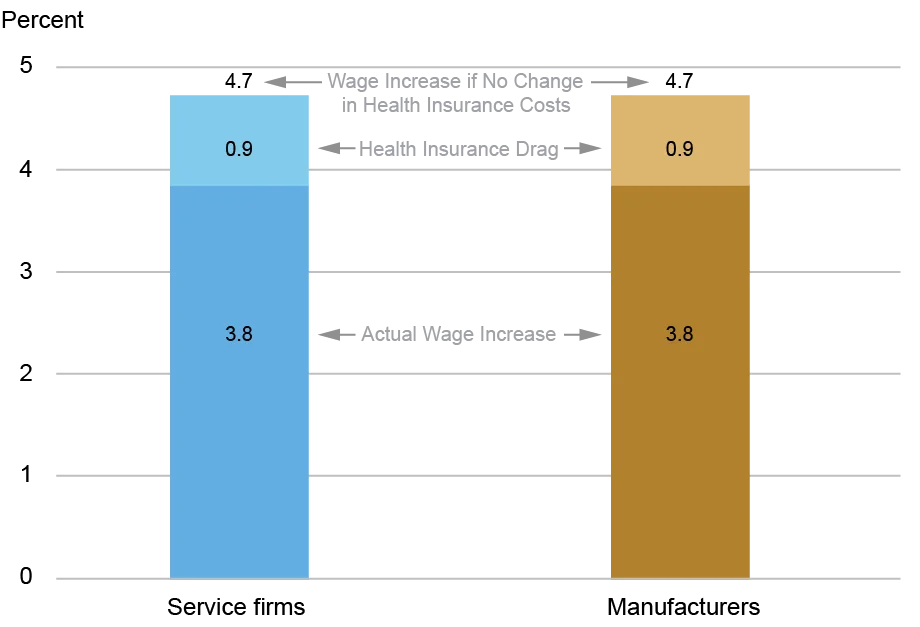
Around firms experiencing increased health insurance costs, wage growth averaged 3.8 percent—slightly above the overall average of 3.4 percent reported in the surveys. However, these businesses suggested they would have implemented wage growth of roughly 4.7 percent had insurance costs remained stable. This disparity reflects a 20 percent reduction in potential wage growth due to rising health insurance costs, demonstrating the tangible impact on workers’ compensation.

Understanding Labor Cost Dynamics
The growing burden of health insurance expenses is suggesting a pressing reality: the total cost of employing labor is increasing faster than what wages indicate. This trend may strain profit margins and elevate the overall expense of labor significantly more than simple wage bills would imply. While not all firms offer health insurance, those that do appear to face increased financial pressure, limiting the wage growth capacity for many employees, thus indicating a broader economic concern.

In conclusion, the ramp-up in health insurance costs presents challenges for business owners and workers alike. As firms grapple with these rising costs, their inability to provide competitive wage increases could further complicate labor market dynamics and employee satisfaction. Close observation of this trend is crucial for understanding its implications for both wages and long-term economic growth.
Authors:
Jaison R. Abel, Head of Microeconomics, Federal Reserve Bank of New York
Richard Deitz, Economic Policy Advisor, Federal Reserve Bank of New York
Nick Montalbano, Data Analytics Specialist, Federal Reserve Bank of New York


