Side A · Liner notes
Impact of Sports Betting Legalization on Consumer Financial Health and Credit Delinquency
Banking · Words by Jacob Goss and Daniel Mangrum · Released
Legalized sports betting has drastically increased wagering activity and led to rising consumer credit delinquency rates, with wider implications for states, both legal and illegal.

Since 2018, more than thirty states have embraced mobile sports betting, culminating in over half a trillion dollars in wagers. A recent Staff Report from researchers Jacob Goss and Daniel Mangrum examines the ramifications of this legalization on household financial health. By analyzing betting activities and consumer credit outcomes across states, the study highlights significant financial trends resulting from expanded betting access.

Increased Spending at Online Sportsbooks
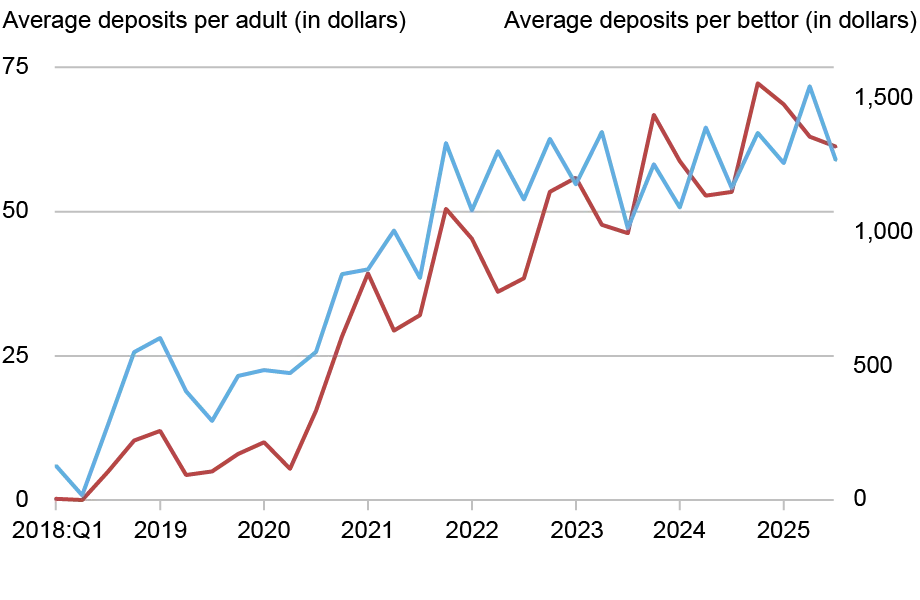
The legalization of sports betting has led to a dramatic upswing in online betting activity, with spending at online sportsbooks increasing approximately tenfold. Data from anonymized transaction-level consumer spending has been analyzed at a county-quarter level to evaluate spending patterns. The findings indicate a notable uptick in average deposits post-legalization. In the chart presented, average deposits per adult rose steeply after mid-2020, displaying seasonal trends that correlate with the National Football League season, and continued this upward trajectory through 2025. Notably, deposits per bettor have stabilized, suggesting that sustained growth is predominantly driven by increased participation rates rather than increased spending from existing bettors.
Border Effects of Betting Access
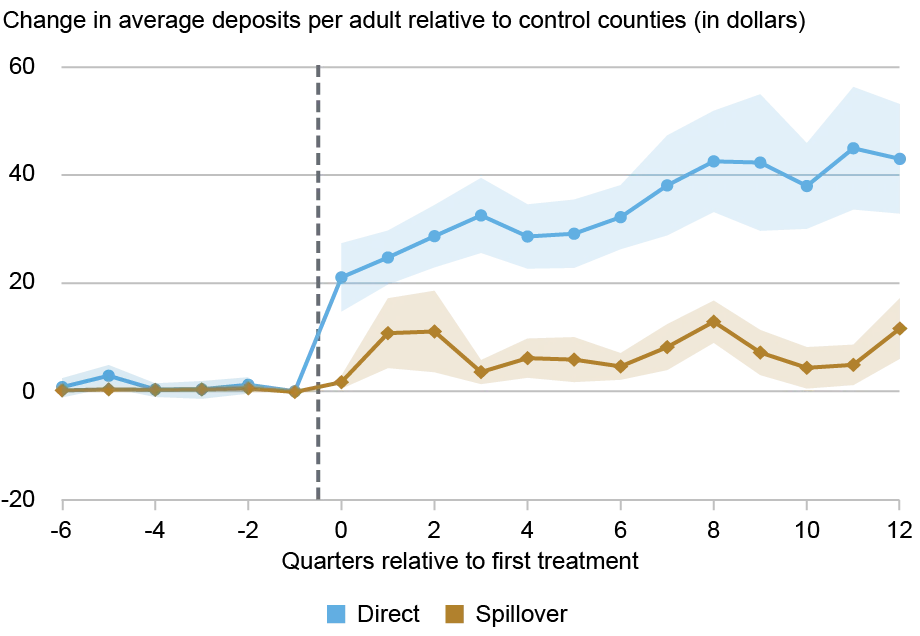
Another crucial aspect of this analysis is the interaction between states regarding sports betting access. Potential bettors need only be physically present in a legal state to place wagers, enabling residents of illegal betting states to cross borders for betting. Using a two-pronged approach, the study divides the data into three distinct categories: direct treatment counties located in legal states, spillover counties situated near legal states but remaining illegal, and control counties further away. On average, deposits per adult have seen substantial increases, with immediate post-legalization effects leading to an approximate $30 increase per quarter, growing to about $40 after three years. Notably, spillover counties, while experiencing a marked increase, see only about 15 percent of the direct effect, highlighting the financial migration trends affecting those near legal betting areas.
Implications for Consumer Credit Health
The report also delves into credit delinquencies using the New York Fed Consumer Credit Panel, providing a deep dive into how legalization impacts financial health. The data reveals an increasing delinquency trend following legalization, surpassing a half-percentage point increase three years post-legalization from a baseline of 10.7 percent of residents being at least ninety days past due on any account. This rise in delinquencies affects younger borrowers significantly more than other demographics, with under-40 borrowers seeing a 1.02 percentage point rise in credit card delinquencies and a 0.55 percentage point increase in auto loan delinquencies.
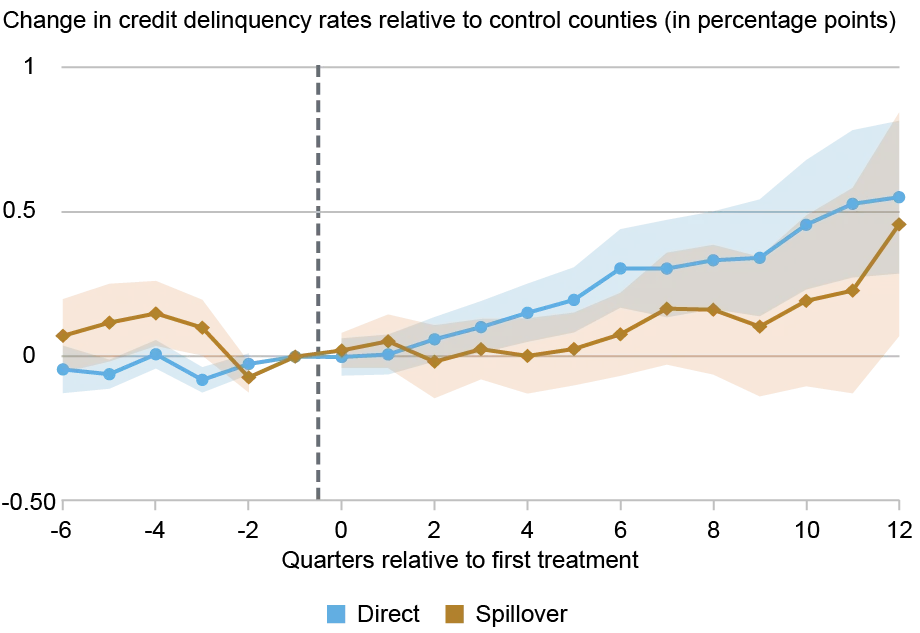
Despite only around 3 percent of the population engaging in sports betting after legalization, focusing on just these new bettors reveals a staggering increase in delinquency rates. The implied increase conditional on betting take-up jumps to 10 percentage points, essentially doubling the baseline rates. This underscores the link between participation in sports betting and financial distress, particularly among young adults.

Consequences for States Without Legal Sports Betting
The implications of these findings extend beyond states where sports betting is legal. States that have not legalized betting experience social and economic fallout as residents cross into legal states to gamble, consequently dragging financial challenges back home. These trends suggest that the effects of legalized sports betting propagate far beyond borders, affecting local economies and community credit stability. As states with legalized betting collect substantial tax revenues—reportedly nearing $3 billion in tax revenue in 2024 alone—they may mitigate some negative impacts of increased delinquencies, while their illegal neighbors lack similar financial buffers.

This economic dynamic might drive states without legal betting to reconsider their policies. The lack of compensating tax revenues in illegal states presents a potent challenge, as they contend with the costs of increased credit distress without the fiscal benefits that legalization provides. Therefore, the disparities in financial health between neighbor states could incentivize states to pursue legalization, especially those with significant population centers near legal betting states.
In conclusion, the recent expansion of legalized sports betting rapidly alters financial landscapes and consumer behavior in affected states. Beyond revenues and expenditures, the elevated rates of delinquency, especially among younger borrowers, raise important considerations for policymakers and financial institutions. Addressing the dual concerns of promoting responsible betting while managing growing financial risks will be essential as this sector evolves. Stakeholders should closely monitor these trends for any significant changes, as the state of consumer credit continues to adapt in response to the nationwide betting changes.