Side A · Liner notes
Assessing AI's Impact on Labor Demand Through Job Postings
Banking · Words by James Johnson · Released
Recent analysis of job postings indicates that the influence of AI on labor demand is limited, with no significant changes linked directly to the release of ChatGPT.

As the implementation of generative AI tools gains momentum, understanding their impact on labor demand becomes increasingly critical. In exploring this relationship, researchers Audoly, Guerin, and Topa investigate the extent to which job postings reflect changes in hiring trends attributed to AI. By analyzing U.S. job-posting data from Lightcast—including listings from corporate career pages, job boards, and aggregators—they assess whether occupations exposed to AI have seen a pronounced decline in hiring following the late 2022 rollout of ChatGPT.

Understanding Job Exposure to AI
The researchers employ a task-level AI exposure metric developed by Anthropic, which categorizes job activities based on their susceptibility to automation by AI. This measure encompasses detailed descriptions from the O*NET database and evaluates each task through three criteria: the potential for AI to complete the task, actual observed usage in AI applications, and whether the AI is primarily used to automate rather than augment work. Tasks that lean more toward automation receive higher exposure scores, which are then aggregated to create an occupation-level exposure metric on a scale from 0 to 1.
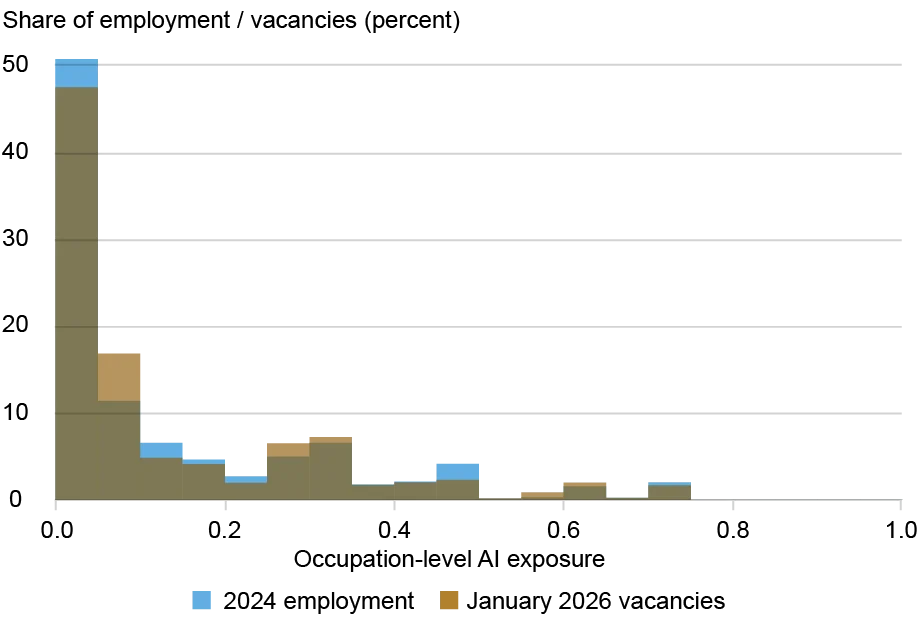
Counter to the expectations that high AI exposure might lead to fewer job postings or layoffs, firms in the New York Fed's Second District report more instances of retraining workers in AI-affected roles compared to reducing hiring. Even when parts of a job are highly susceptible to AI, the overall role may not see significant changes. Analysis of job exposure reveals that only a small segment of the workforce—less than 10%—is engaged in high AI exposure roles, while around 40% remains in positions with no exposure at all. This raises questions about the overall impact of AI on industry hiring patterns.

Examining Job Postings for Evidence of AI Impact
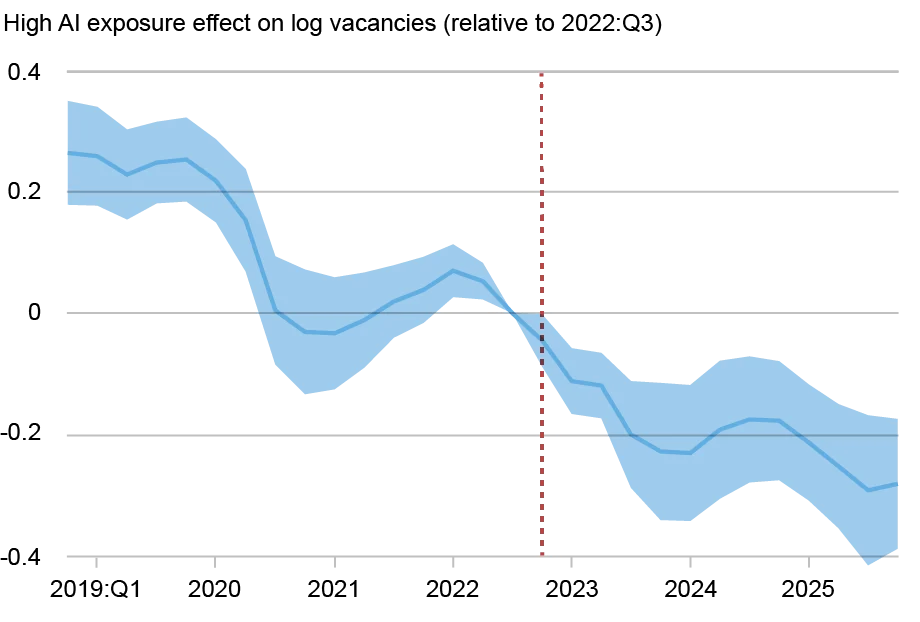
The study conducts an event analysis comparing job postings for occupations with high versus low AI exposure before and after ChatGPT's release. High-exposure jobs are defined as those with an AI exposure score of at least 0.2. The analysis establishes that job postings in high-exposure roles did not exhibit a distinct decline following the release of ChatGPT, as reductions began even before late 2022.

Graphical data illustrates that for high-exposure occupations, the trajectory of job vacancies dipped before the introduction of ChatGPT, challenging the notion that AI adoption is solely responsible for hiring declines. If AI were a decisive factor, one would expect consistent trends in job postings across different occupations prior to the launch. The data, however, displays significant hiring patterns that display stability post-COVID, further complicating the attribution of job posting trends to AI directly.

The Burgeoning Focus on Entry-Level Jobs
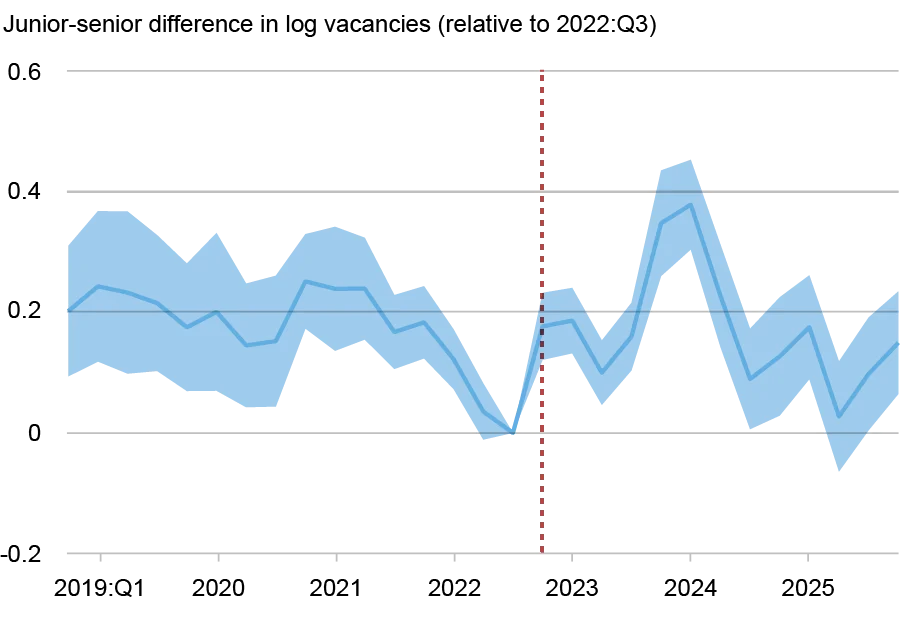
Much discourse surrounding AI's impact has concentrated on entry-level labor markets. The evidence suggests a decline in younger workers in high AI exposure jobs correlating with the timing of ChatGPT's launch. Yet, newly collected data shows that demand for both junior and senior positions in high-exposure occupations fell sharply overall—indicating that the effects of AI are not limited to entry-level roles.
In a further analysis of junior versus senior positions within high-exposure occupations, researchers found no substantive difference in hiring trends post-2022. If AI were to disproportionately affect entry-level jobs, the expectation would be that postings for junior positions decline relative to senior roles considerably. However, the observed data do not support this assumption, showing parallel demand fluctuations for both roles despite AI integration into workflows.

Final Insights and Future Considerations
The overall decline in hiring since 2022 cannot be singularly attributed to AI. The New York Fed’s business surveys suggest firms primarily aim to retrain their existing workforce rather than resorting to widespread layoffs. The data corroborate that evidence of precipitous declines in high AI exposure job postings initiated prior to the advent of ChatGPT and that there is no evidence of disproportionate damage to entry-level jobs.

In summary, the findings suggest that while generative AI is certainly influencing the labor landscape, its immediate effects are subtle and complex. Market stakeholders should remain vigilant to the evolving dynamics of AI within workforce conditions while refraining from oversimplified conclusions regarding AI's role in current labor demand challenges. Understanding these nuanced interactions will be invaluable as industries adapt to accommodate the integration of technological advancements.
Overall, this research hints at the ongoing interplay between technology evolutions and labor market dynamics and underscores the complexity involved in linking AI advancements to immediate changes in employment trends.


