Side A · Liner notes
Interest Rate Caps Lead to Credit Reallocation: Impact on Safer Borrowers
Banking · Words by John Martinez · Released
Interest rate caps in several states have shifted lending practices, resulting in reduced credit for high-risk borrowers and increased lending to safer ones.

Recent interest rate caps aimed at protecting borrowers have stirred significant changes in lending patterns across various states. A study released by researchers from the Federal Reserve Bank of New York investigates the aftermath of these caps in Illinois, South Dakota, and North Dakota, states that imposed a 36 percent cap between 2016 and 2022. The findings reveal unintended consequences that have shifted credit allocation from higher-risk to more creditworthy borrowers.

Understanding Credit Rationing and Reallocation
Textbook economics suggests that imposing usury limits often results in credit rationing for riskier borrowers, who are typically denied access to loans as lenders adapt to the new regulations. Nevertheless, the phenomenon of credit reallocation—where lenders adjust their risk profiles—is less straightforward. If extending credit to safer borrowers under a capped interest rate proves more lucrative, one may wonder why lenders didn't prioritize these borrowers before the cap was enacted.
One possible explanation lies in the limited capital available to lenders. Many institutions may have previously focused on higher-risk borrowers due to profitability prospects, yet when caps are introduced, they may prefer to shift their focus to slightly more creditworthy applicants. This behavior has historical underpinnings; as noted in an analysis by Blitz and Lang (1965), a similar reallocation of credit occurred when usury limits were enforced in the past.
Adam Smith himself supported the idea of usury limits, arguing for a flow of credit directed towards prudent borrowers instead of those considered financially reckless. Historical evidence, such as findings by Hodenborn, illustrate that restrictions on loan rates have historically prompted lenders to favor safer options at the expense of higher-risk borrowers.

Research Findings
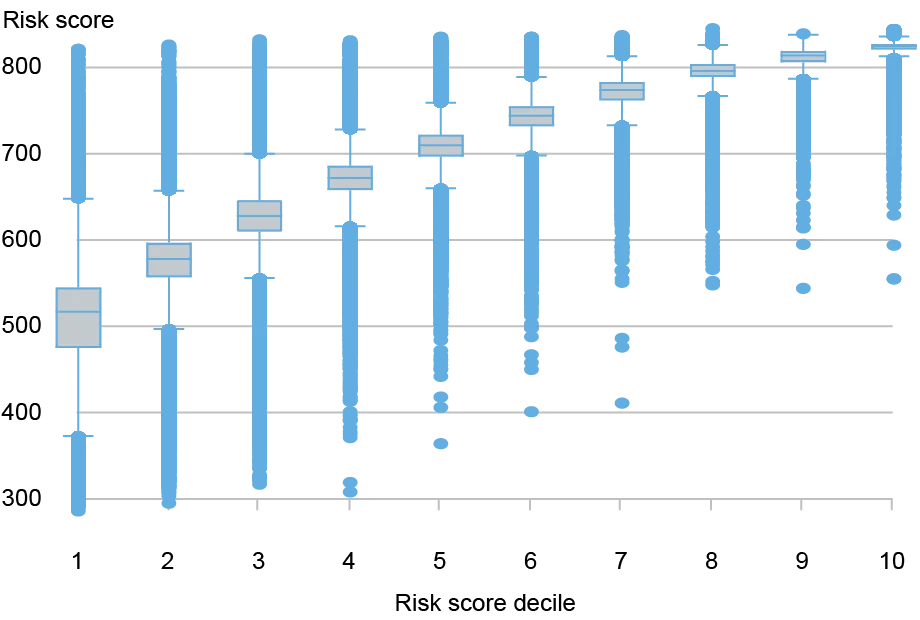
The study assessed lending behaviors by analyzing data from the New York Fed Consumer Credit Panel/Equifax, which provides insight into the credit profiles of approximately 35 million households. By evaluating Equifax Risk Scores—ranging from 350 to 800—the researchers mapped how borrower creditworthiness changed before and after the interest rate caps were implemented.

Data trends indicated a significant concentration of lower risk borrowers after the caps took effect. In particular, while high-cost lenders previously focused on high-risk clientele, the regulatory caps forced a pivot towards borrowing patterns that favored relatively safer borrowers. The median risk score in the lowest risk decile approached 518, approximately 150 points below the prime score line, illustrating the steep decline in access experienced by those with poor credit standings.

Furthermore, as lenders diverted more funds towards the third risk score decile—where scores hover around 620—the gap between previous lending practices and current adjustments became evident. The increased borrowing among these moderately risky borrowers suggests that credit markets are now prioritizing those who fall closer to the prime category, leaving traditional high-risk borrowers with dwindling options.

Quantitative Analysis of Lending Patterns
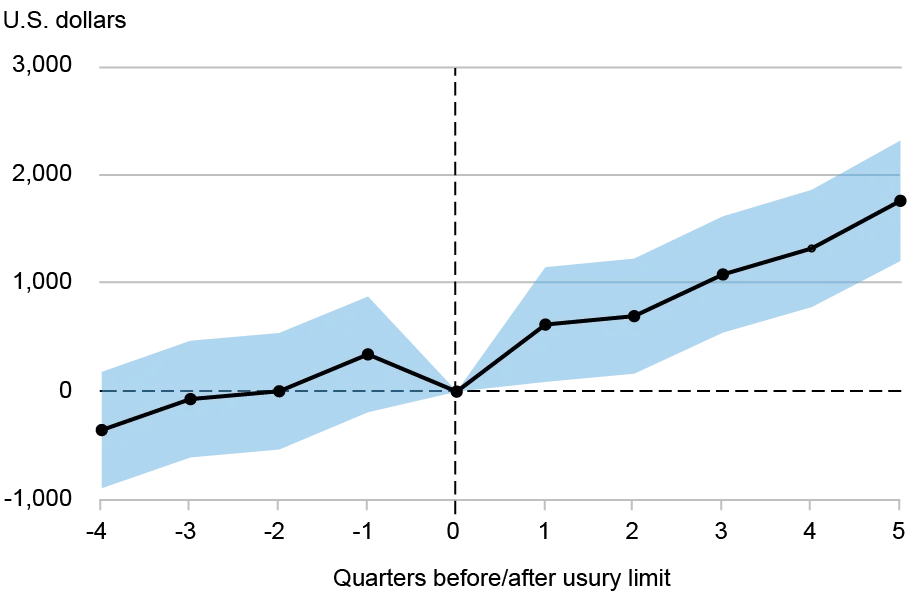
The study presents graphs illustrating the increase in borrowing for the third, fourth, and fifth risk score deciles subsequent to the caps' implementation. This evidence aligns with observed trends, where increases among these creditworthy groups appeared to counterbalance the reduction in lending to less desirable borrowers. As a result, there is a notable decline in overall borrowing amongst the lowest score decile, highlighting the trade-offs that permeate the lending landscape.

Aggregate data reflect a substantially reduced lending volume to borrowers in the lowest decile, coinciding with a smaller downstream decline across all risk categories. These trends imply that while some borrowers are experiencing increased access to funds, others are facing greater risk of credit scarcity.

Implications of Rate Caps on Borrowers
The results of this study draw attention to the complex dynamic present when implementing interest rate caps. Although the intention is to shield borrowers from excessive rates, the actual outcome extends beyond mere protection. The reallocation of credit underscores a dual-edged sword effect; while some consumers may benefit from enhanced lending opportunities, others become more marginalized in the process.

Conclusively, an overarching implication arises: what initially appears as a protective measure for vulnerable borrowers may inadvertently lead to their exclusion from financial markets. The implications of credit rationing reflect a necessary consideration for policymakers weighing the benefits against potential detriments.

The complexities observed in the lending landscape post-rate caps highlight the necessity for a balanced approach when crafting consumer protections. As witnessed in historical contexts and emerging modern practices, the reframing of the borrower pool in response to regulatory limits underscores enduring tensions within the credit market that necessitate ongoing examination.
The relationship between borrower risk profiles and credit access will continue to evolve, particularly as financial institutions navigate the constraints imposed by rate caps. Future observations may reveal greater shifts in borrower behavior and lending strategies, warranting careful monitoring from financial analysts and regulators alike.


