Side A · Liner notes
Optimism in Employment and Revenue Growth Among Small Businesses Using AI
Banking · Words by Robert Davis · Released
AI-adopting small businesses expect higher employment and revenue growth compared to non-users, highlighting potential operational benefits despite challenges.

The Impact of AI Adoption on Small Businesses
The adoption of artificial intelligence (AI) among small businesses has generated a notable divergence in employment and revenue expectations compared to their non-AI counterparts. This sentiment is particularly salient amidst an environment with rapid AI integration across various sectors. Recent findings from the 2025 Small Business Credit Survey (SBCS) reveal that small firms currently utilizing AI anticipate a more favorable outlook for the upcoming year, specifically in hiring and revenue generation.

Survey Insights on AI Utilization
According to the SBCS, which included responses from 5,248 employer firms, 46 percent reported the use of AI tools, while an additional 15 percent plan to incorporate AI within the next twelve months. For those employing AI, 63 percent recognized its critical role in their production processes, and more than half indicated full or partial integration of AI into their operations.
Optimistic Projections from AI Users
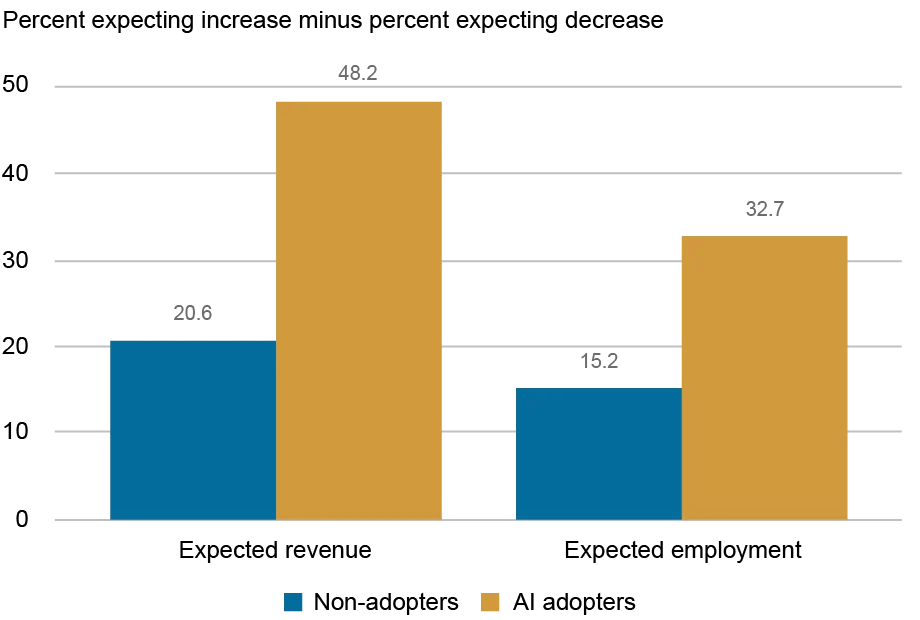
The survey revealed stark contrasts in expectations regarding employment and revenue growth between AI users and non-users. Among small businesses employing AI, the net expectation for increased employment over the next year was a striking 33 percentage points. In contrast, firms that do not utilize AI projected a mere 15 percentage point increase. This disparity indicates a broader trend: companies leveraging AI tools are considerably more optimistic about future staffing levels.
Statistical Evidence of AI Influencing Expectations
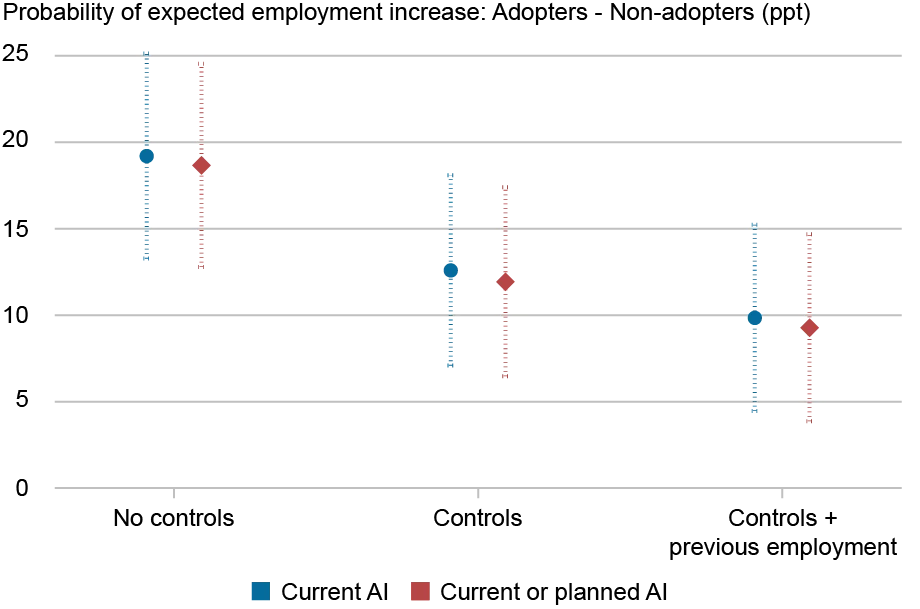
When evaluating employment expectations while controlling for various firm and owner characteristics—such as age and size—the positive effect of AI adoption remains significant. Even after accounting for owners who might inherently have a more optimistic outlook due to personal characteristics or prior successes, AI users consistently demonstrated a heightened probability of anticipating employment growth compared to their peers. This trend persists even among owners reporting less favorable financial conditions, with AI users more likely to foresee growth regardless of their current financial health.
Revenue Expectations Among AI Adopters
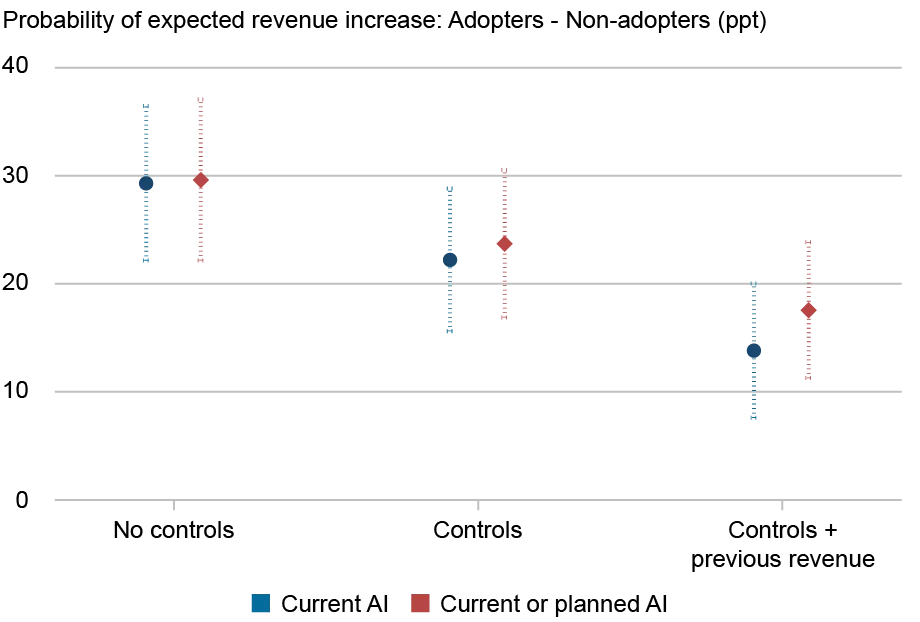
Similar trends apply to revenue growth expectations among small businesses utilizing AI. Only 31 percent of the respondents indicated that their firm’s sales had increased due to AI adoption. However, when asked about future performance, firms using AI exhibited a substantial 48 percentage point edge over non-users in expected revenue increases. This pattern holds true even after adjusting for business size and prior revenue changes, where AI users maintained a net expected revenue growth advantage of 14 percentage points over those not using AI.

Operational Challenges and AI's Role
Interestingly, companies struggling with operational challenges linked to technology reported even greater benefits from AI use. Among firms acknowledging difficulties in utilizing technology—be it for marketing, cybersecurity, or operational efficiency—AI users predicted a 16 percentage point higher increase in revenue expectations compared to those free from such constraints.

Factors Contributing to the Optimism
Various factors contribute to the optimistic expectations of AI users, with operational challenges often at the forefront. The survey supports this connection, indicating that businesses experiencing hurdles with technology see AI as a means to navigate these obstacles. This utility positions AI not merely as a tool for automation but as an essential ally for small firms seeking growth in a competitive landscape.

Conclusion: The Future of AI in Small Businesses
In summary, the findings suggest a pronounced relationship between AI adoption and heightened expectations for employment and revenue among small businesses. The research posits that AI's potential lies in its capacity to alleviate specific operational constraints, thereby fostering a more favorable climate for growth. As the landscape of small business continues to evolve, understanding the tangible benefits and expectations tied to AI use will be critical for stakeholders navigating this shift.
Future research will be crucial to verify whether small businesses that anticipate growth through AI will, in fact, realize these expectations or if they represent an idealized outlook.

Will Aarons is a research analyst in the Federal Reserve Bank of New York’s Research and Statistics Group.

Asani Sarkar is a financial research advisor in the Federal Reserve Bank of New York’s Research and Statistics Group.


