Side A · Liner notes
Crossgates Mall Loan Sale Illustrates Retail CMBS Market Woes with 69% Decline from 2012 Valuation
Banking · Words by Wolf Richter · Released
The auction of defaulted loans on Crossgates Mall highlights the significant decline in retail CMBS values, with sales reflecting 69% losses from prior appraisals.
Recent developments surrounding the retail commercial mortgage-backed securities (CMBS) market have exposed substantial weaknesses, particularly as exemplified by the auction of defaulted loans tied to Albany, New York's Crossgates Mall. Once valued highly, these loans were sold at a staggering 69% discount to their 2012 appraised value, indicating ongoing struggles for the sector.
Background on Crossgates Mall Financing
In 2012, three ten-year interest-only mortgages for Crossgates Mall, which covers 1.3 million square feet, were underwritten with a collateral valuation of $470 million. Lenders, confident in the asset's potential, extended $244 million to the mall's owner, Pyramid Management Group LLC. However, the narrative shifted dramatically over the ensuing decade.
By 2020, a reappraisal of the property set the mall's worth at $281 million, still above the mortgage total. But as of May 2023, Pyramid Management defaulted on the loans after failing to secure refinancing. This left the loans in the hands of CMBS holders through a special servicer, an entity responsible for recovering defaulted loans.
Auction and Sale of Defaulted Loans
Instead of opting for immediate foreclosure, the special servicer put the defaulted loans up for auction in June 2023. The final sale yielded $173.9 million, which, after accounting for liquidation expenses of $29.6 million, netted $144 million from the sale. This amount starkly contrasts with the initial $470 million appraisal, representing a loss of roughly $100 million for the CMBS investors—a loss ratio nearing 41% based on the original loan amount.
This transaction not only underscores the declining asset value in the commercial retail sector but also highlights risks for stakeholders involved. If the successful bidder ultimately takes control of the mall, Pyramid Management will incur a total loss of its investment to date.
Impact of Retail CMBS Delinquency Rates
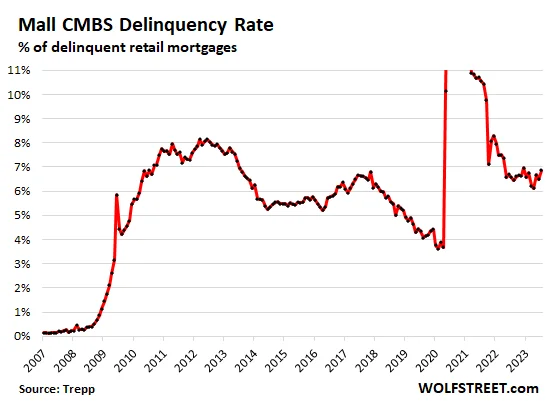
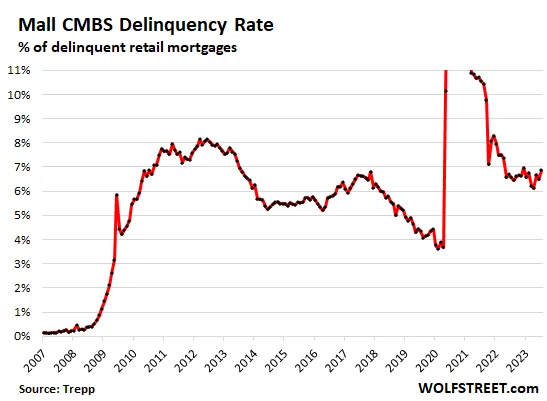
The broader context of retail CMBS is marred by significant delinquency rates, which totaled 6.9% in July 2023. This figure reflects systemic troubles for the retail property market, which has faced growing challenges since the 2008 Financial Crisis. The exceptional rise of e-commerce has accelerated the decline, forcing traditional brick-and-mortar retailers into a difficult freefall.
While delinquencies were resolved sporadically between 2017 and 2020, often through foreclosure sales or loan sales, the recent liquidation of the Crossgates Mall loans will effectively remove these assets from delinquency reports, artificially stabilizing delinquency statistics.

History of Declining Mall Values
The retail property sector has witnessed a catastrophic transformation, with numerous iconic chains like Sears Holdings and Toys “R” Us succumbing to bankruptcy. The consequences of this evolution have resulted in a marked decrease in values for regional shopping centers, with mall operators like Simon Property Group and Brookfield opting to walk away from underperforming assets rather than absorb losses. This trend has cultivated an environment where "zombie malls" proliferate, leading to pervasive uncertainty in collateral valuations.
The fallout from massive closures has jeopardized the viability of numerous shopping malls across the United States. Crossgates Mall now serves as a thematic benchmark of the retail CMBS market’s decay, mirroring sentiments from other troubled properties. Major landlords no longer see the benefit in retaining unsustainable assets. Simon Property Group, for instance, abandoned several malls in quick succession, further emphasizing the sector’s decline.

The E-Commerce Shift and Its Long-Term Effects
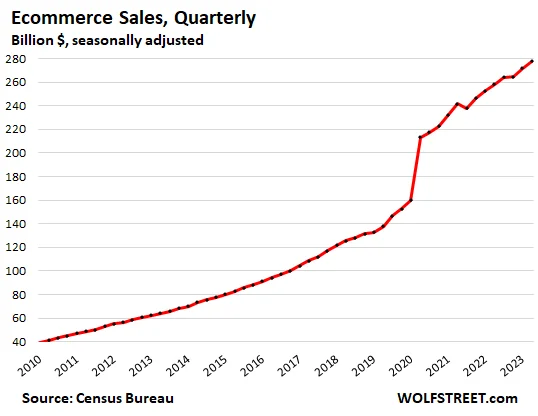
This erosion in retail property values isn’t merely a short-term hiccup; it reflects a deeply rooted shift in consumer behavior triggered by the rise of e-commerce. Since 2010, online sales have skyrocketed from $40 billion per quarter to $278 billion by the second quarter of 2023. Retail dynamics have irrevocably altered, and the likelihood of a reversion to pre-e-commerce norms appears bleak.
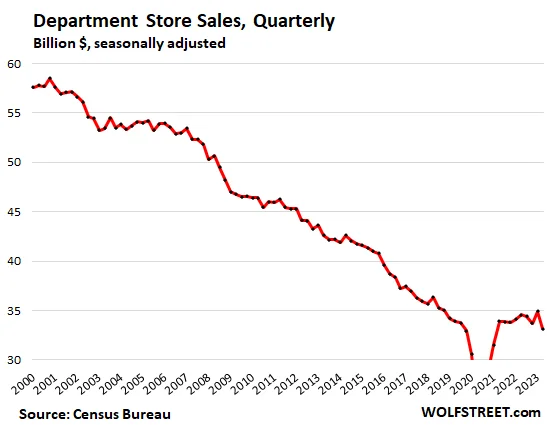
Despite retail sales growth in certain quarters, figures for department store sales have plummeted from $58 billion in Q4 2000 to $33 billion in Q2 2023, signaling a dramatic contraction in the sector. The permanence of these shifts presents considerable risks for investors and stakeholders within retail CMBS.
As CMBS holders continue to contend with the ramifications of these defaults, the Crossgates Mall situation illustrates a critical inflection point for the commercial real estate market. The focus will remain on tracking how other properties navigate these challenging waters, as the market must grapple with continuing uncertainties around consumer behavior, retail viability, and long-term economic conditions.


