Side A · Liner notes
The Impact of ECB Lending Programs on Financial Stability in the Euro Area
Banking · Words by William Jones · Released
This analysis quantifies the effectiveness of European Central Bank lending programs in enhancing financial stability and reducing bank default risks in the euro area.

In the wake of the Great Financial Crisis, the European Central Bank (ECB) instituted long-term lending initiatives aimed at bolstering the euro area's financial stability. Providing loans to banks at rates approaching zero or even negative, these measures sought to support the transmission of expansionary monetary policy and reduce the prospect of bank runs. Despite their significance, empirical research quantifying the efficacy of these lending programs has remained limited. A comprehensive approach taken by Tomas Jankauskas, Ugo Albertazzi, Lorenzo Burlon, and Nicola Pavanini sheds light on the issue by applying a novel structural model to assess the impact of these central bank interventions.

Evolution of ECB Lending and Policy Adjustments
Historically, the trajectory of ECB lending has been influenced significantly by external economic crises. According to data encompassing roughly half of the euro area's deposit and loan markets, the most substantial lending surged after the euro area sovereign debt crisis and further accelerated during the COVID-19 pandemic. The ECB's balance sheet expansion, alongside the interest rate cuts to as low as -1 percent, played a central role in these lending operations, mirroring tactics adopted by other major central banks like the Bank of Japan and the Bank of England.
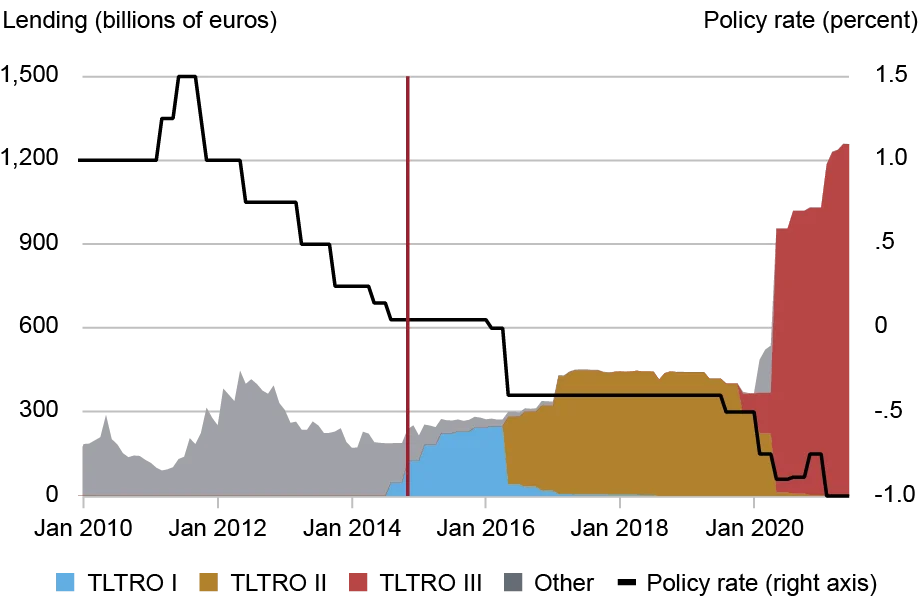
Graphical analyses reveal that while quantitative easing measures were concurrent, they primarily aimed at asset purchases rather than stabilizing banks directly. The scale and direct effects of central bank loans present a compelling context for assessing their relationship with banking stability.
Empirical Challenges and Framework Development
Assessing the effectiveness of central bank policies encounters several empirical challenges. One significant issue is establishing a suitable comparison for evaluating the outcomes of interventions. As the lending initiatives were implemented amidst deteriorating economic conditions, isolating their direct impact proves complex. Moreover, depositor expectations of central bank support can mitigate the occurrence of bank runs even without actual interventions, further confounding evaluative efforts. To address these challenges, the authors utilized a structural model designed to simulate various scenarios under differing conditions.
This model operates under the premise of imperfect competition within deposit and loan markets. It accounts for both borrower and bank default risk while assessing the impact of central bank funding. By simulating alternative scenarios for each euro area country, the model provides a comprehensive analytical framework to measure the ramifications of central bank lending interventions.
Model Findings: Default Probabilities and Their Implications
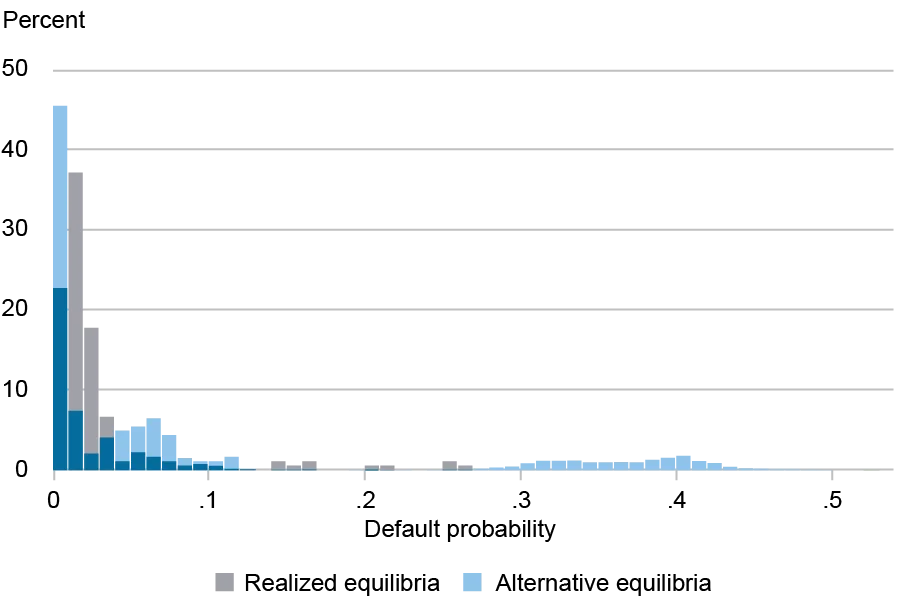
The research findings revealed new critical insights regarding bank default probabilities across the euro area. Data spanning from 2014 to 2021 indicated significant variability in realized default probabilities among banks. However, simulations indicated that without the ECB's interventions, the banks faced dramatically higher default probabilities, with scenarios suggesting risks as high as 50 percent. This suggests that, in a context without ECB support, the fragility of banks would have substantially increased, incurring severe economic costs.

Assessing the Impact of ECB Funding on Financial Stability
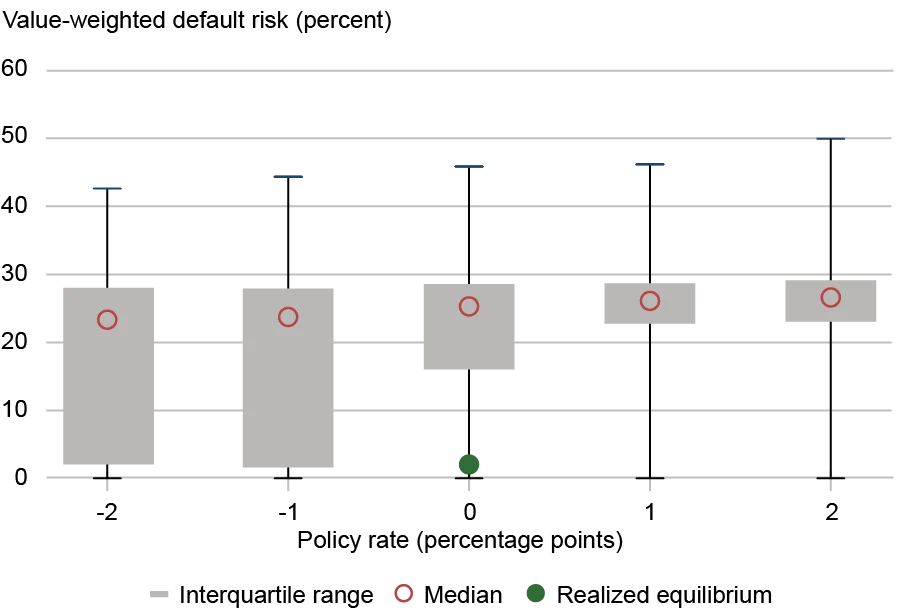
The key contribution of the authors' framework is in quantifying how ECB funding influences financial stability. By adjusting lending rates, the model assessed the direct correlation between borrowing costs and banks' default probabilities. The results highlighted that a 1 percentage point increase in the borrowing rate could elevate bank default probabilities by an average of 1.8 percentage points. This upward shift in default risks illustrates the essential role of low lending rates in stabilizing the banking sector during crises.

Counterfactual simulations depicted a stark contrast between scenarios with higher borrowing rates versus those with lower ones. Banks exhibited considerably heightened fragility in higher-rate scenarios, emphasizing the stability gains achieved through accommodative central bank policies.

Welfare Implications of Central Bank Interventions
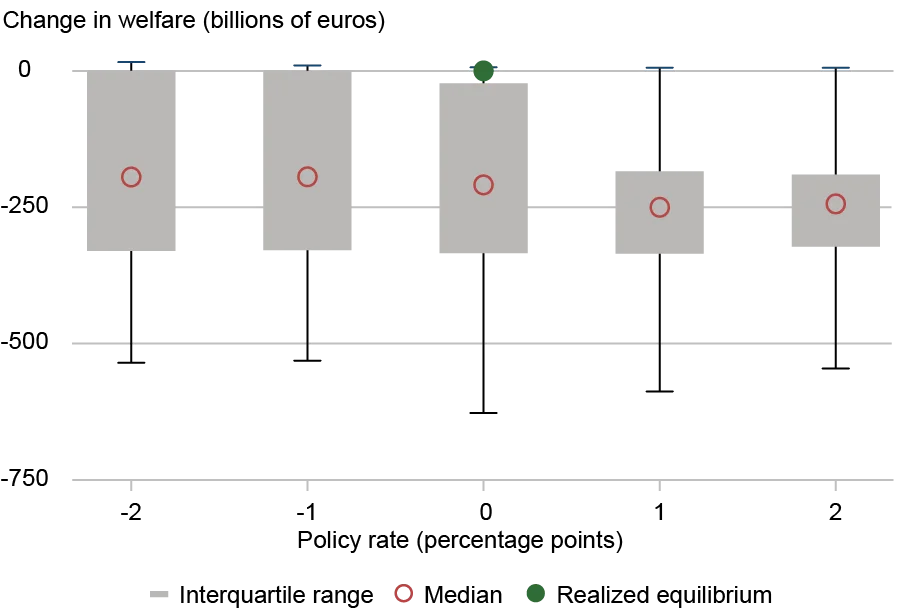
Beyond simply assessing default probabilities, the study also highlights the welfare consequences associated with central bank lending programs. The analysis incorporated the broader economic implications of these interventions, including their effects on deposit insurance costs, bank profits, and overall lending and deposit rates. Distributions of welfare results highlighted that higher bank run risks typically aligned with potential welfare losses, indicating that lower policy rates correlate positively with enhanced economic welfare.

While the overall findings suggest positive welfare improvements linked to lower borrowing rates, it’s critical to recognize the inherent trade-offs. Lower rates often translate into reduced deposit returns for savers, which places some costs on depositors despite the larger systemic benefits that lower rates provide to the economy.
Conclusion: The Role of ECB Interventions in Banking Stability
This research underscores the significant role played by ECB lending programs in mitigating risk and enhancing financial stability within the euro area banking sector. By deploying innovative modeling techniques, the authors successfully quantified how ECB policies attenuated fragility and improved welfare outcomes during periods of distress. As central banks navigate future monetary policy, the findings presented here illuminate the important balance between fostering stability and managing the associated trade-offs impacting all financial stakeholders, including depositors and banks alike.
The authors of this study—Tomas Jankauskas, Ugo Albertazzi, Lorenzo Burlon, and Nicola Pavanini—contribute valuable insights into the ongoing discussion on the efficacy of central bank interventions in modern economies.
Authors' Affiliations:
- Tomas Jankauskas - Federal Reserve Bank of New York
- Ugo Albertazzi - European Central Bank
- Lorenzo Burlon - European Central Bank
- Nicola Pavanini - Tilburg University
For further reading, refer to the original work published on Liberty Street Economics.


