Side A · Liner notes
Reevaluating Import Price Inflation: The Impact of Quality Adjustments
Banking · Words by William Miller · Released
New research suggests that traditional measures of import price inflation significantly overstate costs by failing to account for quality improvements in goods.

As economic indicators continue to shape financial decisions, a closer look at import price inflation reveals significant discrepancies when adjustments for quality changes are considered. Traditional price measures often overlook enhancements in product quality, leading to an inflated perception of inflation associated with imported goods. By employing a novel methodology to evaluate quality changes, recent findings indicate that consumers may actually be benefiting from better quality products than previously thought.

Understanding the Quality Adjustment Challenge
Price indices typically incorporate quality adjustments, which account for improvements that may cause a price index to remain constant despite better product offerings. This means consumers are effectively receiving greater value without an increase in out-of-pocket spending. However, measuring these quality changes presents challenges, primarily due to the lack of comprehensive data on all relevant product characteristics.
To tackle this problem, researchers have developed an alternative approach that infers quality changes from shifts in consumer demand for imports, independent of price fluctuations. The methodology estimates the elasticity of substitution between imported goods and domestic alternatives, measuring how sensitive consumer behavior is to price changes.
For instance, if imports experience a price increase of 10% relative to domestic goods, economists would expect a corresponding decrease in demand based on the calculated elasticity. If observed demand only decreases by 5%, this suggests that product quality likely improved, leading to less sensitivity to the higher prices. Using this inference allows for an alternative import price index calculation that incorporates quality adjustments.
Comprehensive Analysis Across Industries
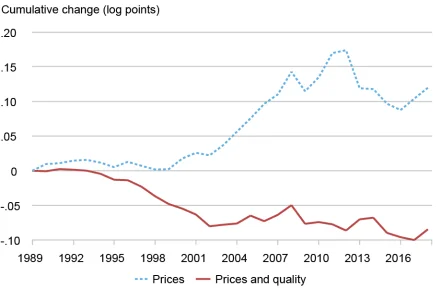
The methodology applied across 155 distinct industries reveals a more nuanced picture of import price inflation. While the official import price index indicated a rise of 13% from 1989 to 2018, the adjusted index suggested a decline of 8% when quality improvements were factored in. This divergence signals the need for a reevaluation of how import price inflation is portrayed in economic data.

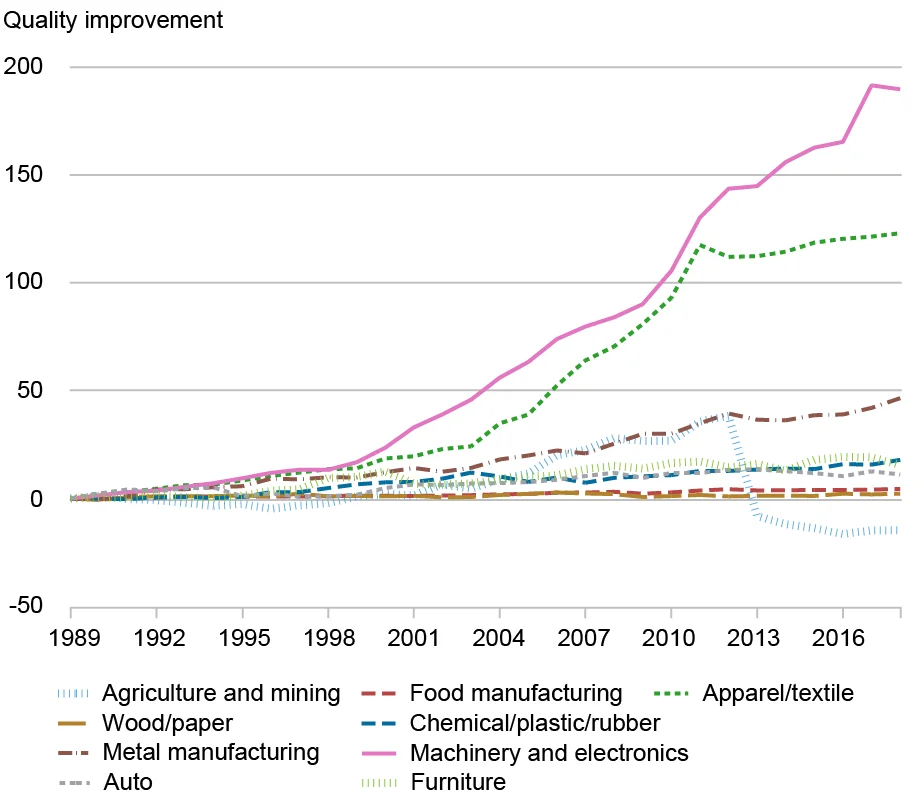
Moreover, further analysis can break down quality enhancements by industry, highlighting sectors where quality improvements are most significant. Unsurprisingly, imported machinery and electronic equipment, encompassing items like computers and peripheral devices, register the highest quality gains. This sector's trajectory underscores a fundamental shift in how imported goods are perceived and valued by consumers over time.

Explaining Demand Trends Through Quality Adjustments
One compelling outcome from the quality-adjusted analysis is its capacity to explain seemingly contradictory consumer behavior. Despite reported rises in import prices relative to domestic prices, import volumes for certain products continue to increase. By applying quality adjustments, a clearer narrative emerges: costs related to machinery and electronic imports are not climbing as steeply when accounting for quality improvements, elucidating the sustained demand for these products.

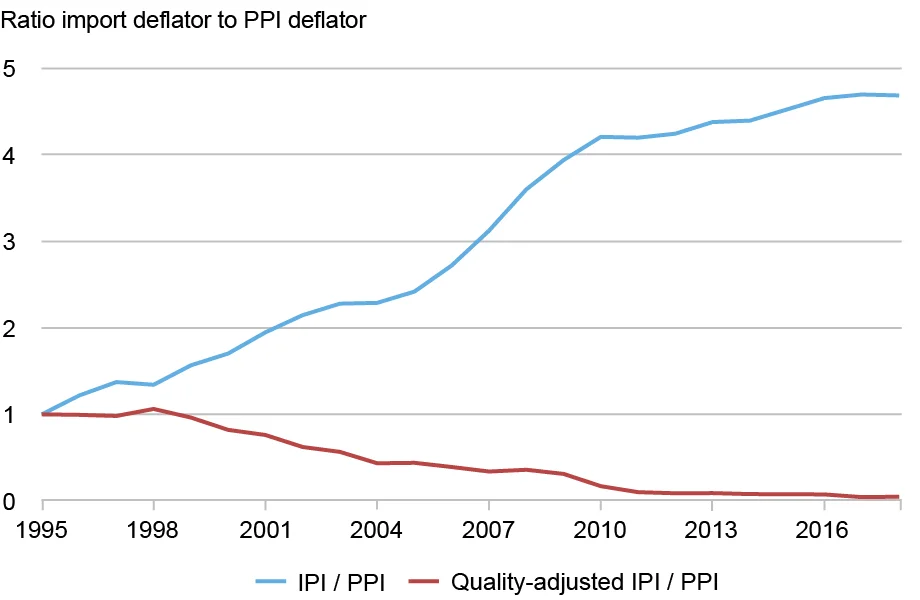
A comparative look at the ratios of import to domestic prices further illustrates this point. Without accounting for quality, the ratios show sustained increases; however, when quality adjustments are incorporated, they demonstrate a decline. This adjustment not only addresses consumer purchasing behaviors but also reconciles economic data with real-market trends, painting a more accurate picture of consumer sentiment and spending power.
The Methodology's Implications for Economic Indicators
These findings raise important questions regarding the broader implications of traditional methods for calculating inflation indices. The apparent overstating of import price inflation implies that analysts and policymakers may need to reconsider how import prices are constructed and reported. This could dramatically influence economic forecasts, inflation targets, and even fiscal policy decisions.
Ultimately, the method outlined by researchers illustrates the need for a shift towards more sophisticated economic modeling that includes quality-based adjustments. This would provide a clearer lens through which to view inflation and its effects on consumers, businesses, and the economy overall.
Conclusion
The novel approach to assessing quality changes reveals significant overstatements in import price inflation due to existing measurement practices. As new methodologies gain traction, they hold the potential to refine economic indicators and improve the understanding of consumer behavior and market dynamics. In a world where consumer choices are increasingly driven by quality perceptions, this research underscores the importance of adapting analytical frameworks to reflect reality more accurately.
Danial Lashkari, an economic research advisor at the Federal Reserve Bank of New York, and his colleagues continue to contribute critical insights into these essential economic discussions.


