Side A · Liner notes
Insights into Homeowner's Insurance: Understanding Risk Management in Property Coverage
Banking · Words by Robert Williams · Released
An analysis of homeowner's insurance contracts reveals key patterns in coverage limits, deductibles, and premiums, offering insights into risk sharing dynamics among households.
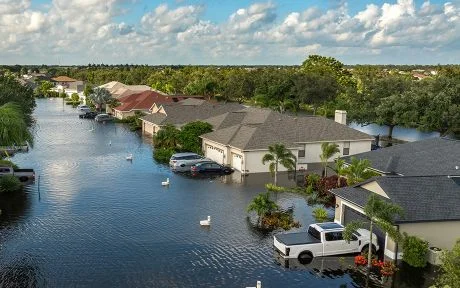
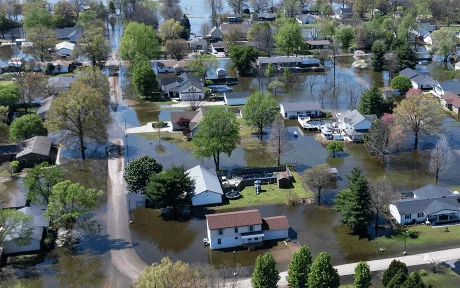
Housing remains the largest asset category for U.S. households, with values projected to reach $48 trillion by 2025. Following natural disasters, the financial impact on homeowners can far exceed their liquid savings. Homeowner’s insurance serves as a critical mechanism for risk transfer, yet the structural intricacies of these insurance contracts are not widely understood. In a recent analysis by Hyeyoon Jung and Jaehoon (Kyle) Jung, insights from millions of homeowner’s insurance policies shed light on this matter, highlighting four major findings concerning coverage limits, deductibles, pricing, and loss distributions.
Understanding Homeowner’s Insurance Contracts
A typical homeowner’s insurance policy is designed to transfer the financial risk associated with property damage from the homeowner to the insurance company, in exchange for a monthly premium. Central to these contracts are three key elements: the premium itself, the coverage limit, and the deductible.
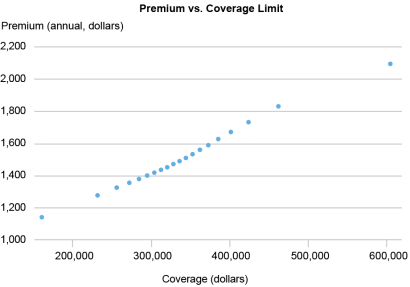
The premium represents the amount households pay for coverage, the coverage limit defines the maximum payout in case of damage, and the deductible indicates the out-of-pocket cost homeowners must cover before receiving compensation from the insurer. These components collectively influence the allocation of risk between the household and the insurer.
The presence of deductibles and coverage limits is a response to market frictions, specifically information asymmetries, where insurers may not fully understand how well homeowners manage their properties. By requiring homeowners to shoulder part of losses through deductibles, insurers promote diligent property maintenance, reducing overall risk.
Key Findings from Insurance Contracts
1. Limited Impact of Coverage Limits
The data indicates that coverage limits seldom reach their maximums. On average, the median coverage limit is about 77 percent of a home's recovery value. Notably, in extreme events with a one-in-a-hundred year probability, losses averaged only 1.4 percent of that recovery value. This suggests that lower coverage limits could significantly decrease expected payouts by insurers without materially affecting risk exposure for homeowners.

Instead of coverage limits, deductibles emerge as critical elements in determining household exposure to risk and their incentive to properly maintain property. Therefore, reliance on metrics like premium-to-coverage ratios may offer a distorted view of effective insurance pricing, as the true drivers of payouts rest more on deductible structures than nominal coverage limits.

2. The Dynamics of Deductibles
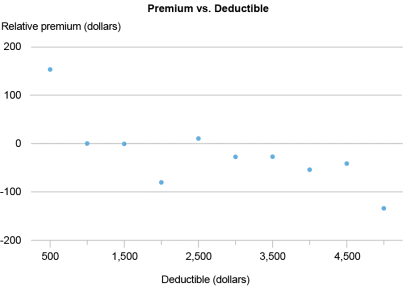
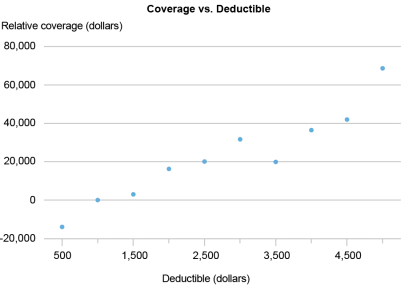
Deductibles are generally structured in round numbers, such as $500 or $1,000, with the median deductible hovering around 0.3 percent of a home's recovery worth. However, expected annual losses average even smaller at just 0.09 percent. Since deductibles are larger than typical expected losses, they profoundly influence risk retention for homeowners and dictate behavioral incentives regarding property upkeep.

3. Disparity Between Premiums and Expected Losses
Another key observation is that insurance premiums significantly exceed expected claims payouts, with the median ratio of expected loss to premium at a mere 28 percent. This discrepancy implies that households are willing to pay a premium, reflecting a risk-averse nature—opt to transfer the burden of infrequent but potentially catastrophic losses off their personal finances. Even after robust adjustments for variables such as flood exposure or integrating a broader loss spectrum, the median ratio remains indicative of insurance being priced with a risk premium.
Visual representations clarify this relationship: premiums tend to increase with higher coverage while decreasing with larger deductibles, displaying a clear correlation between household choices and contract costs.
4. Distribution of Property Damage Risk
The average property loss is minimal; the median expected loss rate is approximately 0.09 percent of home value. However, significant losses seen during rare events present a striking contrast: the median loss at the 98th percentile is 0.8 percent, and at the 99th percentile, it is 1.4 percent. This suggests a skewed distribution of risk, where most damages are minor, but extreme events can lead to substantial claims, emphasizing the importance of adequate coverage during rare catastrophes.
Conclusions and Future Directions
This analysis brings to light four essential conclusions regarding homeowner’s insurance: the economic weight of deductibles relative to coverage limits, the substantial excess of premiums over expected losses, and the highly skewed nature of property damage distributions. These observations are robust across various adjustments in the data set, confirming their relevance in assessing homeowner’s insurance.
Going forward, questions remain regarding the interplay among premiums, deductibles, and coverage levels. How does risk retention change among different homeowner demographics and insurers? Additionally, future discourse will introduce conceptual frameworks linking household risk behaviors to optimal insurance contract designs. Insights gleaned from these inquiries could pave the way for a deeper understanding of moral hazards in the homeowner’s insurance landscape and its implications for both policyholders and the insurance industry.
Authors : Hyeyoon Jung, a financial research economist at the Federal Reserve Bank of New York, and Jaehoon (Kyle) Jung, an assistant professor at NYU Stern School of Business.


