Side A · Liner notes
The Costs and Challenges of Home Remodeling: Why Buying Finished Homes is Wiser
Economy · Words by Financial Samurai · Released
With skyrocketing remodeling costs and lengthy timelines, purchasing fully remodeled homes often proves more cost-effective for homebuyers than undertaking renovations.
Home remodeling can be a daunting, time-consuming ordeal that leaves many homeowners scarred for life. At nearly 50 years old, I’ve concluded that I will never undertake a gut remodel again. Those who have navigated this path share a common look—the dazed expression of someone who’s spent two years arguing over grout colors and waiting for unreliable inspectors. Surprisingly, many willingly embark on this torturous journey annually, investing substantial sums only to endure significant stress and frustration.
Cost and time overruns are almost a given in the remodeling process. If you're contemplating a build or a comprehensive renovation, it's essential to brace yourself for expenses and timelines that could exceed initial estimates by 50%. This is not merely a precautionary suggestion; trusting a general contractor’s preliminary assessment without a healthy buffer could shatter your peace of mind and impact personal relationships.
Understanding Permitting Delays by City
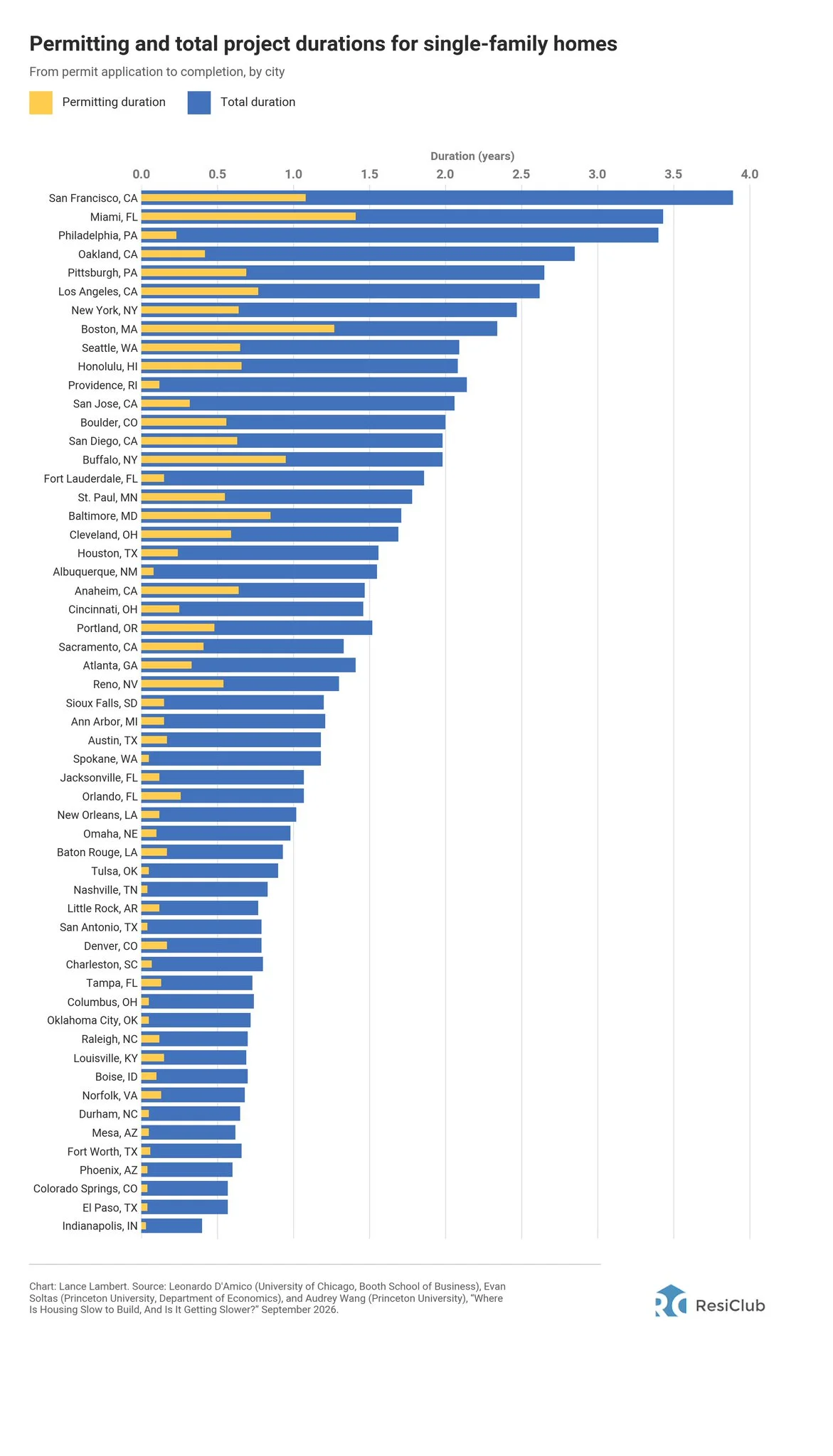
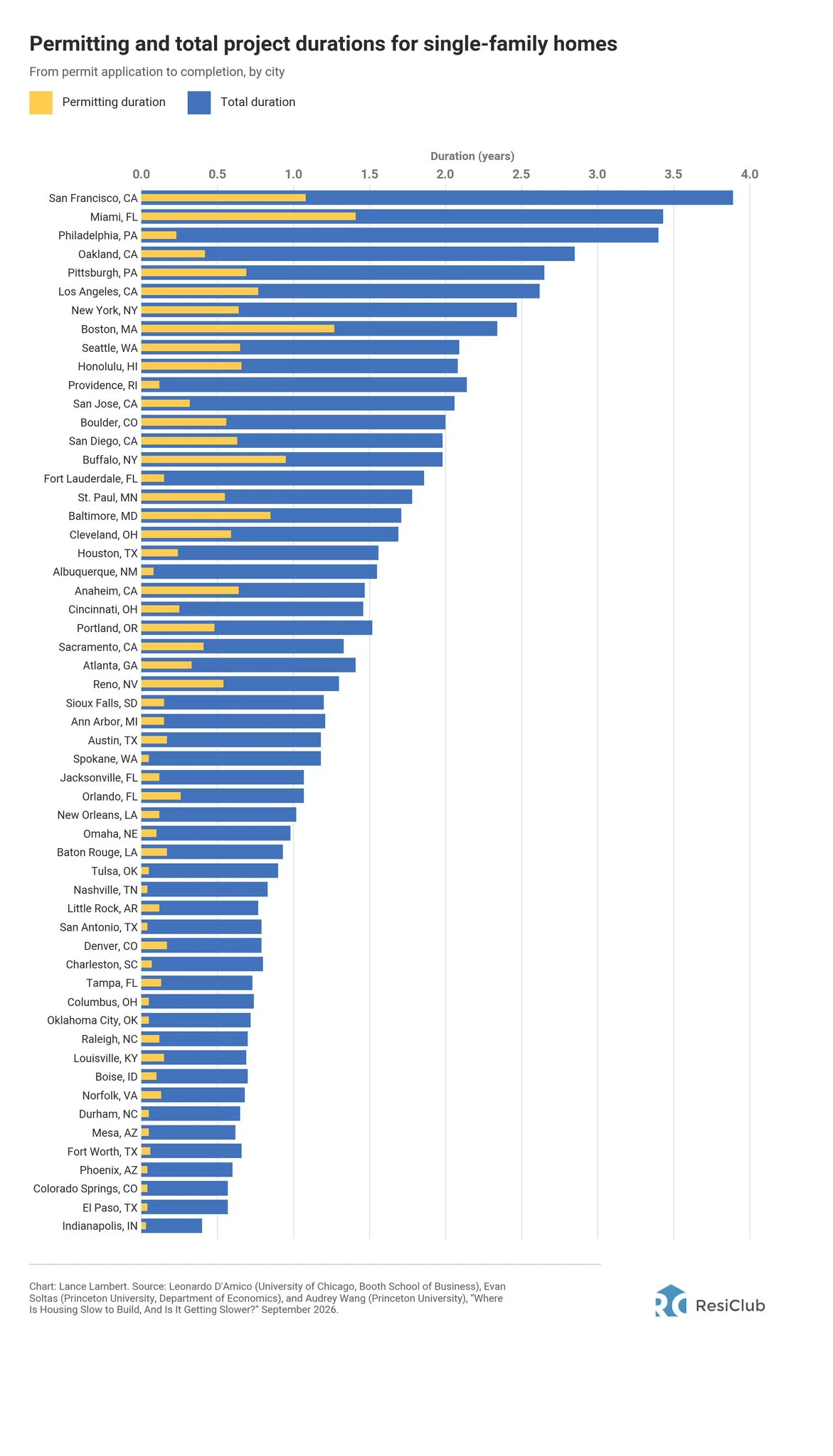
A detailed report from professors at the University of Chicago and Princeton, compiled by ResiClub, reveals how construction timelines can differ drastically across regions. For example, San Francisco leads the nation with an average of 1.1 years to secure a permit, followed by a staggering 3.8 years to build a single-family home. In contrast, cities like Indianapolis and El Paso manage to complete these processes in about six months. Nationally, the average time from permit application to project completion has tripled since 2000, now standing at approximately 8.8 months.
Through my experience with multiple remodels in San Francisco since 2003, I've found these numbers to resonate painfully with reality. My final extensive remodel, initiated in mid-2019, wasn’t entirely complete until late 2022, exacerbated by COVID-related delays. What was expected to be a manageable one-year project dragged on for three and a half years, testing my patience and resolve.
The Hidden Costs of Remodeling
When buyers estimate the cost of a remodel, the construction expenses represent merely the visible portion of a much larger iceberg. Consider purchasing a $1.6 million home needing a $400,000 renovation expected to last 18 months. In practice, this project could easily expand to $600,000—50% higher than budgeted—as well as take 2.5 years to complete. During this period, you might need alternative housing, adding around $195,000 in rental costs, alongside approximately $48,000 in property taxes on a home that remains uninhabitable.
In total, your seemingly reasonable investment of $1.6 million could balloon to nearly $2.44 million—not accounting for the opportunity cost of tied-up funds or the emotional toll of living out of boxes while your family grows during the process.
The Advantages of Buying Fully Remodeled Homes
If you’re over 40 and considering a purchase in a market with lengthy build times, I strongly recommend opting for a fully remodeled home. In cities like San Francisco, the market often undervalues these properties despite their inherent advantages. Investing in a finished home can save you significant time, effort, and financial headaches.
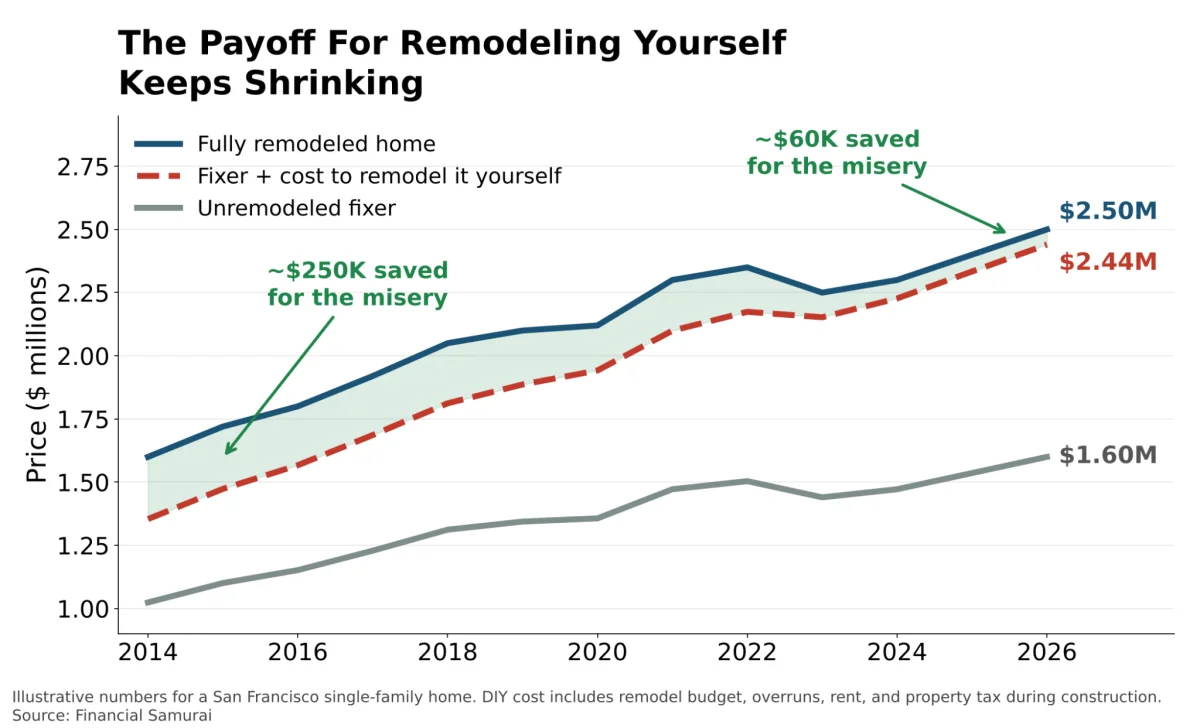
Historical data suggests that ten years ago, the potential savings from purchasing a fixer-upper and conducting renovations could be as high as $250,000. Today, however, that figure has dwindled to about $60,000, primarily due to escalating labor costs, material prices, and permitting delays. When you break this down over a lengthy construction period, the savings grow negligible, especially when factoring in the potential for unexpected issues to arise.
Why Many Still Choose to Remodel
Despite the potential drawbacks, people continue to undertake renovations, often driven by two primary motivations. First, many underestimate the complexity and duration involved in the remodeling process, believing it to be manageable. They envision hiring an architect, a reliable contractor, and simply overseeing selections of fixtures. However, without prior experience, they may be ill-prepared for the myriad challenges that can arise, like supply chain disruptions or unexpected re-inspections from local officials, which can lead to project delays.
- Backordered materials may delay timelines by months.
- Custom installations can arrive damaged or incorrectly sized.
- Inconsistent demands from inspectors can complicate compliance.
- Neighborhood dynamics can worsen amidst construction turmoil.
- Initial installations may reveal unforeseen issues.
- A contractor's disappearing act can leave homeowners in limbo.
These various factors can lead to frustration and anxiety, underscoring how easily one can become overwhelmed during such a process.
Personal Taste vs. Market Preferences
The second reason some buyers may opt for remodeling lies in personal taste preferences. Fully renovated homes typically appeal to a wider audience, emphasizing safe, neutral design choices. If you desire unique features, such as a jade green kitchen or personalized spa-like installations, you’ll likely need to pursue these changes yourself, understanding the associated costs might far exceed what you imagined.
It’s important to consider how much you value personalization compared to the cumulative stress and expenses that come with the remodeling journey. In many cases, cosmetic changes post-purchase can achieve 80% of the desired uniqueness at a fraction of the cost and time.
The ultimate lesson I’ve learned is that it may not be worth the stress and time to debate taste in a fixer-upper when you can simply purchase a finished home and make minor adjustments later. In a market that hasn’t fully appreciated this reality yet, purchasing a remodeled home can be a savvy financial move.
The Ripple Effect of Noise
Another dimension to consider relates to the disruption remodeling brings to surrounding neighborhoods. Homeowners embarking on renovation projects often become the source of tension as noisy construction crews disrupt the peace, earning enmity from neighbors. Just as I have witnessed neighbors undergo major renovations in my community, it’s evident that even purchasing a remodeled home doesn’t guarantee an escape from construction noise.
Strategies for Smart Remodeling
- Select a reputable contractor: Choose someone with extensive local experience as building regulations can vary drastically by region. Verify their recent project completions to gauge reliability.
- Consider a permit expediter: Employing this service might seem unnecessary but can significantly minimize friction in areas with slow permitting processes.
- Order supplies in advance: Secure long-lead items before construction starts to avoid unnecessary delays.
- Budget for contingencies: It’s prudent to prepare for potential 50% budget overruns—you may well be the exception if you don’t utilize this cushion.
- Relocate during remodeling: While living in the home during renovations may seem financially savvy, it adds significant stress. If the contractor can work in segments, consider alternative living arrangements during key phases.
Finding Joy After the Struggle
Ultimately, once the dust settles and the remodeling is complete, you might experience a profound sense of relief and satisfaction. Surviving the trials of renovation can be deeply rewarding, akin to the relief when ceasing a repetitive and painful task. Moreover, if you’ve executed your remodel wisely, enhancing livable space without excessive spending, there’s a good chance you might recoup at least 80% of your investment in the future. In upscale markets, it's realistic to achieve over 100% recovery while simultaneously enjoying the renovated space.
However, you’ll want to keep in mind that these undertakings can take a toll on your wellbeing and quality of life.
As a final reflection, I encourage readers to share their remodeling experiences, particularly regarding how timelines and costs have evolved in their respective markets. Would you consider investing in a fully renovated home in light of the remodeling challenges that might await you?
If you're seeking real estate exposure without the hassles of remodeling, passive investment may be the answer. Notably, I’m observing growth in investments related to AI and data center requirements—areas with promising returns amid affordability in regions with favorable valuations.
For those interested, opportunities such as Fundrise, which focuses on residential and industrial real estate in the Sunbelt, mitigate the need for direct renovation involvement while offering competitive returns, beginning with minimal investments.