Side A · Liner notes
A Streamlined Approach to Annual Budgeting: A Step-by-Step Guide
Economy · Words by 5am Joel · Released
This article outlines an efficient annual budgeting process, including setting, reviewing, and adjusting budgets while keeping the process engaging and insightful.

“A budget is simply telling your money where to go instead of wondering where it went.” – John Maxwell

Hello, financial enthusiasts! As we step into the new year, it’s time to share my approach to budgeting, a process that I believe can benefit many readers looking to keep their finances in check for 2022 and beyond. My process is straightforward: I spend about an hour at the start of the year and another 20-30 minutes each month to ensure everything stays aligned.
Whether you're searching for fresh budgeting strategies or already have a system in place, exploring how others navigate their finances can provide inspiration. I've also included various tips at the end to not only streamline your budgeting but also infuse some fun into the process.
High-Level Budgeting Overview
Budgeting, in my approach, consists of three key activities executed throughout the year:

- PREVIEW: Aiming for an annual budget by evaluating expected expenses which takes about one hour at the year’s start.
- REVIEW: Conducting monthly reviews to assess spending against the set budget, requiring about 20-30 minutes each month.
- COURSE CORRECTIONS: Implementing adjustments throughout the year based on life changes and observed spending trends.
If you’re starting from scratch or aiming to refine your current budgeting approach, I recommend exploring various free budget templates available online or checking out my simple spreadsheet created in Google Docs.
Setting Your Annual Budget
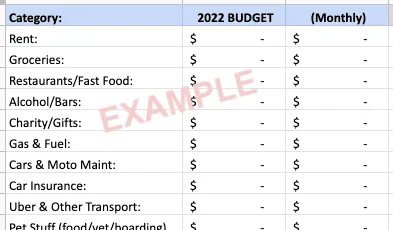
As the new year begins, I focus on establishing an annual budget. This involves estimating total expenses that my wife and I anticipate for the upcoming year, across approximately 20 spending categories.
Initially, I account for all fixed expenses—these are predictable costs such as rent, insurance, and utilities. By entering these known figures directly into the budget, the process becomes simpler.

Next up are the variable expenses, which can fluctuate. To project these costs accurately, I review spending from the previous year. This involves analyzing trends to derive an average while considering factors like inflation and potential life changes.
- Inflation considerations: If last year I spent $7,015 on groceries, projecting a 5% increase means this year I might budget around $7,500.
- Life changes: If there's the possibility of welcoming a child next year, adding approximately $1,000 for family-related grocery expenses would be prudent.
After estimating each category, I compile an annual budget figure and break this amount down into monthly allocations.
I also factor in large, singular expenses planned for the year. For instance, upcoming weddings or potential vehicle purchases require distinct budget lines to avoid impacting regular spending categories.
- Attending three weddings could necessitate a $2,000 budget for gifts and travel.
- If purchasing a minivan is on the horizon, I might set aside around $20,000 for that expense.
It’s essential to create a personalized budget that reflects unique life goals and spending habits. A successful budgeting experience hinges more on self-awareness than on strict numerical adherence.
Monthly Budget Reviews
Following the establishment of an annual budget, I conduct monthly check-ins. My wife and I utilize Mint.com for transaction tracking, which automatically categorizes our expenditures for monthly reviews.
Each month, I download transactions and categorize them in my budget spreadsheet, with dedicated columns for each month. The visual layout allows for quick comparison of spending against the budget.

While minor variances are often acceptable, I keep an eye on consistency in overspending, as this can indicate potential issues. The clarity provided by the spreadsheet makes it easy to identify trends that may require further attention.
Adjusting Your Budget Mid-Year
It’s unrealistic to believe that our spending patterns will perfectly match our initial budget. Therefore, being flexible with the budget is crucial.
We begin by celebrating underspending, which indicates that we may have over-budgeted. This surplus can then offset overspending in other categories.
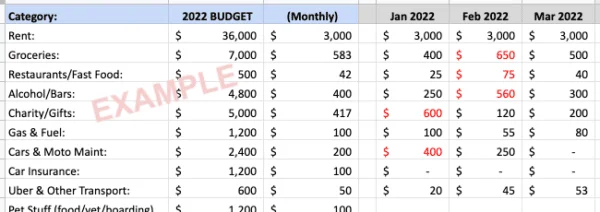
When noticing consistent overspending, we ask ourselves two primary questions:
- Does this spending align with our core values?
- Will continued overspending disturb our long-term financial objectives?
If overspending doesn't align with what we value, we cut back immediately. However, if it supports our lifestyle and well-being, we may acknowledge it as an acceptable variance.
For instance, in one case, spending on groceries went above my original budget, but was deemed acceptable since food is a significant joy for my wife and me. Instead of drastically altering our grocery habits, we identified alternative categories where we could trim spending, such as reducing mid-week outings.

If necessary, we might consider temporary solutions like side hustles to cover unexpected expenditures or, as a last resort, tapping into our emergency fund for larger unforeseen costs.
Make Budgeting Efficient and Enjoyable
A common hesitation regarding budgeting is time commitment. To tackle this, consider the following:
- Automate tracking through systems like Mint or your bank’s app to reduce manual entry.
- Limit cash transactions to enhance traceability using payment services like PayPal.
- Round transaction figures to the nearest hundred to save assessment time.
- Consolidate categories for similar expenses to lessen complexity.
- Regularly budget to build familiarity, enhancing the speed of the process.
Budgeting can be tailored to suit your preferences—aim for simplicity whenever possible.
To inject some excitement into budgeting, try these techniques:
- Establish monthly rewards for meeting budgetary goals.
- Engage in budgeting discussions outside the home—for example, during a date night.
- Create visually appealing trackers for goals and spending to enhance motivation.
- Communicate budgeting successes positively to shift perspectives away from stringent frugality.
- Consider creative approaches to enjoy budgeting like themed discussions on spending and savings.
Thanks for taking the time to explore my budgeting process. If you’re feeling determined to enhance your financial management for the new year, I’m here to help. Let’s make 2022 a year of fiscal empowerment!
Wishing you all the best as you prepare for the new year ahead!
Cheers,
Joel


