Side A · Liner notes
Shifts in U.S.-China Trade: Impact and Trends Revealed
Banking · Words by Joseph Davis · Released
U.S. trade dynamics with China are changing, with a growing deficit with ASEAN and noticeable shifts in high-tech sectors, driven by geopolitics and tariffs.
Recent developments in U.S. trade policy concerning China reveal significant changes over the past year, yet these alterations have not dramatically affected the overall trade deficit. By the close of 2025, the U.S. recorded a trade deficit of $1.2 trillion, essentially holding steady compared to 2024. Conversely, China’s trade surplus rose from $1 trillion to $1.2 trillion. Notably, while the total figures for the trade balances appear consistent, dissecting the data reveals marked shifts in trade flows between the U.S., China, and Southeast Asia.
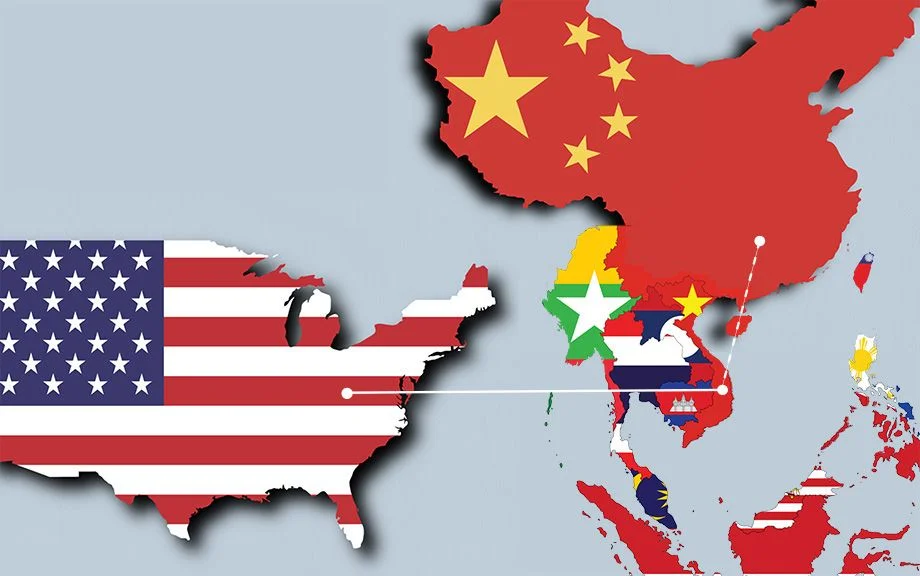
U.S.-China Trade Dynamics
The assessment of trade balances between the U.S., China, and the Association of Southeast Asian Nations (ASEAN) uncovers valuable insights. Reports show a decreased trade deficit for the U.S. with China, while a significant increase in trade deficit with ASEAN indicates a shift in trade dynamics. Vietnam emerged as a key player in this trend, notably influencing the deficit increase. Data illustrates a clear rerouting of trade whereby China’s exports to the U.S. increasingly move through ASEAN channels.
Changing Trade Patterns
Trade dynamics between the U.S. and ASEAN have markedly changed, with the U.S. trade deficit with the region seeing substantial growth. Charts that highlight these trends underscore that while the U.S.’s trade deficit with China has diminished, its deficit with ASEAN has surged considerably. A deeper analysis reveals that this shift aligns with changes in production and supply chains, reflecting a strategic pivot among U.S. companies amidst ongoing trade tensions with China.

Statistical Anomalies in Trade Reports
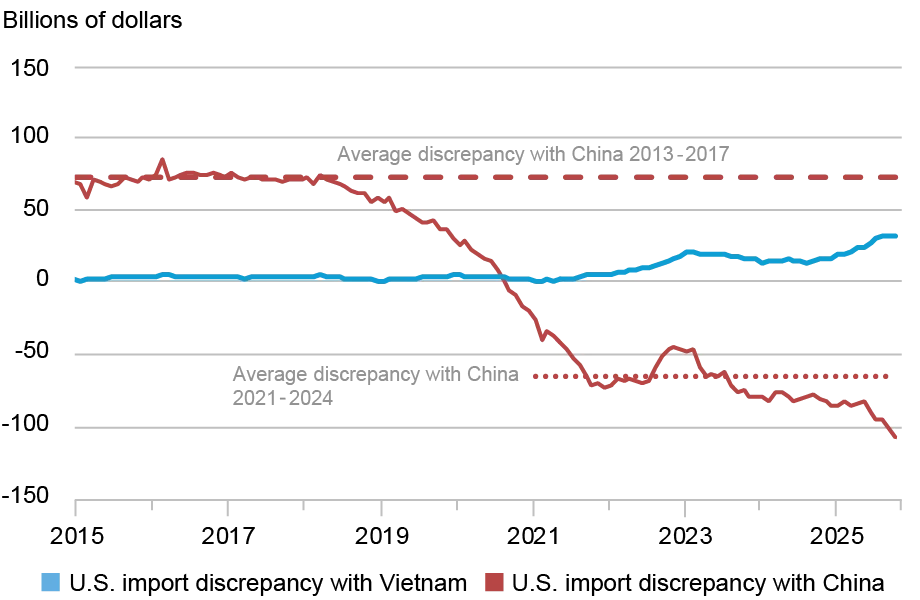
A closer look at the discrepancies in trade data raises questions about the accuracy of reported figures between the U.S. and its trading partners. Research indicates a persistent gap between U.S. imports from China and what China reports as its exports. For instance, a study found that an additional $25 billion discrepancy was noted last year alone, indicating a troubling trend of underreporting by U.S. authorities. This pattern has also begun to appear with trade stats involving Vietnam.

The current tariff regime has played a role in these discrepancies, with the effective tariff rates on U.S. imports from China averaging 34 percent, significantly higher than the 25 percent on imports from ASEAN. This situation incentivizes businesses to minimize tariffs, resulting in trade flows that may not accurately reflect the actual market demand.
Technological Goods and Trade Shifts
Despite the statistical challenges, there have been meaningful changes in the high-tech sector. A significant dip in the U.S. trade deficit with China is observed in categories linked to advanced technology, particularly those classified under Harmonized System (HS) codes 84 and 85, which encompass various computer and networking equipment.

The shift highlights that the U.S. deficit in high-tech items with China fell by approximately $70 billion, while the trade deficit with ASEAN ballooned by around $80 billion. Specific products, such as laptops and tablets, recorded distinct trade flow shifts—U.S. imports of these goods from ASEAN increased dramatically by $21 billion, while imports from China decreased by $24 billion in just this segment.

Corporate Manufacturing Strategies
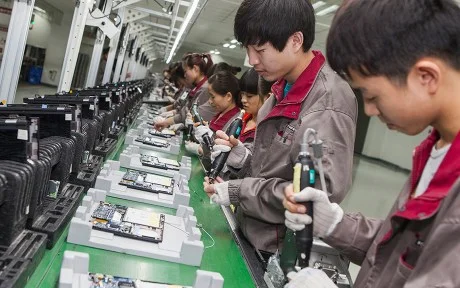
This realignment in trade reflects evolving corporate strategies directed at diversifying supply chains to sidestep tariff barriers. Major players like Lenovo, Apple, Dell, and HP have initiated moves to relocate manufacturing operations to ASEAN countries, facilitating a shift in where production takes place while still sourcing components from China.
For instance, products like laptops, which carry high import tariffs from China, are now being assembled in countries like Vietnam and Thailand, attracting U.S. imports that can take advantage of lower tariffs from those regions. Moreover, the flexibility of existing supply chains allows manufacturers to adapt stages of production without needing a full relocation of their processes, aiding in maintaining efficiency.
Infrastructure Developments and Data Center Demand
Beyond consumer electronics, structural shifts driven by expanding digital infrastructure significantly influence trade patterns. The astonishing growth of demand for AI-related infrastructure—including servers and networking equipment—has propelled investment forecasts for computing hardware to an estimated $550 billion by 2026.
Networking equipment, particularly, reflects a robust trend, with the U.S. import of such goods from ASEAN rising by $24 billion and marking a reversal of previous trends with China, where the deficit continued its decline. This suggests an increasing role for ASEAN as a crucial hub in the supply chains for essential data center components.
Conclusion and Future Outlook
The evolving trade landscape indicates a real shift in U.S.-China trade, characterized by both tariff-driven distortions and a significant reorientation toward ASEAN. The pressures from geopolitical factors and the evolving AI industry are likely to continue reshaping supply chains, with ASEAN’s role poised to expand. Observing these changes requires close attention to how trade flows intersect with emerging technological demands and tariff regulations in the near future.


